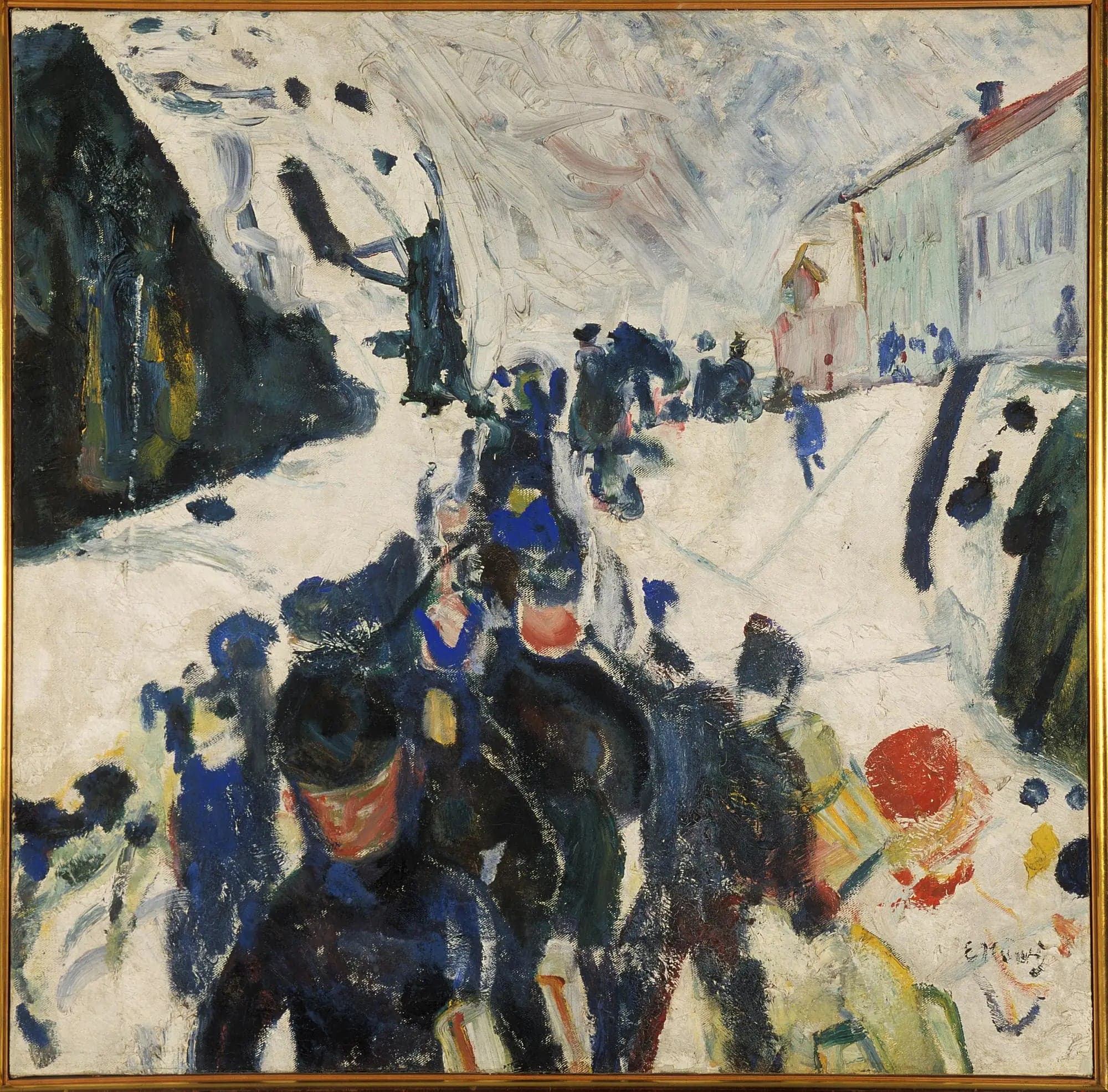
Walking in the Snow
- Original dimensions
- 95.5 x 94.5 cm
- Museum
- Munch Museum
- Year
- 1910
Scene depicted
"Walk in the Snow" depicts a solitary walk through a winter landscape where the snow stretches as far as the eye can see, symbolizing both the beauty and melancholy of existence. The figures, draped in dark silhouettes, blend with the immaculate whiteness of the snow, creating an atmosphere of mystery and reflection. The contrast between humanity and nature enhances the emotional impact of the painting, revealing the intrinsic isolation and search for meaning that Munch brilliantly illustrates.
Historical context
Created in 1910, the painting "Walk in the Snow" is one of the emblematic works of the expressionist movement, echoing the inner struggles and inner landscapes of Edvard Munch . Located in Oslo, Norway, the Munch Museum houses this canvas where each brushstroke seems to whisper the secrets of winter and the intimacy of human emotions. Its size, 95.5 cm in height and 94.5 cm in width, makes it an imposing composition , full of presence.
Place in the artist's career
"Walk in the Snow" embodies a pivotal period in Edvard Munch 's career, marked by an intense exploration of the human soul. This painting is part of the continuity of his masterpieces like "The Scream" and "The Madonna," reflecting both a technical and emotional evolution, where the canvas becomes a vehicle for conveying deep and universal emotions.
Anecdote
"Solitude is the mother of my creativity," said Munch, referring to the genesis of this masterpiece . This canvas was inspired by a solitary walk through a snowy landscape, where each step in the snow crunched like a whisper in the silence. This vision of gliding in the cold materializes on the canvas, awakening a unique evocative force.
Major exhibitions
Edvard Munch . Monumental projects