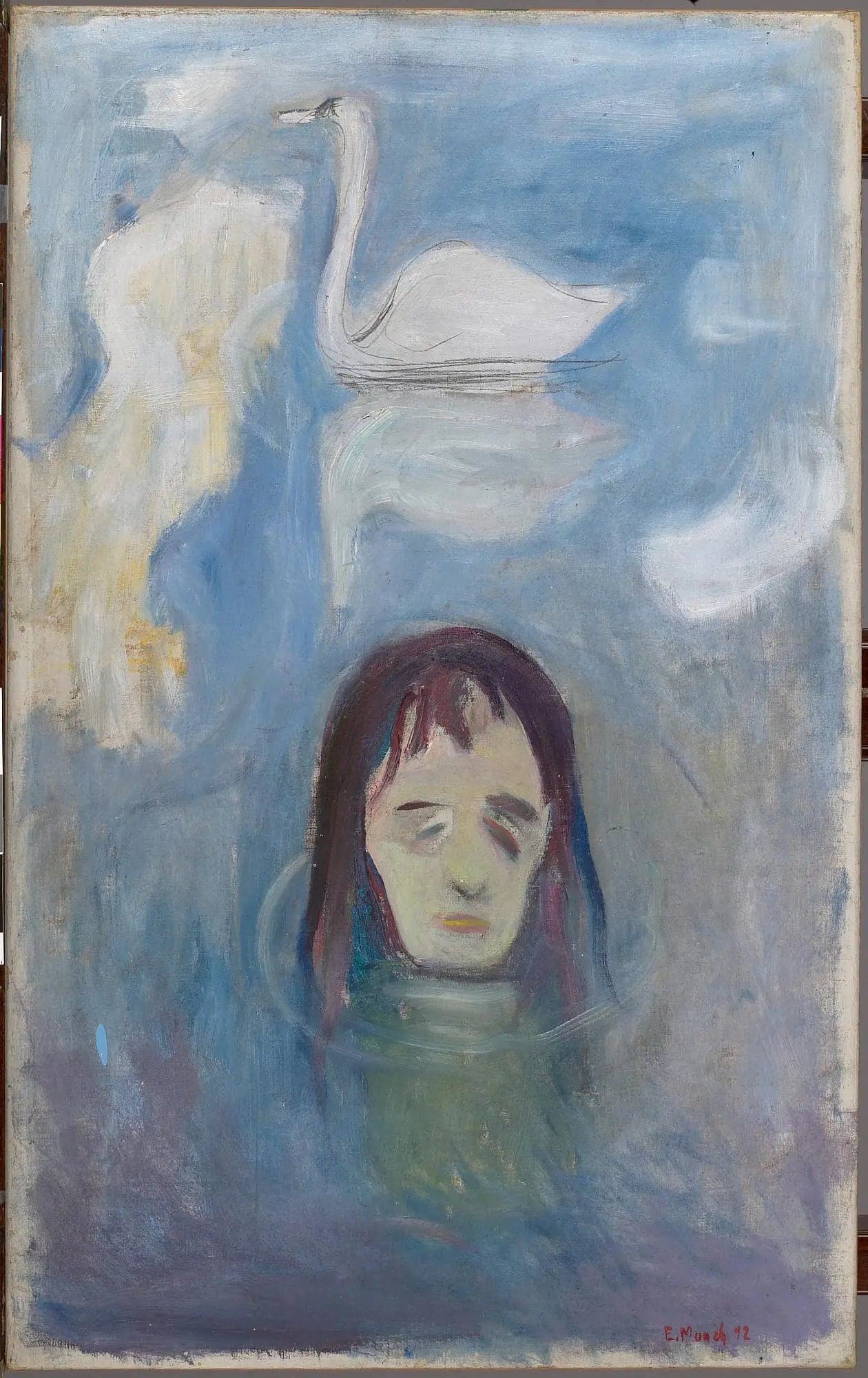
Vision
- Original dimensions
- 45.5 x 72.5 cm
- Museum
- Munch Museum
- Year
- 1892
Scene depicted
In Vision , Munch captures a deeply introspective atmosphere: a solitary figure stands amidst a landscape that is both dreamlike and disturbing. The vibrant colors and fluid shapes intertwine to create an atmosphere of mystery, a state of mind where dream and reality merge. The presence of symbolic elements reinforces this feeling of existential quest.
Historical context
Created in 1892 in the vibrant city of Oslo, this iconic canvas is at the heart of the expressionist movement. Evoking tumultuous emotions, Vision was born in an era when artists sought to transcend reality through art. Today, it is preserved at the Munch Museum, where every visitor can contemplate its depth and power.
Place in the artist's career
Vision marks a pivotal turning point in Munch's career, signifying a bold exploration of the human psyche. Parallel to The Scream and Madonna , this painting illustrates his evolution towards a freer and more personal expression, affirming his status as a pioneer of modern art.
Anecdote
“I paint my dreams and my anxieties,” said Munch, thus revealing the essence of his inspiration. It was in a foggy alley in Oslo, one morning when the light was fading, that he glimpsed an evanescent silhouette that became the beating heart of this work. The painting transcribes this fleeting encounter between permanence and evanescence, like a canvas where emotions dance.
Major exhibitions
Munch and France