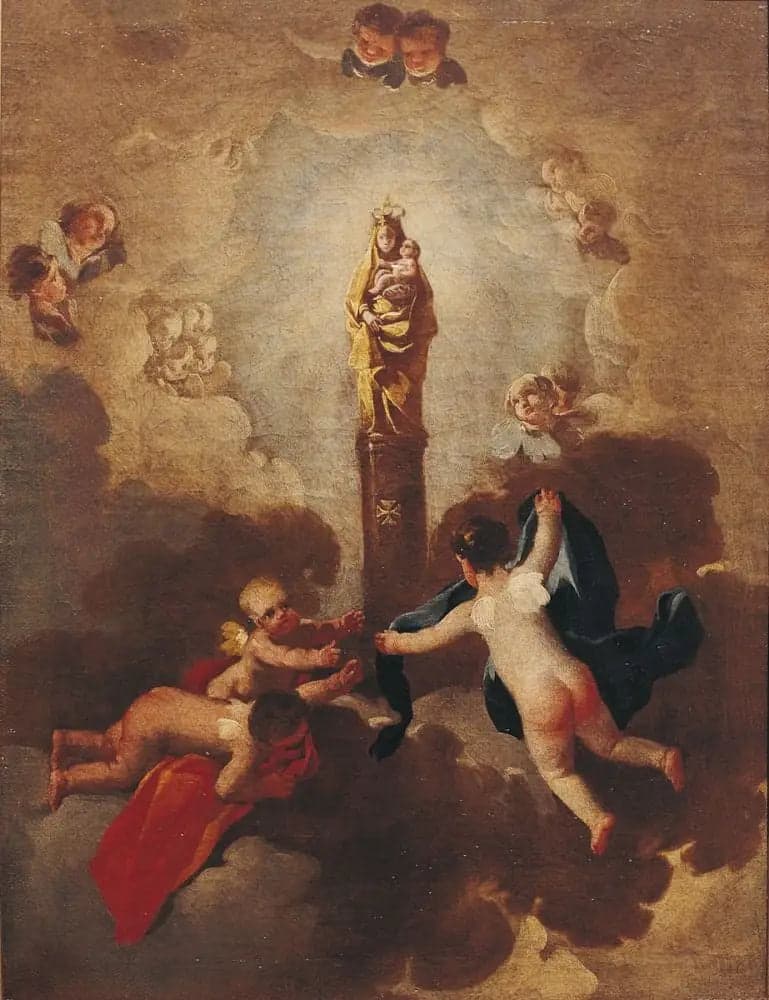
Virgin of the Pillar
- Original dimensions
- 42 x 56 cm
- Museum
- Museum of Zaragoza
- Year
- 1769
Scene depicted
The painting "Vierge du Pilier" depicts the Virgin Mary, majestically represented, surrounded by symbolic elements that highlight her beauty and sanctity. This painting illustrates a key moment in Christian spirituality, where divine light seems to emanate from the central figure, illuminating all that surrounds her. Every detail, carefully executed, allows the viewer to feel a deep connection with the sacred.
Historical context
Created in 1769, the painting titled Vierge du Pilier is part of the artistic movement of Rococo, a flamboyant and emotion-rich era. Located in Zaragoza, this canvas evokes a fervent religious veneration, characteristic of 18th-century Spanish culture. This precious painting currently resides in the Museum of Zaragoza, where it continues to amaze visitors with its spiritual depth and refined aesthetics.
Place in the artist's career
This canvas represents a pivotal stage in Goya's career, marking his development as a master of light and shadow. It sits between his early religious works and his darker pieces, such as "The Disasters of War" and "The Family of Charles IV," reflecting his stylistic evolution and his ability to capture complex human emotions.
Anecdote
Francisco de Goya , in a moment of intense inspiration, reportedly declared: "Light is the soul of my painting ." He found himself one spring morning, wandering through the streets of Zaragoza, when a dazzling image of the Virgin appeared to him, inspiring this masterful work. This fleeting moment gave birth to a composition that resonates with emotional strength and the sweetness of the sacred image.