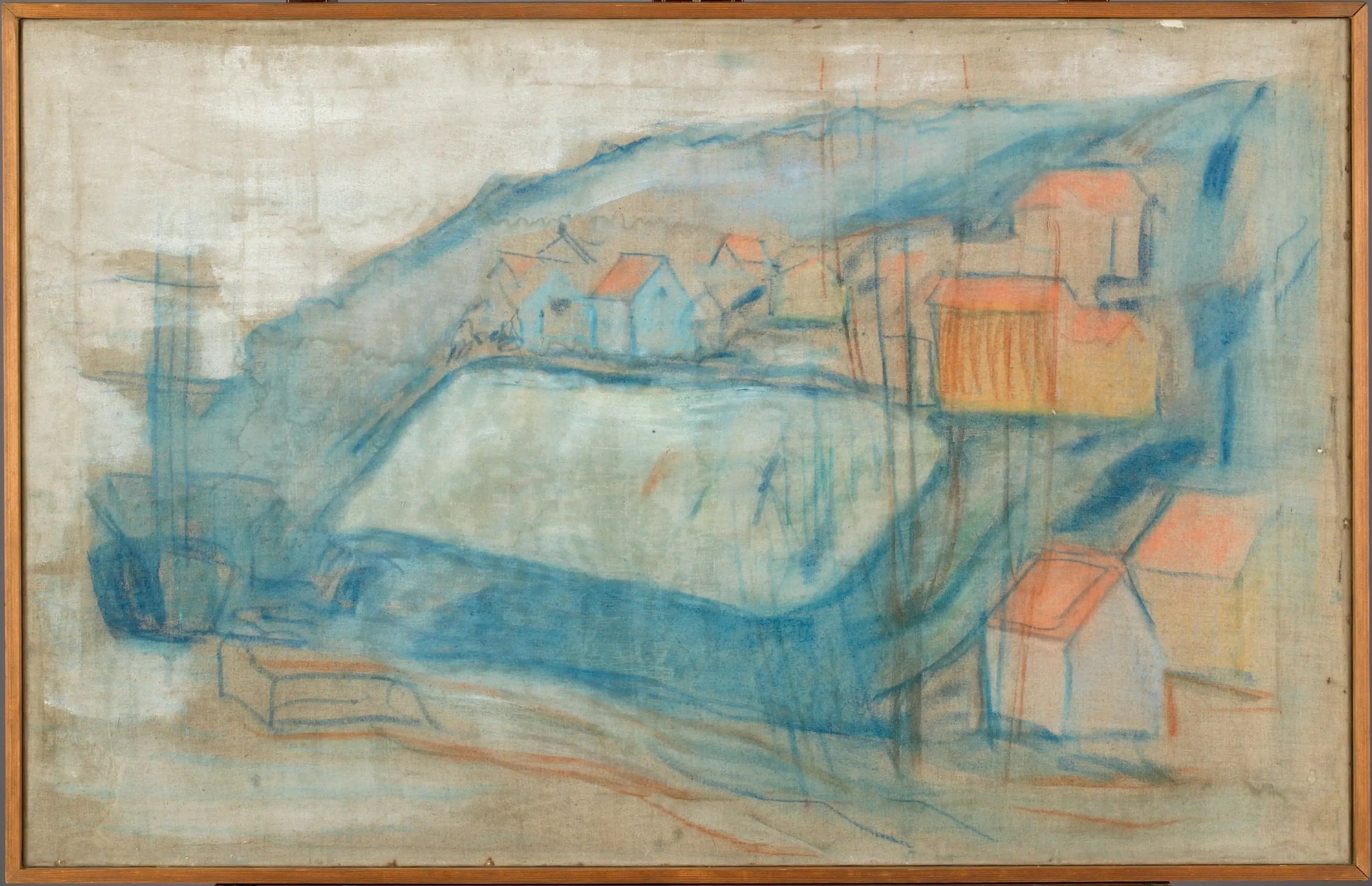
Village by the Sea
- Original dimensions
- 104 x 66 cm
- Museum
- Munch Museum
- Year
- 1909
Scene depicted
This painting depicts a tranquil village, nestled against the silvery waves of the sea, where each color seems to tell a story of tranquility and harmony. The light plays through the clouds, creating an atmosphere of intimacy that invites the viewer to dive into this suspended space, a witness to a serene existence.
Historical context
Created in 1909, the painting "Village near the Sea" takes place in the picturesque setting of Norway, relating to the expressionist movement. Edvard Munch , the main spokesperson for this movement, engages with his work the human soul and its relationship with nature. The canvas is currently exhibited at the Munch Museum in Oslo, where it continues to inspire and touch generations.
Place in the artist's career
"Village near the Sea" marks a crucial milestone in Munch's career, symbolizing his period of stylistic exploration. Alongside his iconic works such as "The Scream" and "The Dance of Life," this painting reveals a sensitivity to nature that asserts itself with irony, balance, and emotion.
Anecdote
"Nature is a great confidant," Munch is said to have remarked when discussing the inspiration behind this masterpiece . It is in the heart of a misty morning that this painting is born, when the silence of the coastal waters resonates with the melody of the waves, a moment etched in the canvas.