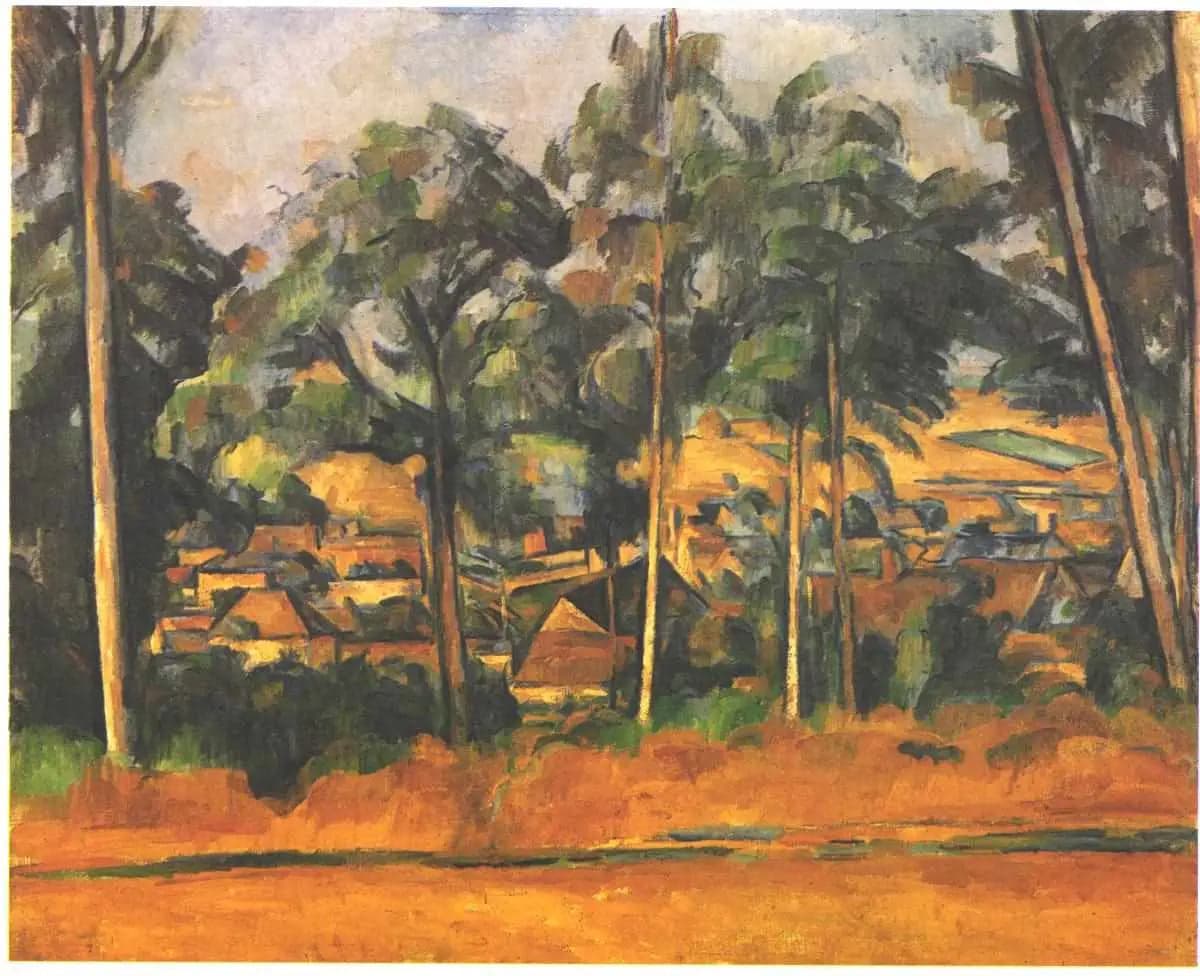
Village Behind the Trees
- Original dimensions
- 81 x 65 cm
- Museum
- Kunsthalle Bremen
- Year
- 1898
Scene depicted
In this painting , Cézanne transports us to the heart of a rural village, where tranquility reigns. We see the play of shadows and light, where majestic trees stand proudly, lining the modest homes. Each brushstroke reveals the fleeting beauty of nature, while illustrating the harmony that unites man with his environment. This bucolic scene captivates and evokes a deep sense of serenity, a testament to the sublime interaction between space and time.
Historical context
Created in 1898, this painting embodies the vibrant context of post-war France, in Aix-en-Provence, at the heart of a post-impressionist movement. Skillfully weaving elements of nature and architecture, this work illustrates the artistic revolution of its time. Currently, the canvas is housed at the Kunsthalle Bremen , a prestigious museum in the city of Bremen, where it continues to inspire visitors, both through its impressive dimensions of 81 x 65 cm and its timeless legacy.
Place in the artist's career
“Village behind the Trees” represents a perfect transition in Cézanne's career, marking a period of artistic maturity. This canvas , at the crossroads between his exploratory beginnings and his more abstract works such as “The Large Bathers” and “Mont Sainte-Victoire,” illustrates a technical and emotional growth. It testifies to his desire to explore the relationships between formal analysis and personal expression, a guiding thread throughout his career.
Anecdote
“I want my paintings to tell stories” Cézanne might have said as he stood in the streets of his youth. One sunny morning, intrigued by the light playing hide and seek through the foliage of an ancient tree, he found the inspiration that brought to life the masterpiece we know today. This painting is not just a landscape; it is an invitation to contemplate the magic of the moment, a star guiding his pictorial work.