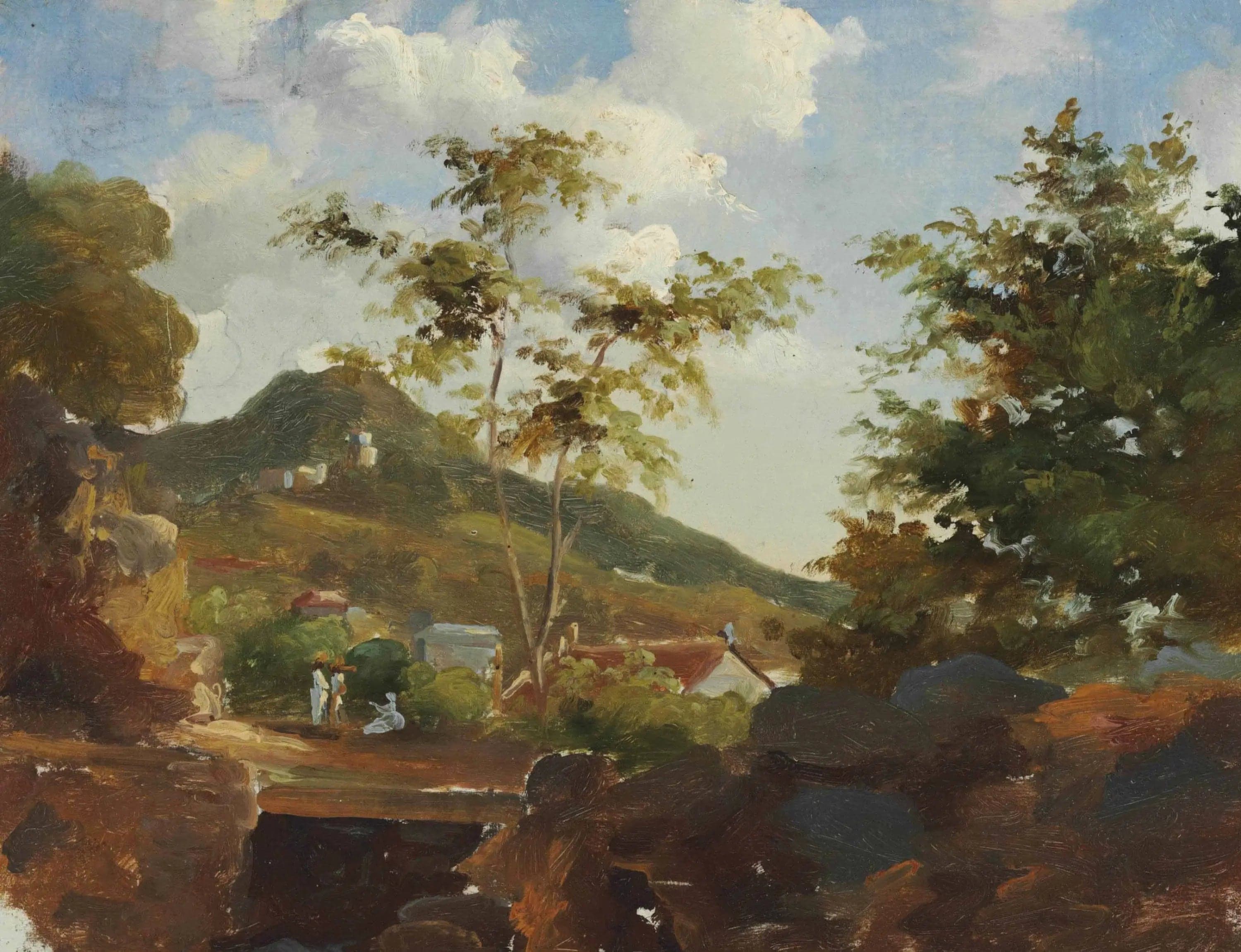
Village at the Foot of a Hill
- Original dimensions
- 20.5 x 24.1 cm
- Museum
- Not specified
- Year
- 1850
Scene depicted
The painting “Village au pied d'une colline” depicts a bucolic scene, where life flows quietly. The peasants go about their tasks, while the daylight illuminates the landscape. The green hills outline the background, while fluffy clouds float in a blue sky, testifying to the harmony between humans and their environment. Each element of this scene seems to vibrate, creating an atmosphere of peace and serenity.
Historical context
Created in 1850, this painting is emblematic of a pastoral, green, and serene world, imbued with the influences of the Impressionist movement. Located in a rural area of France, the canvas captures the very essence of a time when art finally takes the liberty to express the nuances of everyday life. Although the painting is not housed in a well-known museum, its modest dimensions hide immense artistic richness, inviting everyone to dive into a unique universe.
Place in the artist's career
“Village au pied d'une colline” positions itself in Pissarro's career as a significant turning point towards the Impressionist style, illustrating his quest to capture light and movement. In parallel with paintings such as “Les Toits Rouges” and “La Récolte de Poires”, one can detect an evolution in his technique, moving from a realistic representation to a more jubilant, vibrant form of expression, where nature and humanity converge in a silent choreography.
Anecdote
“Nature is the only true muse, it speaks to me in the gentle whisper of the wind.” This quote from Camille Pissarro transports us to the heart of the inspiration for this masterpiece , on a bright morning when the artist marveled at the peaceful village stretching at the foot of a hill. The colors of the flora, golden in the sunlight, and the soothing sounds of a gliding stream resonate through the painting , awakening in us a deep respect for the fleeting beauty of nature.