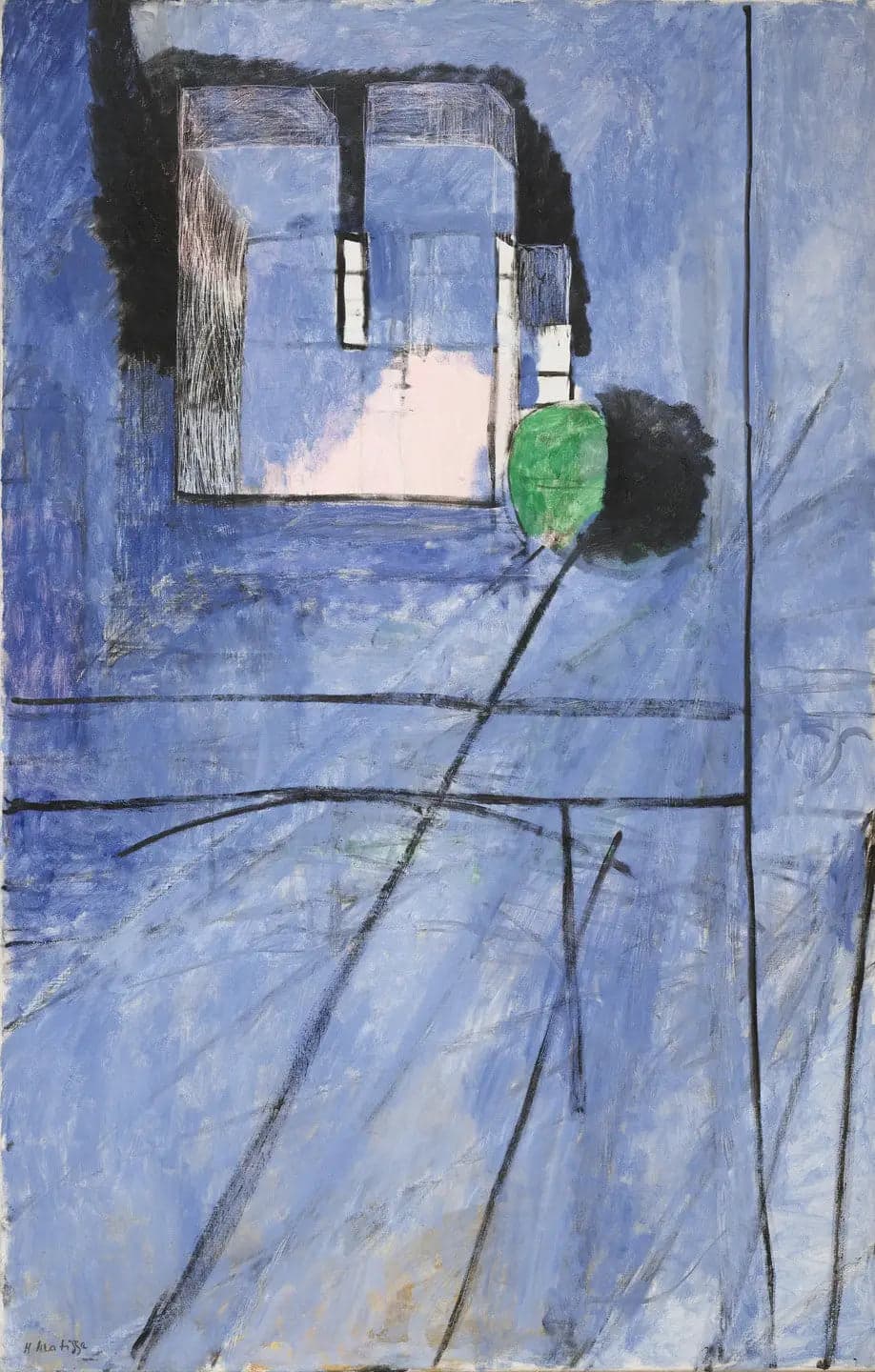
View of Notre-Dame
- Original dimensions
- 94.3 x 147.3 cm
- Museum
- Museum of Modern Art
- Year
- 1914
Scene depicted
The painting "View of Notre-Dame" illustrates an iconic scene of the cathedral, bathed in a soft light that dances on the waters of the Seine. Matisse captures the majesty of Gothic architecture and the harmony that light plays on its facades. The work stands out for its ability to evoke a moment frozen in time, where art and nature meet in a sublime way.
Historical context
Created in 1914, during a period marked by Fauvism , the painting "View of Notre-Dame" is an iconic representation of the Parisian cathedral. Located in Paris, this work was conceived in a tumultuous historical context, just before the outbreak of World War I. Today, this canvas finds refuge in the collections of the Museum of Modern Art, where its artistic imprint continues to evoke emotions.
Place in the artist's career
This painting is situated at a turning point in Matisse's career. In 1914, he is already recognized as a pioneer of Fauvism . Alongside "The Dance" and "The Joy of Life," "View of Notre-Dame" asserts itself as a major milestone, symbolizing a stylistic maturity and a renewal of the artist's pictorial expressionism.
Anecdote
Henri Matisse , in his own words, once said: "Painting is an expression of everyday life. When I paint, I delight in the fleeting moments that light captures." It is in this vibrant setting, at the dawn of a spring day, that Matisse was inspired by the pure and melodious brilliance of reflections on the Seine, thus offering the world this masterpiece radiant.