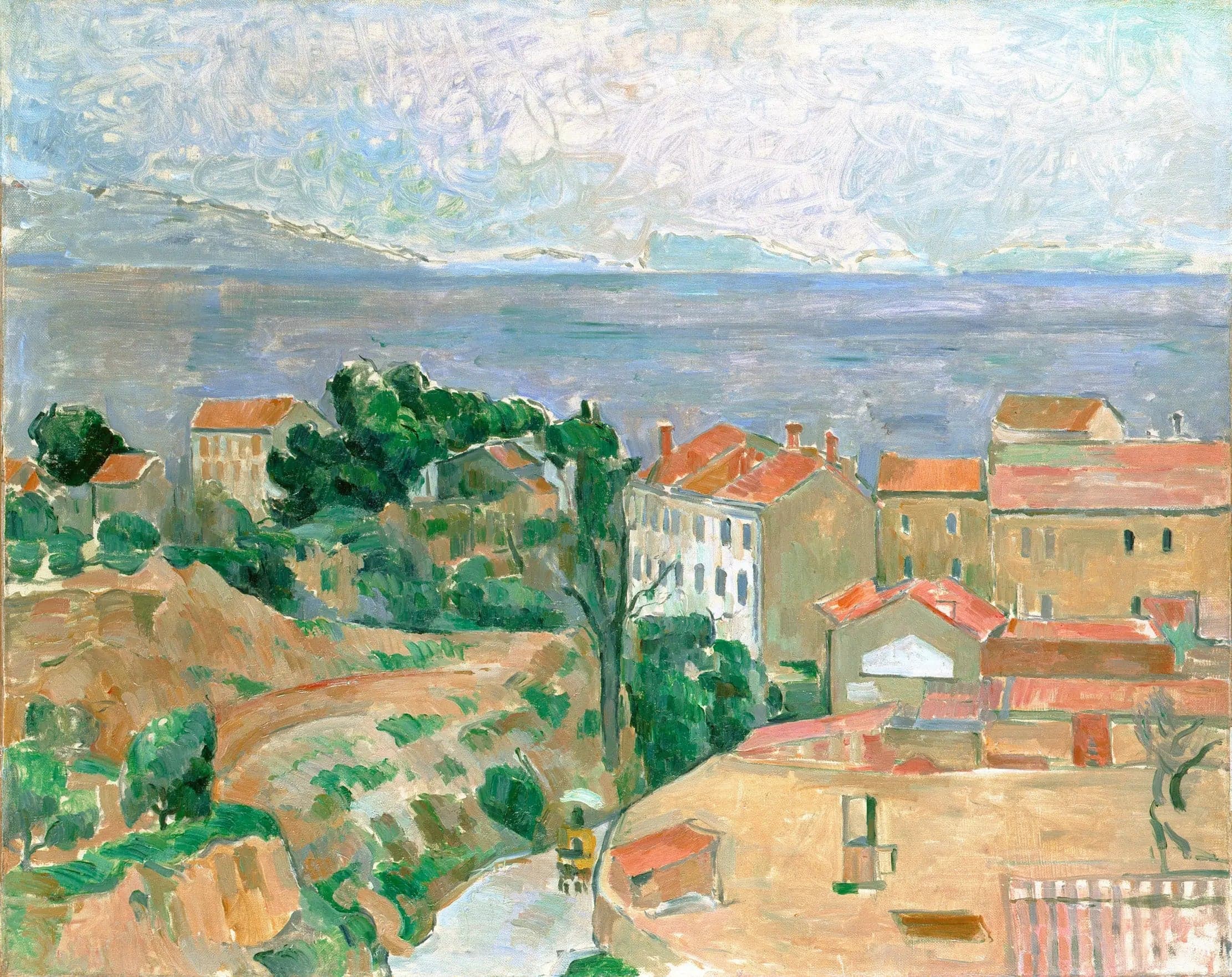
View of l'Estaque
- Original dimensions
- 73 x 60 cm
- Museum
- Not specified
- Year
- 1882
Scene depicted
"View of l'Estaque" unfolds an enchanting composition where the sea, the sky, and the Provençal hills intertwine harmoniously. The severe geometric shapes are tempered by a soft light, emanating a palpable serenity. This painting invites the viewer to appreciate the natural beauty while capturing the living essence of this iconic region.
Historical context
Created at the heart of the late 19th century, the painting "View of l'Estaque" is a vibrant testimony of the post-impressionist movement to which Paul Cézanne significantly contributed. This painting , born in Provence, evokes a bright landscape, a source of inspiration for many artists. The canvas is in a private collection, a rare treasure where the spirit of the Provençal nature remains alive.
Place in the artist's career
This painting represents a crucial step in Cézanne's career. It lies between his early impressionist explorations and his quest for structure in his later works. Alongside "The Large Bathers" and "Mont Sainte-Victoire," "View of l'Estaque" reveals a profound stylistic evolution where light and form become a fascinating conversation.
Anecdote
“Looking with the heart is the best way to paint.” This reflection from Cézanne resonates as a call to authenticity. One spring morning, the artist stood on a hill, overlooking the village of l'Estaque. The light breeze and the scents of the garrigue nourished his thoughts, inspiring this masterpiece , a canvas filled with emotions.