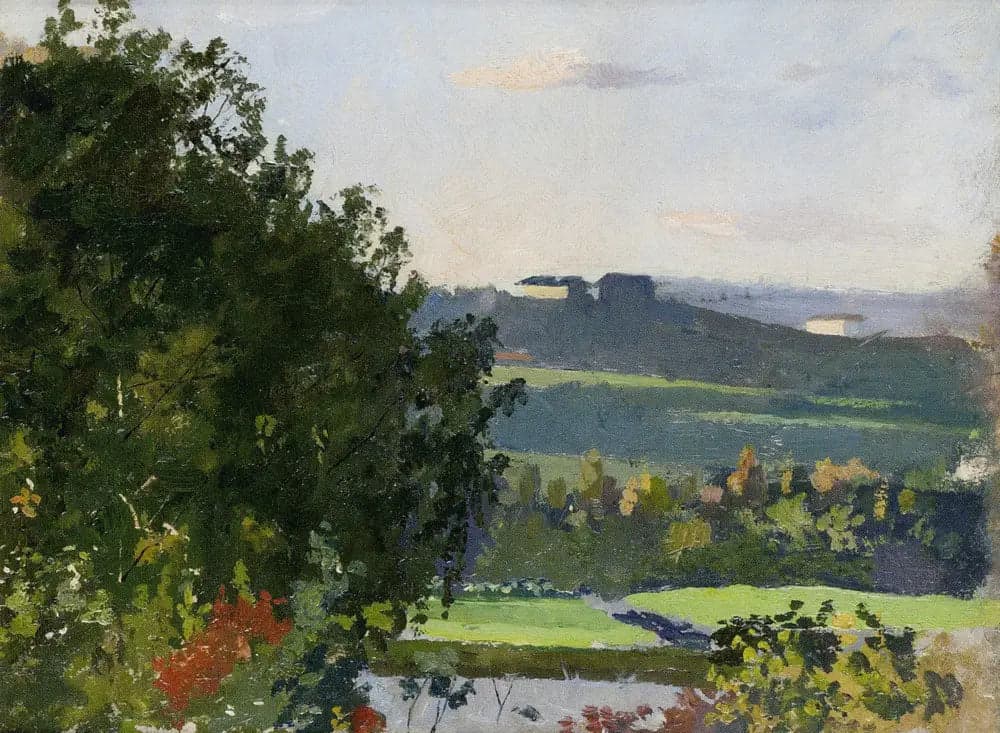
View of Grüner's Garden
- Original dimensions
- 29.5 x 22 cm
- Museum
- Not specified
- Year
- 1881
Scene depicted
The painting gently depicts a lush garden, a space of relaxation and pulses of life. Munch captures not only the vibrant colors and serenity of the plants but also the universal essence of nature, a true invitation to contemplation and inner peace. The elements represented in the painting interact with each other, revealing a harmony that transcends the everyday.
Historical context
Created in 1881, the painting "View of Grüner's Garden" is set against a fervent artistic context of the late 19th century in Norway. From Oslo, where Edvard Munch developed his artistic vision, this painting evokes symbolism , a movement that prioritizes the expression of human emotions through representative motifs. Although the exact location of this canvas is not documented, its artistic imprint endures through time.
Place in the artist's career
"View of Grüner's Garden" positions itself at a turning point in Munch's career, a moment when he begins to deeply explore emotions through the canvas . This painting echoes other iconic works such as "The Scream" and "The Madonna," illustrating a stylistic shift towards a more pronounced emotional intensity, in a quest for personal and artistic expression.
Anecdote
"Nature is a reflection of our soul," Munch said, referring to his inspiration. It was a cool morning in the Norwegian spring when the artist discovered a friend's lush garden, an idyllic scene bathed in soft, warm light. This vision is at the source of the composition we know today as "View of Grüner's Garden."