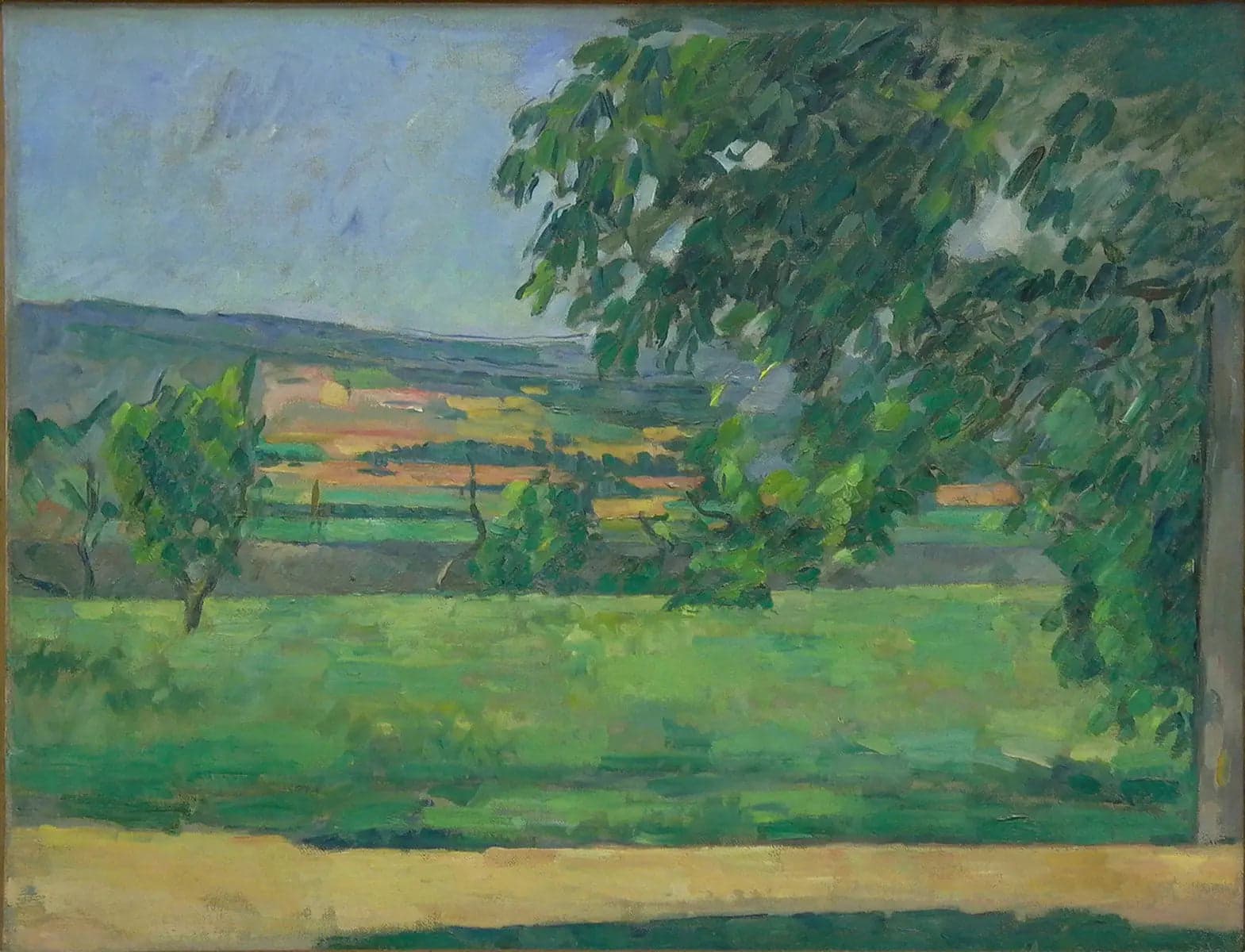
View from the Jas de Bouffan
- Original dimensions
- 60.5 x 46 cm
- Museum
- Granet Museum
- Year
- 1876
Scene depicted
The painting "View from the Jas de Bouffan" depicts a peaceful landscape, dominated by the majesty of the hills of Provence. Cézanne, with unmatched mastery, translates the golden light of the sun filtering through the trees, playing on shadows and lights to bring the scene to life. This composition transcends mere representation, becoming a true celebration of nature and the everyday.
Historical context
Created in 1876, the painting "View from the Jas de Bouffan" finds its roots in Aix-en-Provence, a jewel of southern France. This iconic painting is at the heart of the Impressionist movement, which revolutionizes art with its bold approach to light and color. Today, this painting is displayed at the Granet Museum, where it continues to dazzle visitors with its harmonious dimensions and unique atmosphere, blending nature and urbanity.
Place in the artist's career
"View from the Jas de Bouffan" represents a turning point in Cézanne's career, reflecting a mature style and refined technique. Alongside other masterpieces like "The Montagne Sainte-Victoire" and "The Large Bathers," this canvas reveals a fascinating evolution both aesthetically and emotionally, unveiling the emergence of a unique artistic voice.
Anecdote
Paul Cézanne once declared: "I want to create a painting that resonates like a living echo of nature." It is in this context that this masterpiece was born, inspired by a sunny morning, where the song of birds and the scents of the greenhouse awaken his senses. This pictorial work captures the very essence of this inspiration, making the canvas a suspended moment where the real and the imaginary meet.