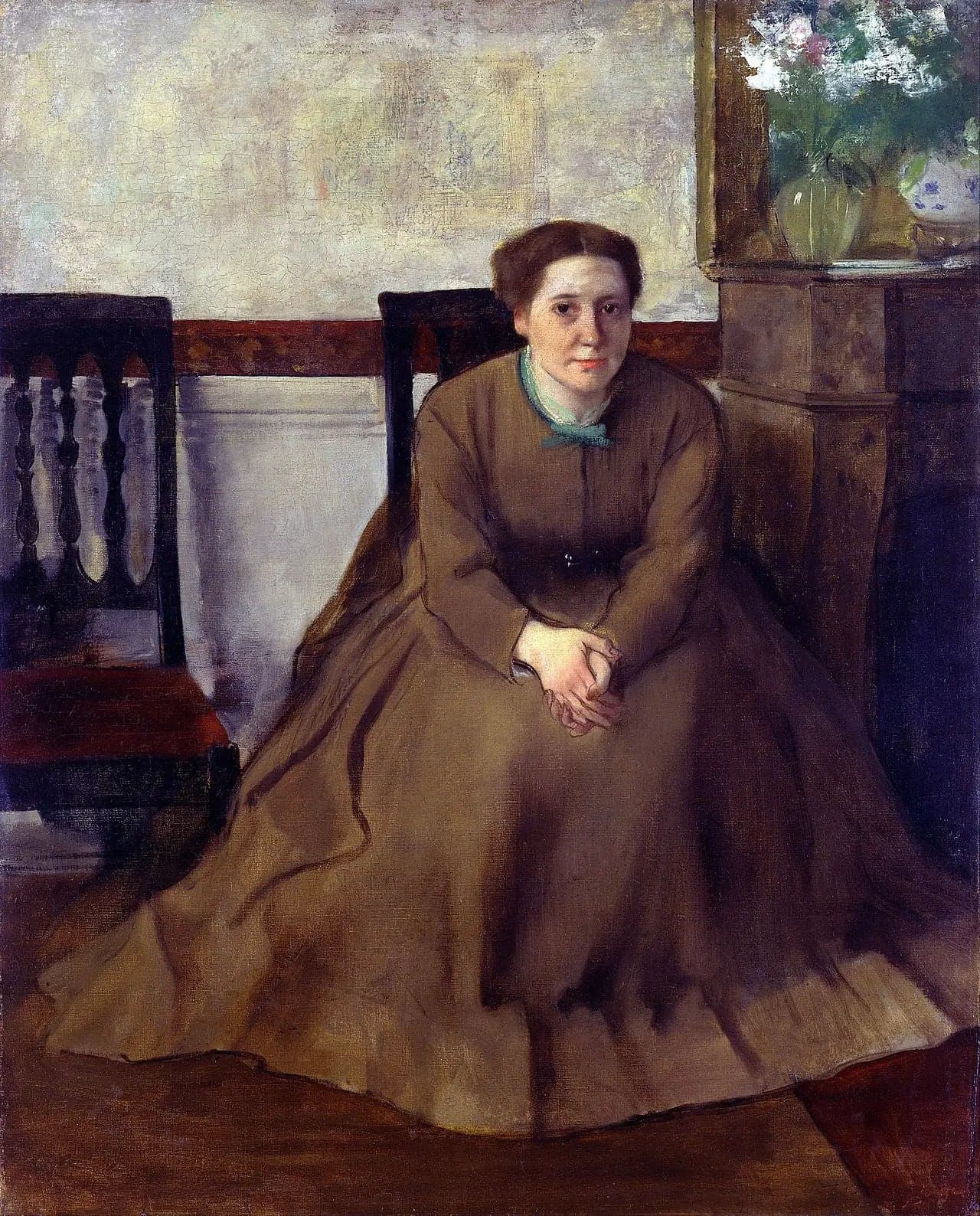
Victoria Dubourg
- Original dimensions
- 648 x 813 cm
- Museum
- Toledo Museum of Art
- Year
- 1868
Scene depicted
This pictorial work vibrates with a vibrant atmosphere, where dance embodies beauty in motion. Degas, with his sharp gaze, captures not only the bodies of the ballerinas but also the soul of the scene, blending delicate details with rich emotional depth. The fluid lines and nuanced hues transport the viewer to the heart of the scene, evoking a dance that is both powerful and delicate.
Historical context
Created in 1868 in Paris, Victoria Dubourg is part of the Impressionist period, a revolutionary artistic movement that challenges traditional conventions of painting. At that time, Paris was the beating heart of art, where artists met and exchanged innovative ideas. This painting by Edgar Degas , currently exhibited at the Toledo Museum of Art , unfolds on a majestic canvas measuring 648 by 813 cm, capturing dance and Parisian life with unmatched intensity.
Place in the artist's career
The painting Victoria Dubourg marks a pivotal period in the career of Edgar Degas , revealing stylistic refinement and mastery of the human form. Alongside The Dance Class and The Wedding Ballet , this painting illustrates a progression in the representation of everyday life, focusing on fleeting moments of emotions.
Anecdote
Edgar Degas often said: “Art is not what you see, but what you make others see.” It is precisely this intention that drove the painting of Victoria. One sunny spring morning, while observing ballerinas training, he found inspiration in the ephemeral grace of their movements, immortalizing their momentum in this masterpiece .