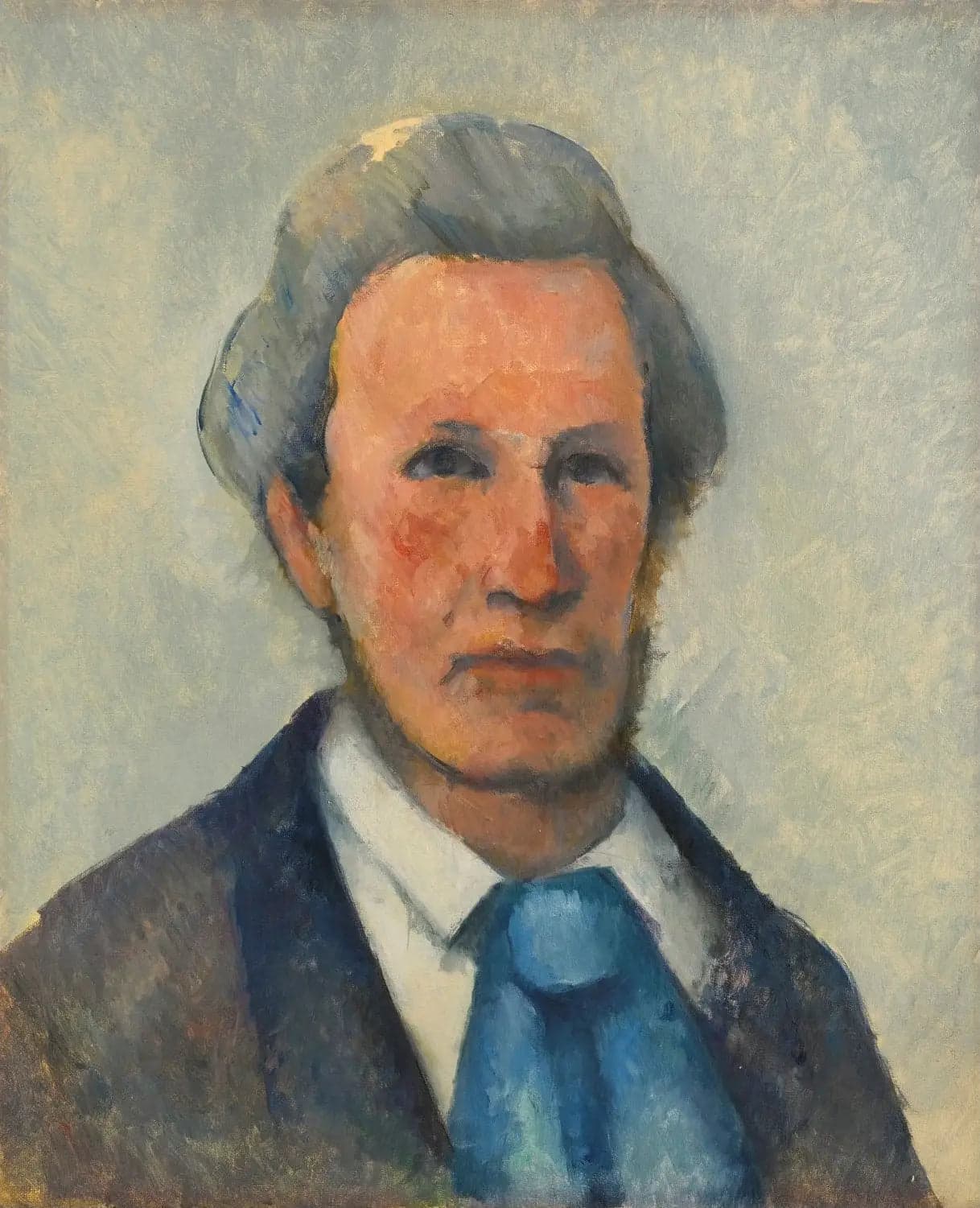
Victor Chocquet, after a photograph
- Original dimensions
- 36.7 x 45 cm
- Museum
- Not specified
- Year
- 1880
Scene depicted
This canvas illustrates the art of human representation with all the sensitivity and rigor that characterize Cézanne. It captures the moment when Chocquet poses in front of the lens, an expression of contemplation and enigma immersed in a vibrant atmosphere. The delicate nuances of the painting infuse a life that transcends the frozen frame, inviting the viewer to grasp the soul of the subject.
Historical context
Created in 1880, this painting embodies its roots in the south of France, where Paul Cézanne , an iconic figure of post-impressionism , began to forge his unique style. Evolving in a vibrant artistic environment, this canvas is part of the movement where color and light redefine the perception of reality. Although the canvas is not located in a specific museum, its dimensions and authenticity make it a precious work of art.
Place in the artist's career
Victor Chocquet, after a photograph marks a crucial step in Cézanne's career, witnessing his transition from traditional art to a more emotional and modern exploration. Alongside 'The Card Players' and 'Mont Sainte-Victoire', this canvas stands as a milestone in the evolution of his aesthetic approach, a palpable maturation in the use of color and the construction of forms.
Anecdote
“Each painting is the imprint of an immutable thought, captured in a moment,” Cézanne might have declared, recalling the moment he encountered the face of Victor Chocquet that fascinated him so much. This masterpiece is the result of a contemplative gaze, inspired by a spring morning slipping through the hills of Provence, where light invites creation.