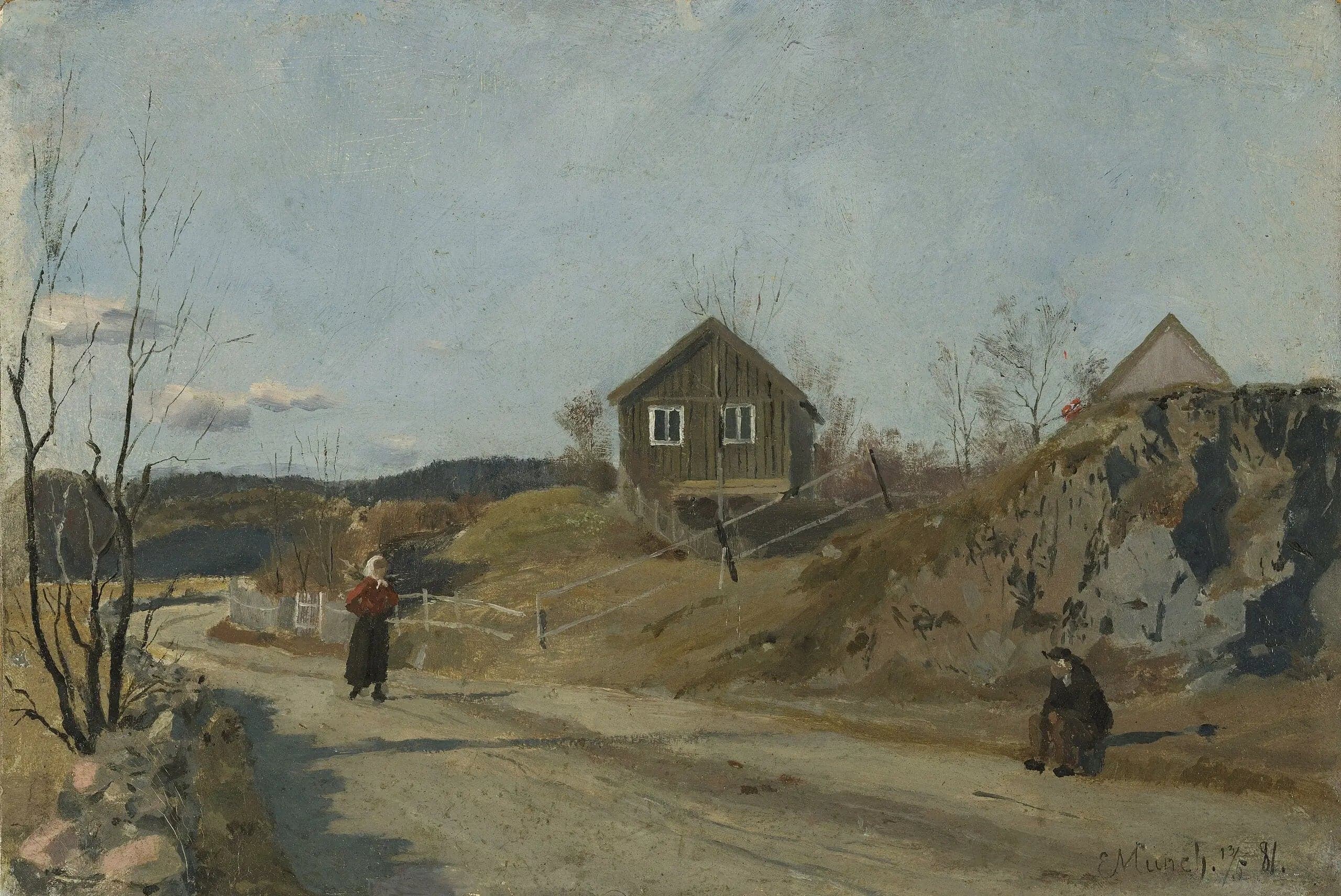
Vestre Aker
- Original dimensions
- 30.5 x 20.5 cm
- Museum
- National Gallery of Oslo
- Year
- 1881
Scene depicted
In the painting "Vestre Aker," Edvard Munch illustrates a peaceful scene of a Norwegian village. The houses stand proudly, bathed in soft light, while the lush landscape stretches to the horizon. This pictorial work resonates with a sense of tranquility, inviting the viewer to dive into a world where nature and humanity coexist in harmony.
Historical context
Created in 1881, this painting embodies life in the peaceful setting of the city of Oslo, in the heart of Norway. Emanating from the expressionist movement, Vestre Aker captures the essence of a time when art bears witness to human emotions. Currently on display at the National Gallery of Oslo, this canvas measuring 30.5 x 20.5 cm evokes a blend of intimacy and visual power.
Place in the artist's career
The painting "Vestre Aker" stands as a key milestone in the career of Edvard Munch . Anticipating his more famous works, this canvas already shows the beginnings of his expressive style. Alongside "The Night" and "The Scream," this masterpiece testifies to his evolution towards more striking compositions, blending light and darkness.
Anecdote
Edvard Munch once said: "Art should not reproduce the visible, but make visible what is not always seen." Inspired by a walk at dusk, the painting "Vestre Aker" reflects those simple moments, filled with vibrant memories and melancholy, where each brushstroke reveals a deep emotion.