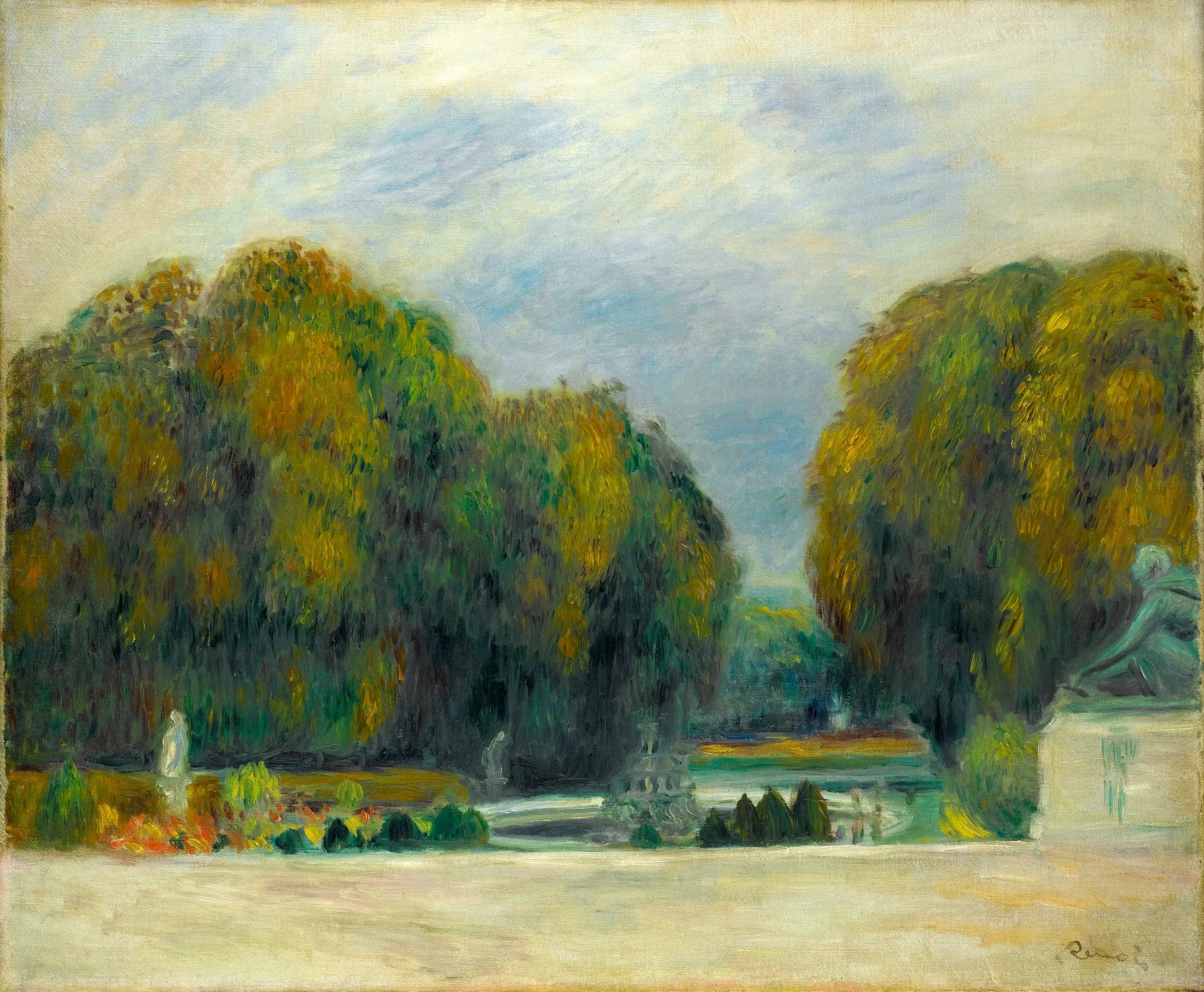
Versailles - Pierre
- Original dimensions
- 63.2 x 52.1 cm
- Museum
- Metropolitan Museum of Art
- Year
- 1900
Scene depicted
The canvas "Versailles" depicts the tranquility of the castle's gardens, where visitors gather among the carefully tended flower beds. Each element of this painting evokes an atmosphere of harmony, where man coexists with nature gracefully, revealing a moment suspended in time. The shadows of venerable trees and the golden light of the sun play together, rhythmically coloring this painting with delicate hues.
Historical context
Created in 1900, the painting "Versailles" by Pierre- Auguste Renoir is set against the majestic backdrop of France, at a time when the Impressionist movement is experiencing a meteoric rise. This painting, now housed in the Metropolitan Museum of Art , draws its inspiration from the enchanting gardens of the famous castle, emblematic of a French art of living that blends tradition and modernity. With dimensions that hum a melody of grace and elegance, this canvas immerses us in a universe filled with light and serenity.
Place in the artist's career
"Versailles" is part of a pivotal period in Renoir's career, a creator already recognized but still in search of innovation. It is at this moment that he merges his influences with a brighter and more colorful approach, resonating with works such as "Luncheon of the Boating Party" and "La Grenouillère." These paintings illustrate the evolution of his style, oscillating between a tender realism and vibrant abstraction, while celebrating the vitality of each moment.
Anecdote
"Light is the soul of a work," said Renoir, who was able to capture the ephemeral beauty of a moment in the painting "Versailles." Inspired by a spring morning, the artist evoked the serenity of the blooming gardens, cradled by the song of birds and the gentle caress of the wind. This precious moment is reflected in the evocative power of this composition , making each brushstroke a celebration of nature.