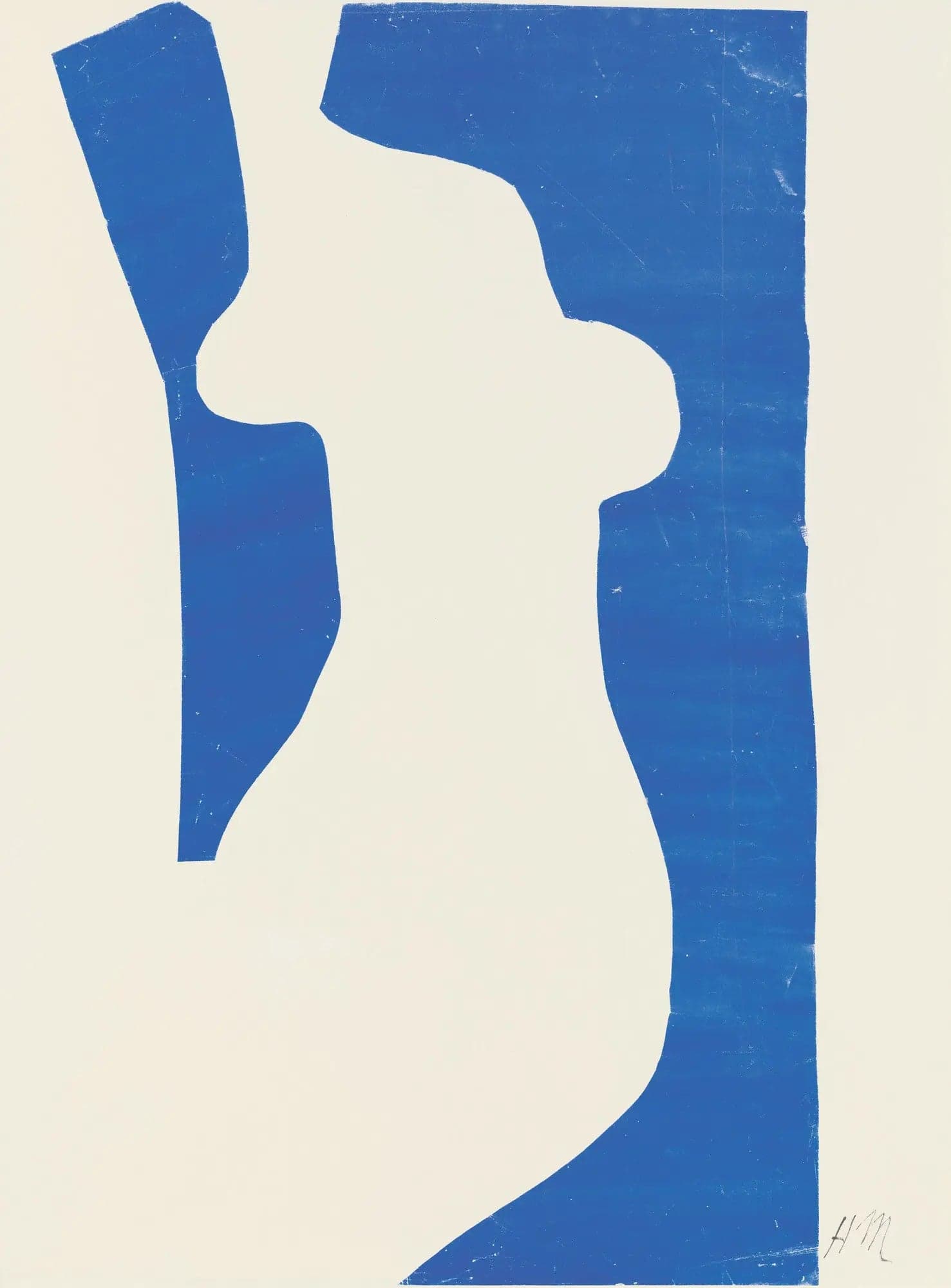
Venus
- Original dimensions
- 76.5 x 101.2 cm
- Museum
- National Gallery of Art
- Year
- 1952
Scene depicted
In this pictorial work, Matisse captures the essence of the goddess Venus, embodying love and beauty. This painting bears witness to a fleeting moment where art and mythology converge, where the voluptuous form of the drawn figure invites us on an inner journey. The fluid contours and vibrant colors converse with each other, creating an atmosphere of serenity that transports the viewer into a world of divine harmony.
Historical context
Created in 1952, the painting "Venus" is set against the vibrant and innovative backdrop of the post-war period in Washington, DC, where it finds sky and light in the National Gallery of Art . This canvas is emblematic of the Fauvism movement, an artistic movement that took root in France in the early 20th century. The work flourishes in a vibrant and colorful atmosphere, symbolizing an artistic renewal, where Matisse plays with form and color, transcended by the luminous ambiance of the American capital.
Place in the artist's career
"Venus" stands as a significant milestone in Matisse's career, representing a period of maturity where he combines technique and emotion. When placed alongside other works such as "The Dance" and "The Joy of Life," one observes a stylistic evolution, where Matisse deepens the dialogue between abstraction and figuration, while continuing to explore the richness of colors and forms.
Anecdote
"Light is my language," could have said Henri Matisse , inspired one spring morning when his gaze fell upon a flower blooming in full light in a garden. This moment nourished the evocative power of the painting "Venus," a composition where beauty and light blend gracefully, revealing the artist's sensitivity to nature and life.