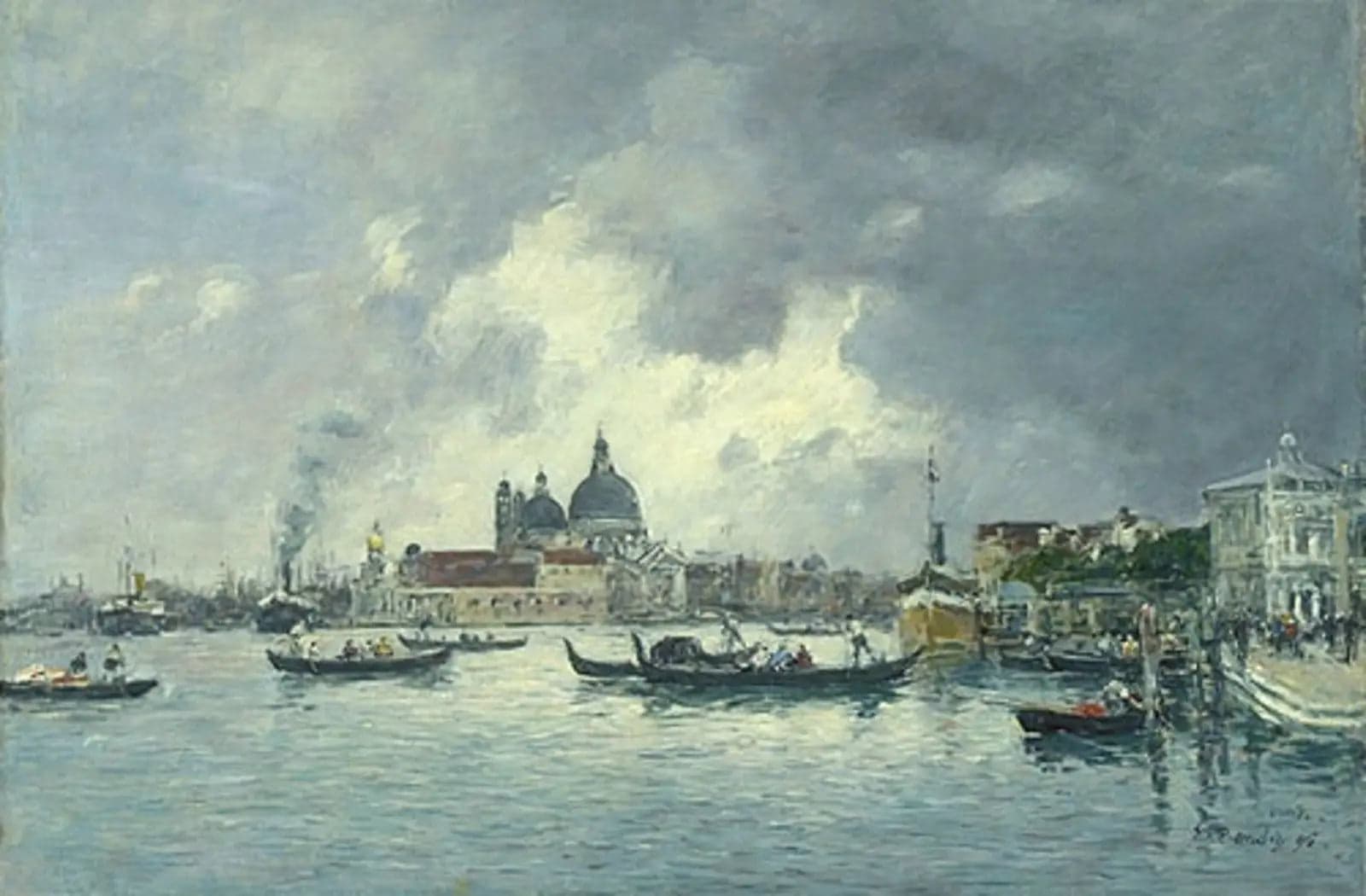
Venice, in the evening. The Quai des Esclavons and the Salute
- Original dimensions
- 65 x 46 cm
- Museum
- National Museum of Fine Arts of Quebec
- Year
- 1895
Scene depicted
This striking canvas transports the viewer to the water's edge, with vibrant reflections dancing on the calm surface. The silhouettes of iconic buildings, such as the Salute, gently emerge in the twilight mist. The balanced composition of the canvas highlights a harmony between architecture and landscape, inviting exploration of every detail of this enchanting Venetian scene.
Historical context
Created in 1895, this painting is emblematic and immerses the viewer in the beauty of the city of Venice at dusk. This canvas, painted at a time when Boudin was at the fringes of the Impressionist movements, captures the timeless charm of this Italian region, while currently being displayed at the National Museum of Fine Arts of Quebec. Its dimensions, 65 by 46 cm, make it a piece that is both generous and welcoming.
Place in the artist's career
“Venice, in the Evening” is situated at the peak of Boudin's career, a period when he merges his love for the outdoors with an increasingly assertive Impressionist style. Combined with other paintings such as “Côte de Deauville” and “The Port of Honfleur,” this work illustrates an evolution in his treatment of light, too often flattered by the idea of a simple maritime landscape.
Anecdote
“Art is a cry, a melody, a breath of nature,” said Boudin. Inspired by the fleeting lights on the water and the whisper of gondolas, he painted Venice with ineffable passion. The painting “Venice, in the Evening. The Slave Quay and the Salute” captures this atmosphere, inviting contemplation of a suspended moment.