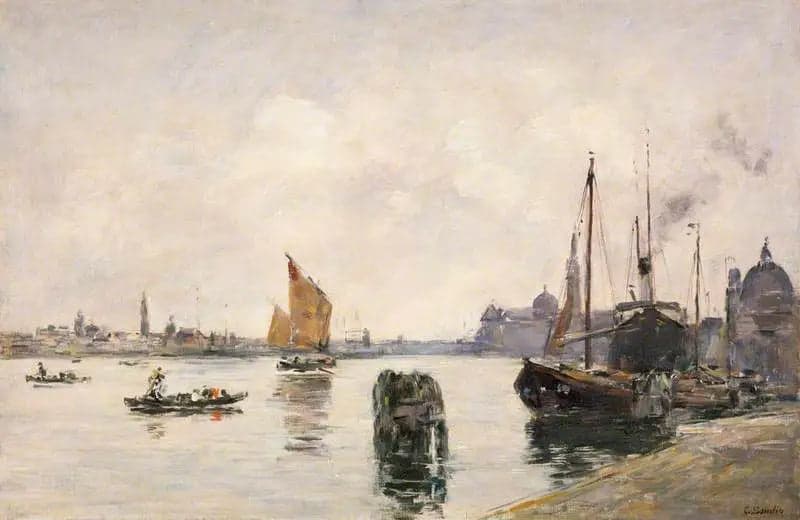
Venice
- Original dimensions
- 55 x 36 cm
- Museum
- National Gallery of Scotland
- Year
- 1895
Scene depicted
This painting depicts a daily scene in Venice, revealing gondolas gliding on the Grand Canal. The shimmering reflections in the crystal-clear water carry an almost ethereal light, symbolizing the privileged connection between man and nature. Each brushstroke tells a story, paying tribute to the timeless beauty of this extraordinary city.
Historical context
Created in 1895, the painting "Venice" by Eugène Boudin is part of the Impressionist movement, which was in full swing. This canvas evokes a period when light and color took a prominent place in art. Located at the National Gallery of Scotland, this painting is a living witness to the enchanting atmosphere of Venice, a fusion of arts and culture.
Place in the artist's career
"Venice" is a milestone in Eugène Boudin 's career, reflecting his artistic maturity. With works such as "The Beach at Trouville" and "The Port of Honfleur," this masterpiece reveals a technical evolution towards a greater mastery of light and movement, solidifying his place among the great Impressionist masters.
Anecdote
"The light of Venice is a melody, a symphony of colors." These words from Eugène Boudin resonate like an echo of his inspiration. Imagine the painter strolling along the quays of this mythical city on a spring morning, the sweet scent of the sea mingling with the aromas of the cobbled streets. It is in this magical setting that this pictorial work came to life.