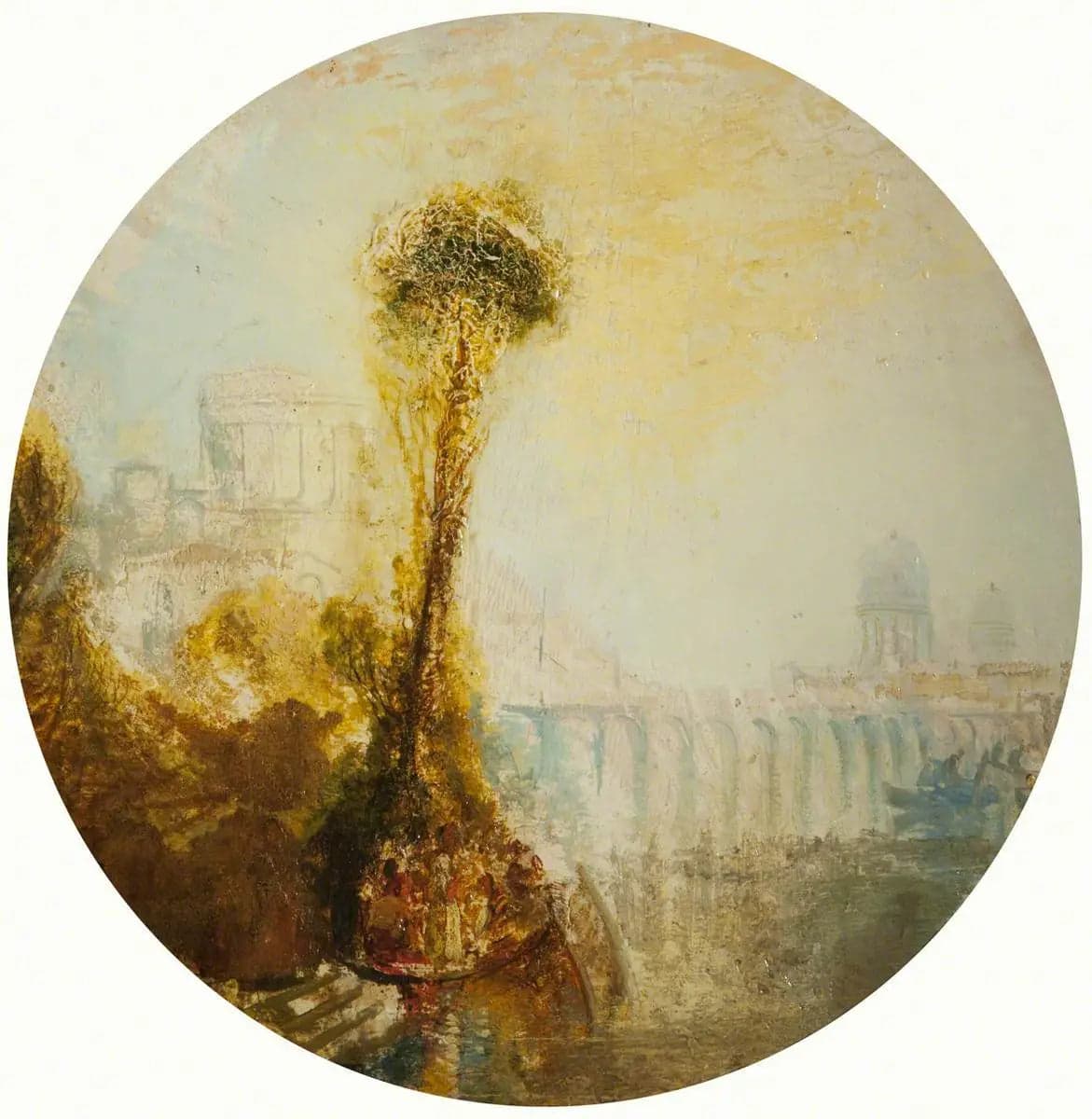
Venetian Scene
- Original dimensions
- 79.4 x 78.7 cm
- Museum
- Tate
- Year
- 1842
Historical context
Created in 1842, the painting Venetian Scene is part of the romantic movement that swept through Europe at that time. Turner, like a poet of light, captures the magic of Venice, this enchanted city nestled in the lagoon, at the height of the impressionist movement. This canvas , now carefully preserved at the Tate , bears witness to the artistic legacy of a man whose vision revolutionized the use of light and color in the world of art.
Place in the artist's career
Venetian Scene represents the pinnacle of an already well-established career. After his essential works like The Grand Canal, Venice and Rain, Steam and Speed , Turner here explores a fusion of emotions and techniques, elevating this painting as a response to his relentless quest to capture light. His evolution is palpable, moving from an almost photographic precision to a more abstract and sentimental expression.
Anecdote
“Art can only be a replica of the beauty of the eyes,” Turner is said to have declared, inspired by the shimmering reflections of the Venetian canals on a summer morning. The golden light dancing on the water and the whispers of gondolas sketching furtive shadows nourished his spirit, infusing his masterpiece with a vibrant energy found in every brushstroke of this exceptional painting .