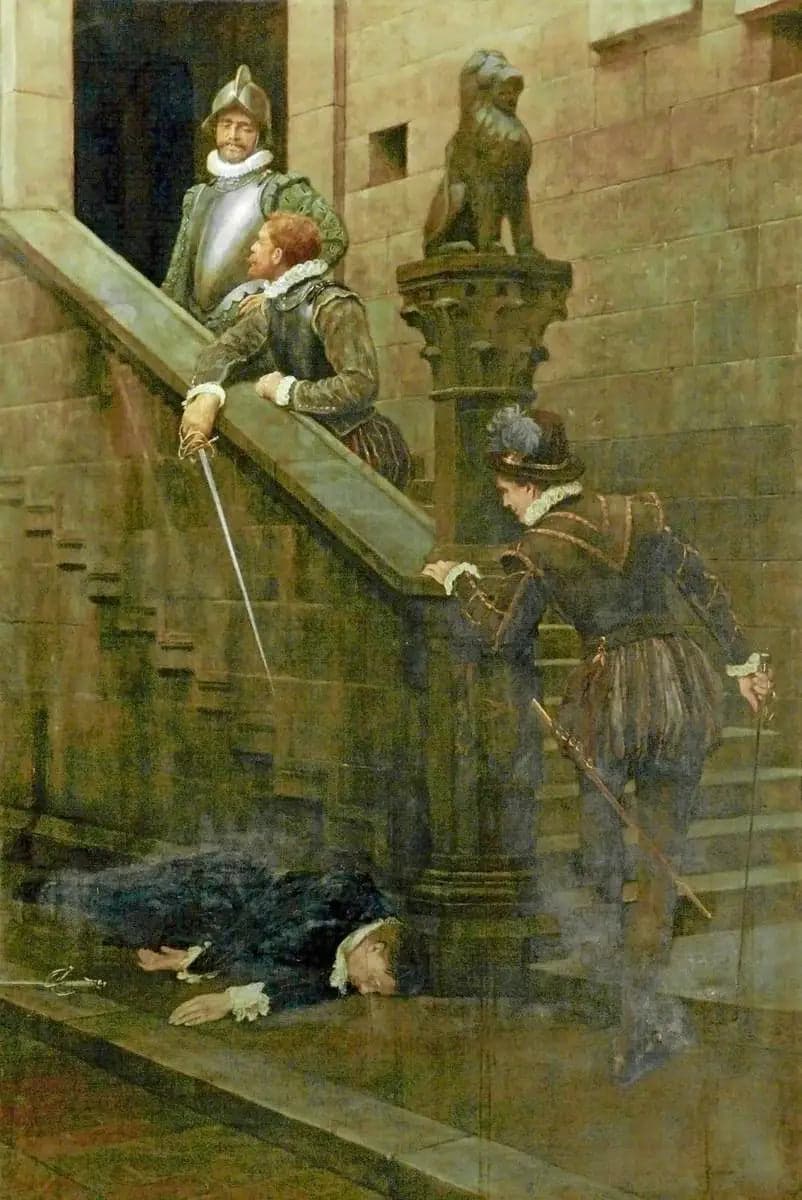
Vendetta by John Collier
Scene depicted
The canvas depicts the passionate drama of a woman mourning an act of vengeance. The role of human emotions, anger in the face of injustice, and the shadow of misery animate every brushstroke. This canvas whispers a story of love, pain, and tragic choices, capturing the intensity of a scene intertwined with tradition and modernity.
Historical context
Created in 1896, the painting “Vendetta” by John Collier finds its roots in Victorian London, a period when the image of drama and passion dominated the artistic landscape. This iconic work is linked to the Pre-Raphaelite movement, famous for its mystical themes and literary inspirations. Today, the canvas rests in a private collection, testifying to its timeless influence, with dimensions of approximately 97 x 129 cm.
Place in the artist's career
“Vendetta” marked an important milestone in the career of John Collier . It fits into the maturity period of his art, rising alongside his previous work “The Eve of Saint Agnes” and the ultimate “The Death of the Virgin.” The linear thread of light and themes of tragedy bind these paintings in a fascinating progression.
Anecdote
“Every masterpiece must vibrate with a soul.” It was in a quiet alley, with the distant noise of London at the time, that one spring morning, Collier allowed himself to be amazed by the tormented souls he wished to immortalize. This quest for emotional depth gives all its evocative power to the painting “Vendetta.”