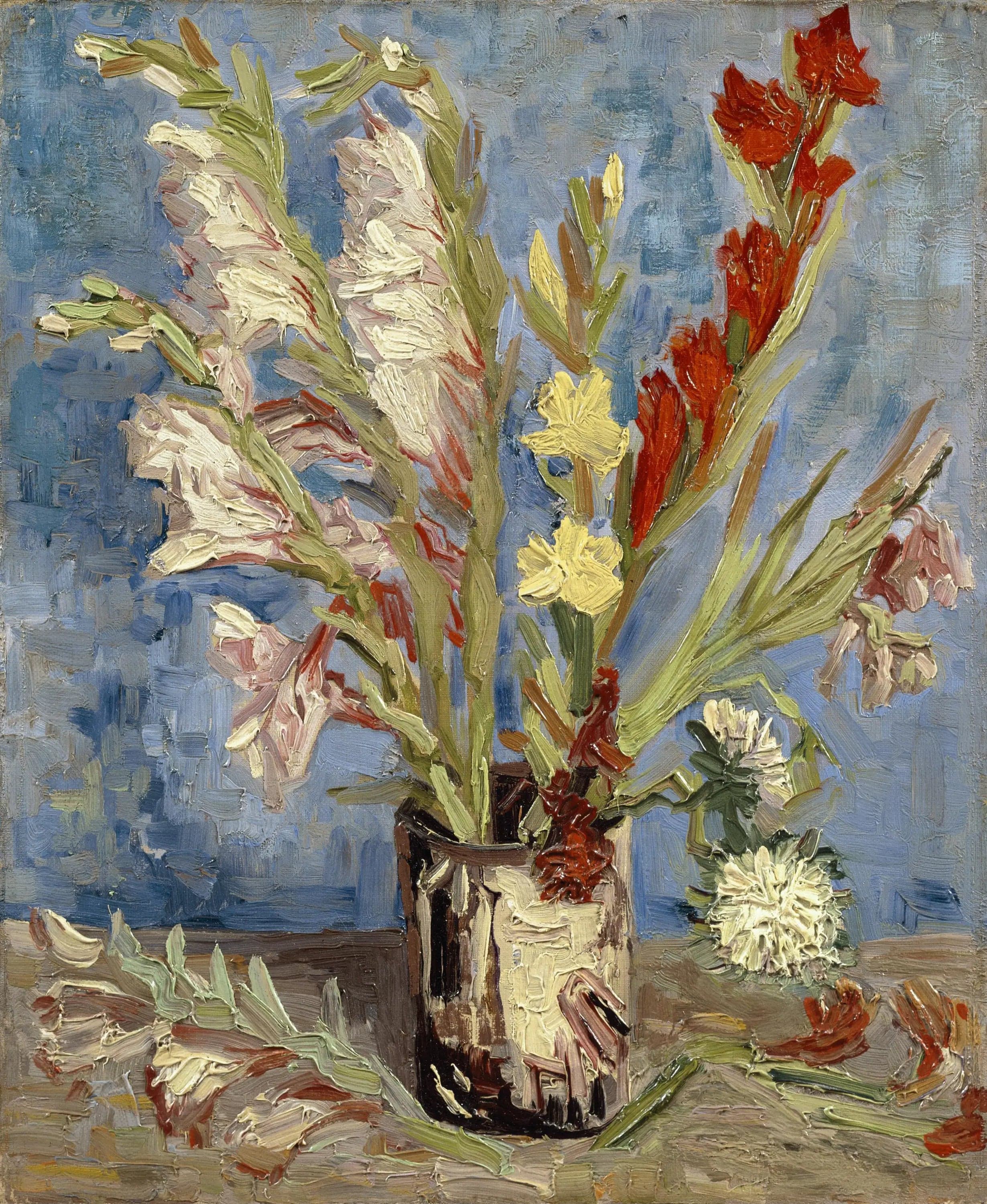
Vase with Gladioli and Chinese Asters
Scene depicted
The painting “Vase aux glaïeuls et asters de Chine” immerses us in a rich and vibrant floral composition, where the flowers stand proudly in their vase. The contrasting colors, from deep purple to pastel shades, create a captivating play of light that seems to dance on the canvas. This pictorial work conveys a poetic vision, revealing both the fragility and splendor of life.
Historical context
Created in 1886 in the vibrant city of Paris , this painting is emblematic of the Impressionist movement. Van Gogh, in search of expressing his unique vision, gives a living soul to this still life by celebrating the ephemeral beauty of flowers. The canvas is now preserved at the Van Gogh Museum in Amsterdam, measuring 38.5 x 46.5 cm, a size that invites introspection.
Place in the artist's career
This painting marks a pivotal moment in Van Gogh's career, illustrating his artistic evolution. Alongside The Sunflowers and The Arlésienne , “Vase aux glaïeuls et asters de Chine” testifies to a stylistic maturation, where emotions are expressed through bold brushstrokes and daring color palettes.
Anecdote
“Beauty lies in the simplicity of things.” This quote might resonate in Van Gogh's mind as he observes his garden one spring morning, passionately conceiving this masterpiece . Inspiration bursts forth from the vivid colors and dazzling textures of the gladioli and asters, revealing the intensity of a fleeting moment captured on his canvas .