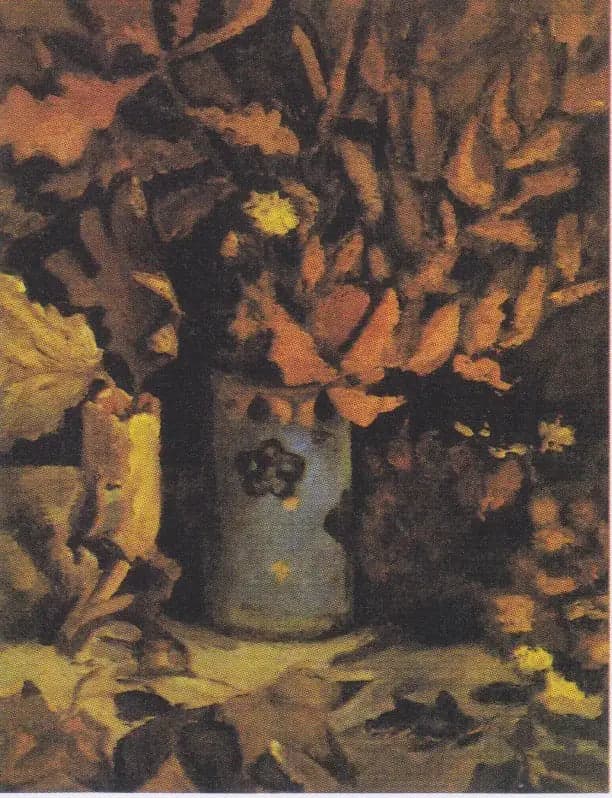
Vase with Dead Leaves
Scene depicted
This canvas captures the melancholy of a season where everything transforms. The dead leaves rest gracefully in a vase, symbolizing both the ephemeral beauty of nature and the inexorable cycle of life. The composition, though simple, invites reflection on the fragility of moments and the richness of the memories they carry.
Historical context
Created in 1884, in Nuenen , this painting belongs to the movement of realism , reflecting the quest for truth and beauty in everyday life. The canvas , now without a specific museum to host it, captures a time when Van Gogh sought to express emotion through simple objects of daily life. Its dimensions, 31 x 41.5 cm, transport the viewer into an introspective world, where every detail matters.
Place in the artist's career
The painting “Vase avec feuilles mortes” testifies to a period of maturation in Van Gogh's career. Following compositions like “ The Potato Eaters ” and “ The Starry Night ”, this work illustrates his evolution towards a more intimate and emotional approach to his art. By addressing everyday life with such poetry, Van Gogh gradually approaches the deepest truth of his existence.
Anecdote
“I believe that nature is a living painting, and every brushstroke is a confession of our soul.” These words from Van Gogh resonate as he imagines this masterpiece , inspired one fresh spring morning, observing fallen leaves, testifying to the ephemeral beauty of life.