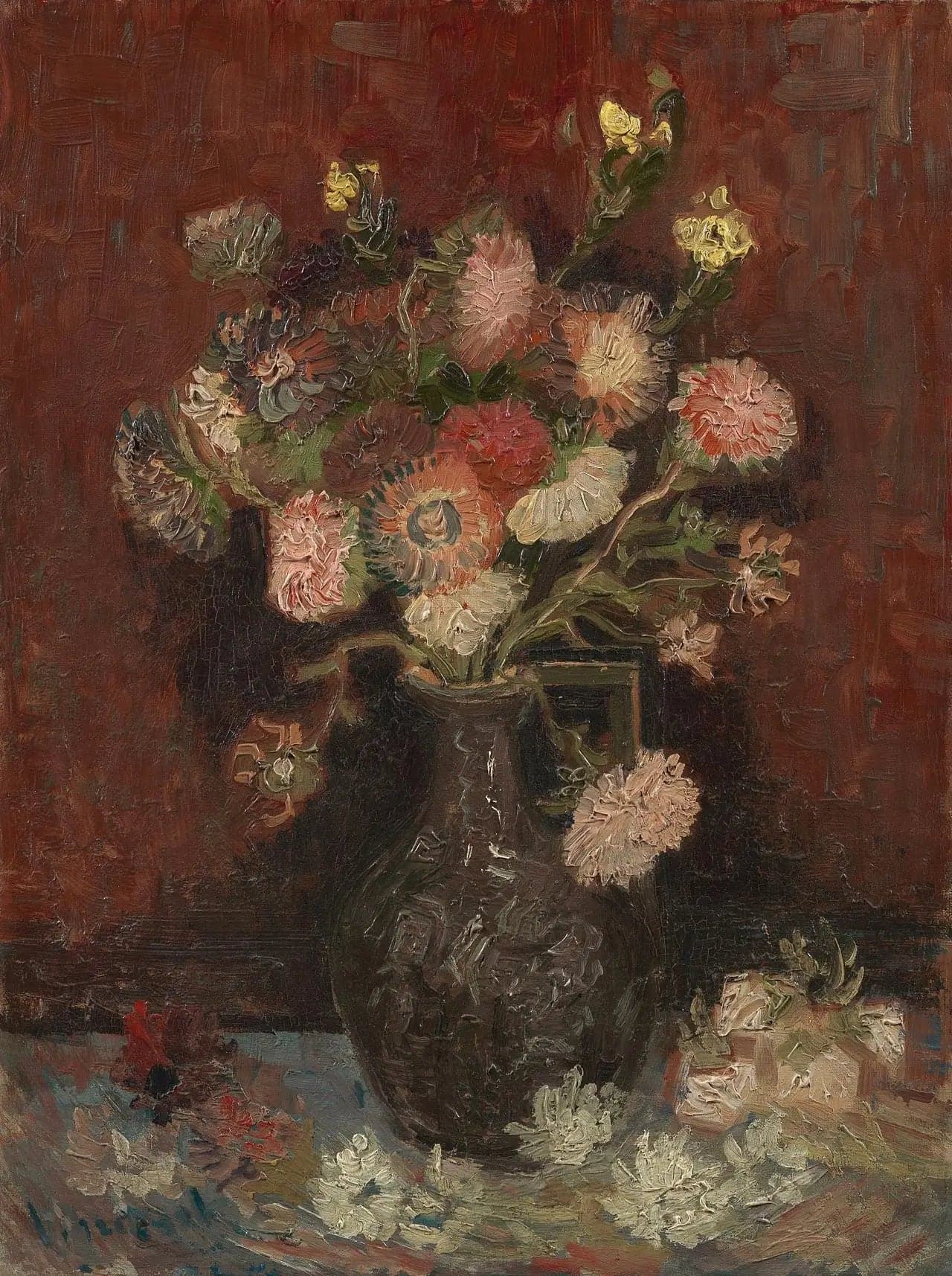
Vase with Chinese asters and gladioli
Scene depicted
In "Vase with Chinese Asters and Gladiolus," the canvas conjures a vibrant scene, where the delicacy of the flowers contrasts with the robustness of the vase. The asters, with their colorful brilliance, and the gladiolus, tall and proud, stand together in an explosive floral harmony. This painting captures the fleeting nature of beauty and the importance of celebrating each moment, like a sweet melody sung by nature.
Historical context
Created in 1886 in Paris , the painting "Vase with Chinese Asters and Gladiolus" is part of the Impressionist movement, reflecting an era marked by the quest for bright colors and light. This canvas is currently displayed at the Van Gogh Museum , where it attracts admirers in search of authentic beauty. Its dimensions, 46 x 61 cm, highlight the intensity of the composition while remaining accessible.
Place in the artist's career
"Vase with Chinese Asters and Gladiolus" represents a pivotal moment in Van Gogh's career. This canvas juxtaposes with other iconic works from his Parisian period, such as " The Night Café " and " Starry Night ", demonstrating an evolution in his use of color and light, moving from realistic representation to a more emotional abstraction.
Anecdote
"Nature is my best teacher," said Van Gogh. It was on a clear autumn morning, inspired by the soft light filtering through the windows of his studio, that he sketched the first lines of this masterpiece . The sight of the Chinese asters, vibrant with life, filled him with a creative energy, the resonance of which is captured in the painting itself.