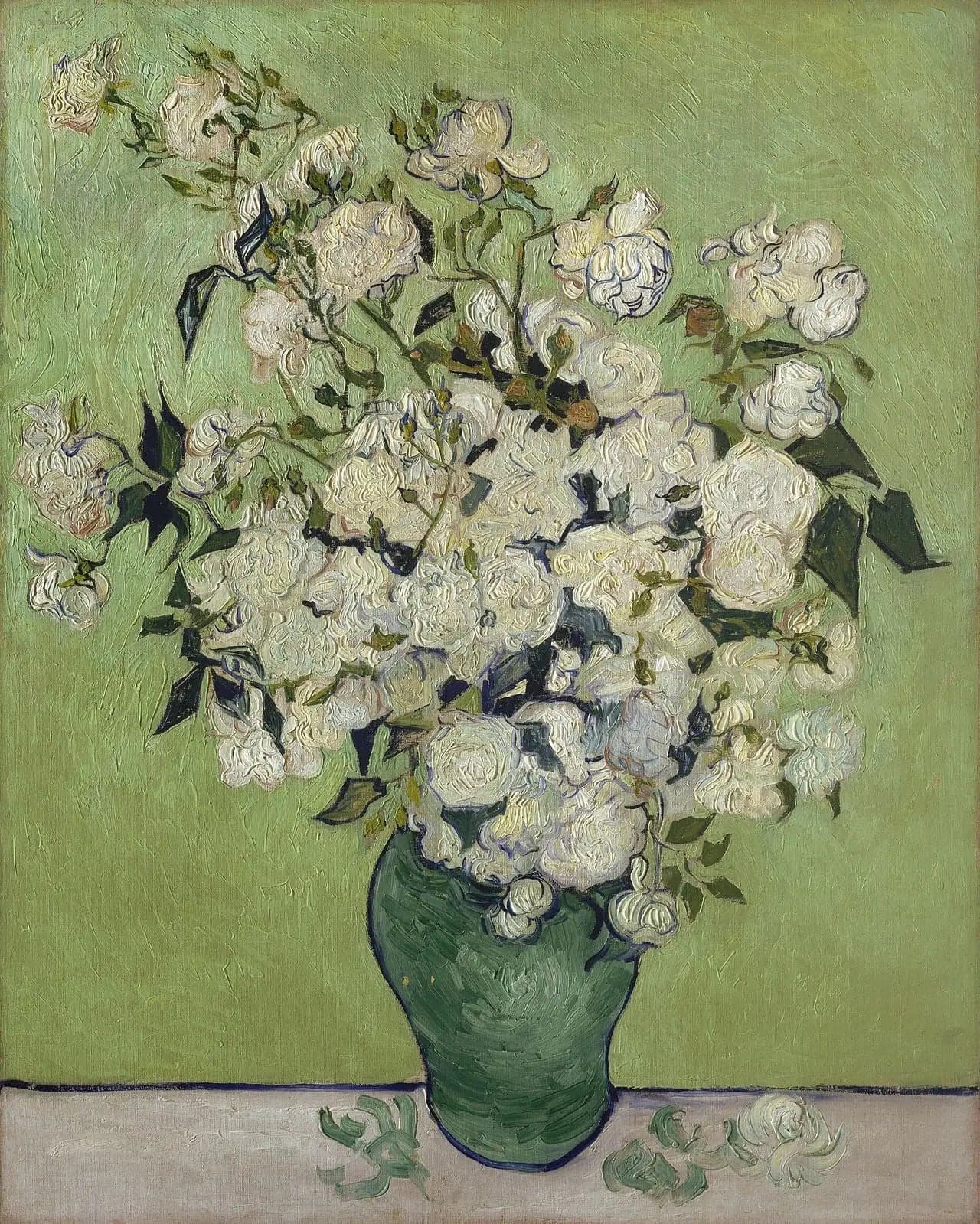
Vase of Roses
- Original dimensions
- 90 x 71 cm
- Museum
- National Gallery of Art
- Year
- 1890
Scene depicted
The painting “Vase of roses” illustrates a lush bouquet of roses in a vase, where each flower seems to vibrate with life. The space is joyful, bathed in light, and the composition reveals a harmony between nature and art. The artist managed to capture the fleeting beauty of these flowers , their brilliance celebrating life itself, at the heart of his creative universe.
Historical context
Created in 1890, in Saint-Rémy-de-Provence , this canvas is emblematic of the post-impressionist movement. This painting, now preserved at the National Gallery of Art , embodies Van Gogh's tireless quest to capture the essence of life through its vibrant colors and expressive touch.
Place in the artist's career
This painting represents a key moment in Van Gogh's career, marking a phase of deep introspection and artistic maturity. Alongside “The sunflowers ” and “ The Bedroom of Van Gogh ”, this painting reveals his evolution, both technically and emotionally. A poignant testimony to the artist's struggle against himself and the simplest beauty of nature.
Anecdote
“I wanted to immortalize the ephemeral beauty of roses, that precious moment when nature reveals itself” could have said Van Gogh, sitting in his garden one spring morning. It was this quest for eternity that drove him to paint this masterpiece , his hand coming alive with each brushstroke, as if to capture a breath of life.