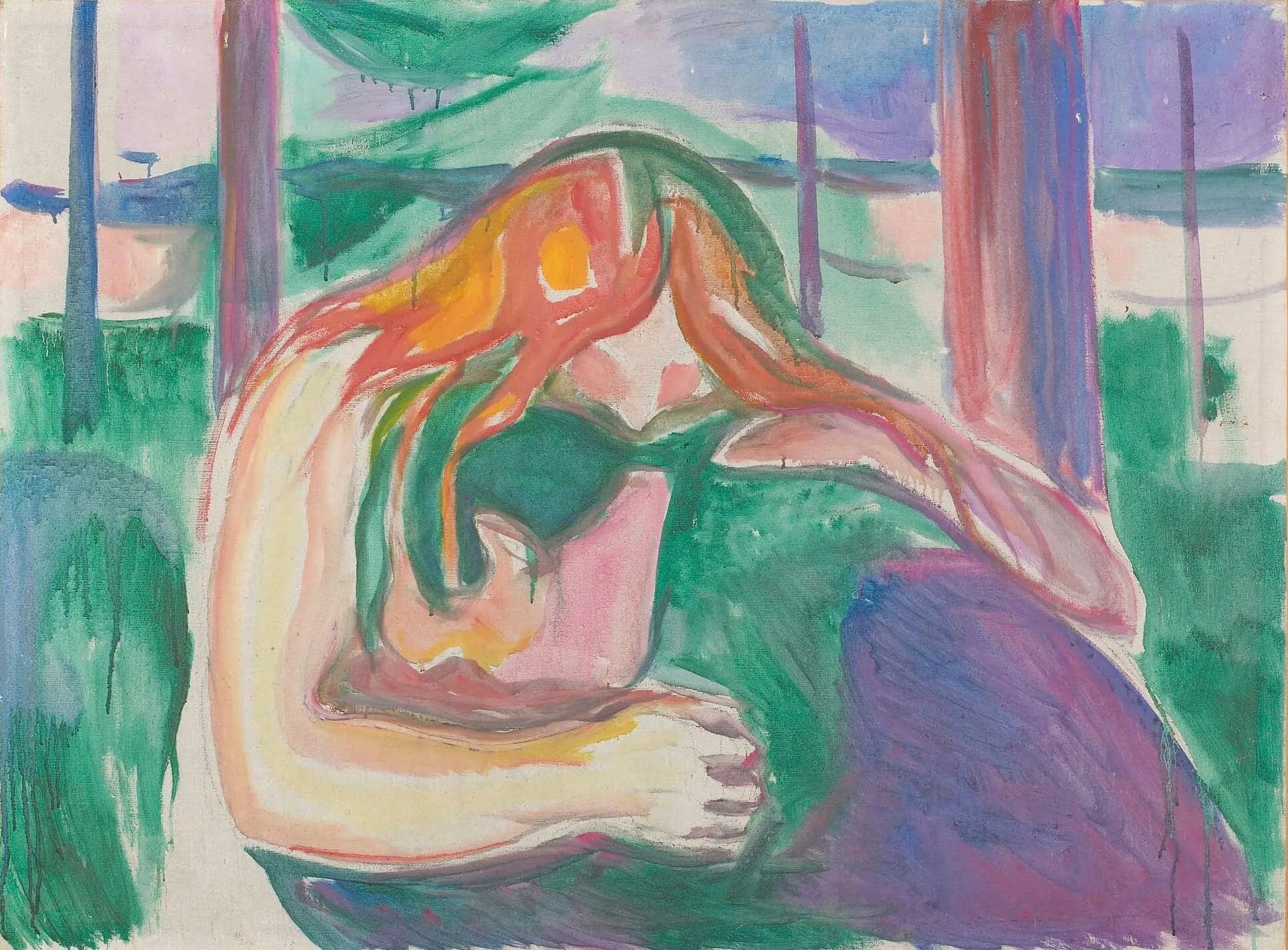
Vampire
- Original dimensions
- 37 x 27 cm
- Museum
- Not specified
- Year
- 1895
Scene depicted
The painting "Vampire" illustrates a poignant scene where a female figure embraces a man, kissing him with a disturbing, almost deadly fervor. Their faces come close in a hypnotic dance, conveying consuming passions and romantic dramas. The composition, rich in emotions, evokes a dark melancholy also present in other works by Munch, where love is tinged with suffering.
Historical context
Created at the end of the 19th century, in Oslo, this painting is emblematic of the expressionist movement that emerged in Norway. The era was marked by reflections on the human condition in the face of social turmoil and psychological upheaval. The canvas "Vampire" flourishes within a rich and complex artistic heritage, revealing the inner struggle of modern man. To this day, its precise location remains unknown, making the work even more mystical.
Place in the artist's career
"Vampire" marks a turning point in Munch's career, revealing his unique style influenced by expressionist trends. Alongside other works such as "The Madonna" and "The Scream," this painting reflects the artist's evolution towards an abstraction of emotional pain. It represents a peak in his quest to express the internal conflicts of the human soul.
Anecdote
Edvard Munch once confided: "In every painting, I seek a soul that I can make vibrate." This masterpiece , created on a misty evening, captures the essence of tormented love during an exciting encounter in a dark garden. Through this painting , he manages to merge his own tumultuous emotions with the intensity of human feelings.