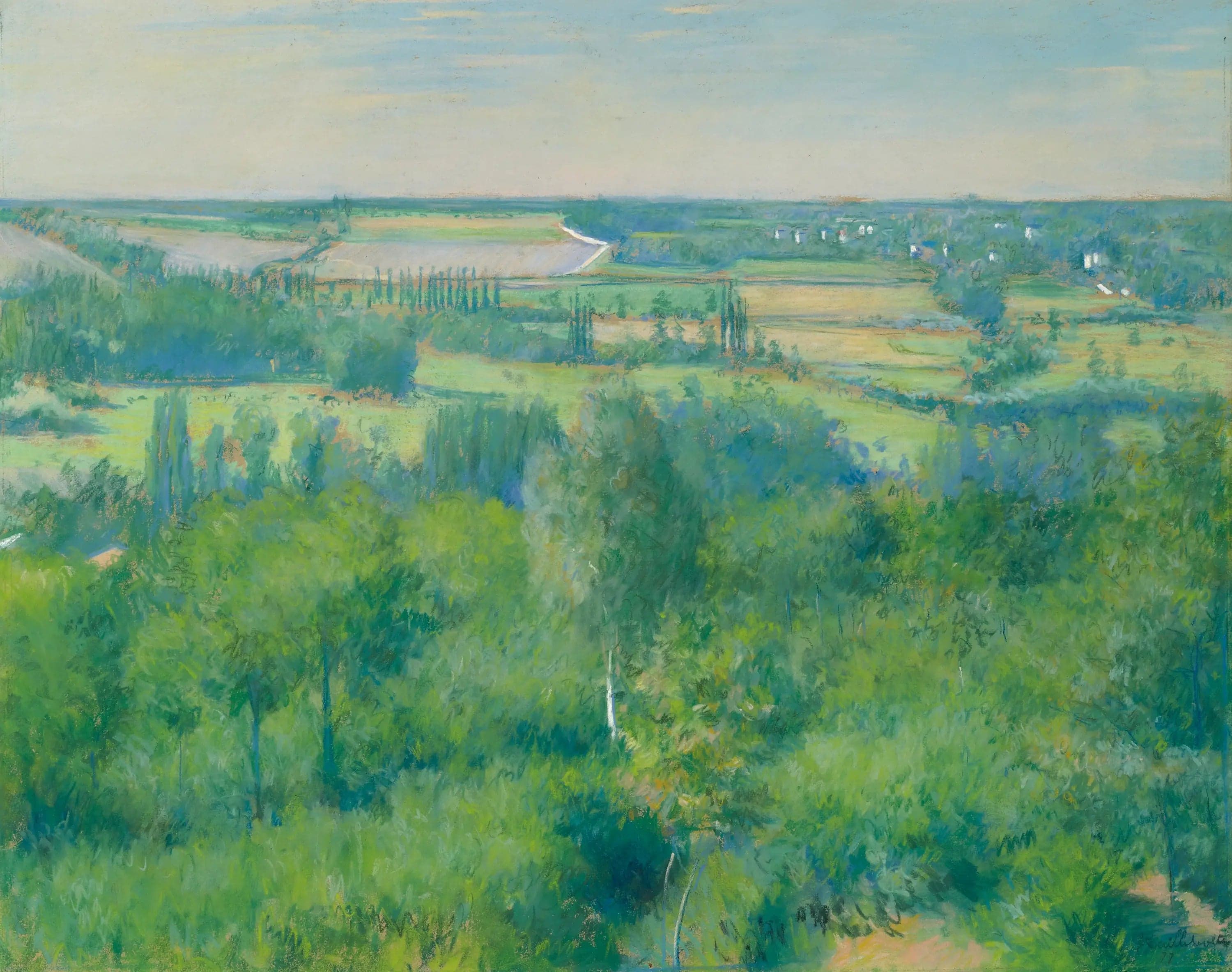
Valley of the Yerres
- Original dimensions
- 72 x 57 cm
- Museum
- Not specified
- Year
- 1877
Scene depicted
This painting represents a serene panorama where the river winding between the trees and the blue sky merge to offer an idyllic vision. The sparkling reflections on the water evoke a soothing freshness, while the lush greenery embraces a winding path, promising escape. Caillebotte, by capturing this scene, immerses us in an atmosphere of tranquility and contemplation, where every detail tells a story of simplicity and harmony.
Historical context
Created in 1877, the painting "Vallée de l'Yerres" is at the heart of impressionism , an artistic revolution that highlights the ephemeral beauty of nature. Located in Yerres, this iconic work captures the essence of a time when the urban scene and the dolce vita of the countryside meet in sublime harmony. The canvas is an invitation to dive into the tranquility of a lush landscape, a reflection of a moment frozen in time.
Place in the artist's career
"Vallée de l'Yerres" stands as an emblematic work in Caillebotte's career, marked by his desire to experiment with new perspectives. Alongside "Le Pont de l'Europe" and "Les Raboteurs de parquet," this painting testifies to his technical and stylistic evolution, blending realism and impressionist touches, leaving an indelible mark on the movement.
Anecdote
"The beauty of the world lies in its simplicity." These words resonated in Caillebotte's mind as he immortalized the landscape of the Yerres. One spring morning, he walked silently along the river, absorbing the brilliance of light filtered through the foliage. The painting , a reflection of this encounter with nature, then becomes the bearer of his deepest emotions, resonating with every brushstroke.