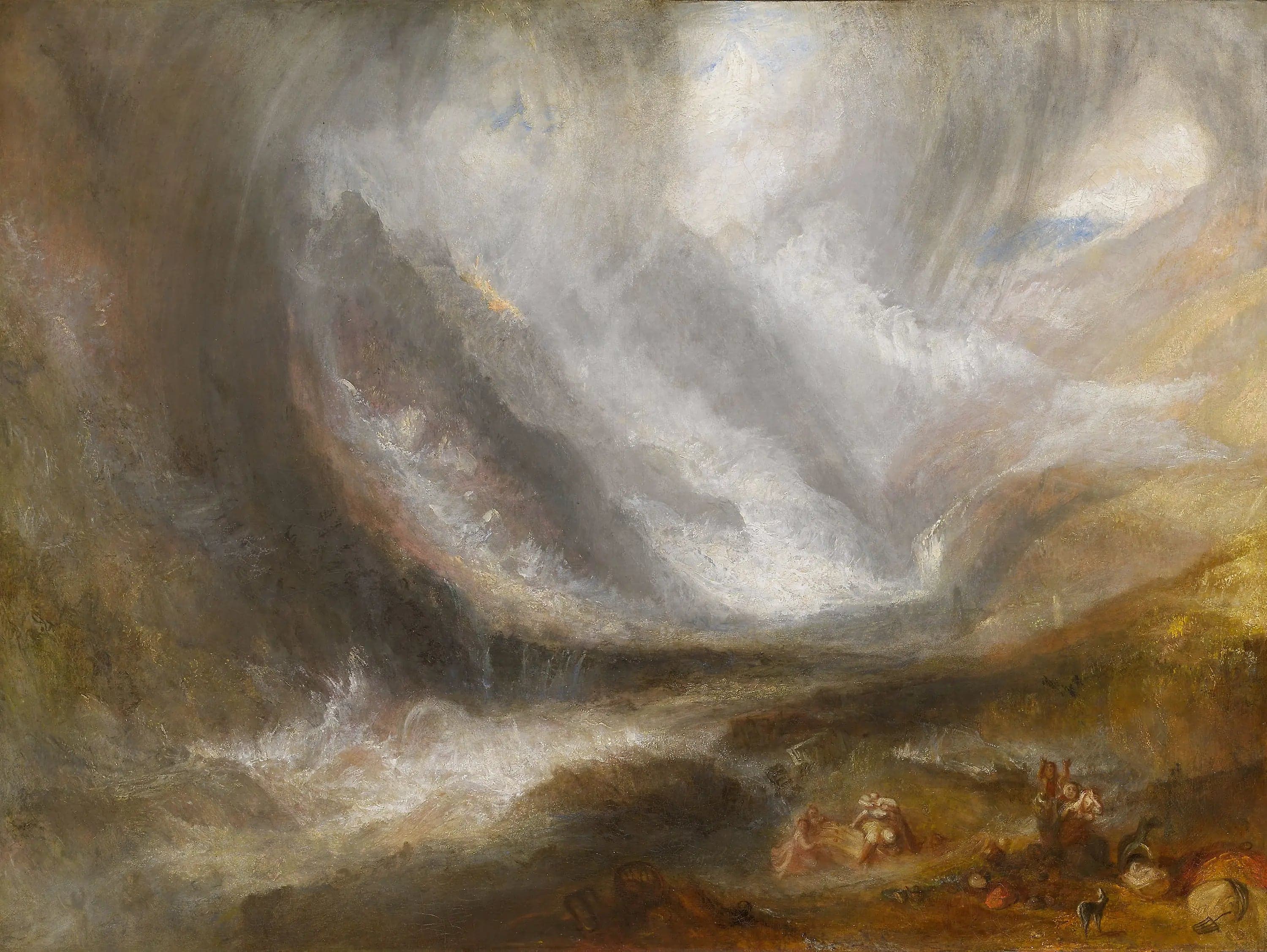
Valley of Aosta: Snowstorm, Avalanche, and Thunderstorm
- Original dimensions
- 123 x 92.2 cm
- Museum
- Art Institute of Chicago
- Year
- 1836
Scene depicted
The painting reveals a tumultuous scene: a storm rages, threatening to cause a devastating avalanche. The swirling shapes of the clouds mingle with lightning streaking across the sky, while the earth trembles under the cry of angry nature. This painting, rich in emotion, tells a story of intensity and grandeur, capturing the very essence of the alpine landscape subjected to the untamed forces of nature.
Historical context
Created in 1836, the painting "Valley of Aosta: Snowstorm, Avalanche, and Thunderstorm" by J. M. W. Turner is set in a fascinating romantic context. Located in the picturesque Val d'Aosta, this canvas evokes the mountainous landscapes of the Italian region. At a time when the romantic movement was rediscovering the power of nature, this painting stands out as an emblematic work. Currently, its brilliance resides within the famous Art Institute of Chicago where it delights art admirers. Its dimensions of 123 x 92.2 cm make it a composition that attracts the eye.
Place in the artist's career
“Valley of Aosta” represents a turning point in Turner’s career. Both a witness to natural beauty and an explorer of the whims of light and atmospheres, this painting is part of a period when the artist mastered innovative techniques. Comparing it to “The Fighting Temeraire” and “Rain, Steam and Speed” shows how he evolved from a realistic use of light to an almost spiritual interpretation of nature.
Anecdote
“I paint my dreams, capturing the invisible at the heart of a storm,” Turner might have said in a creative surge. Imagine him at the top of a mountain, immersed in a misty landscape, listening to the whisper of the gusts of wind. This moment of wonder and contemplation gave birth to this pictorial work , imbued with the brutal and sublime energy of the ephemeral.