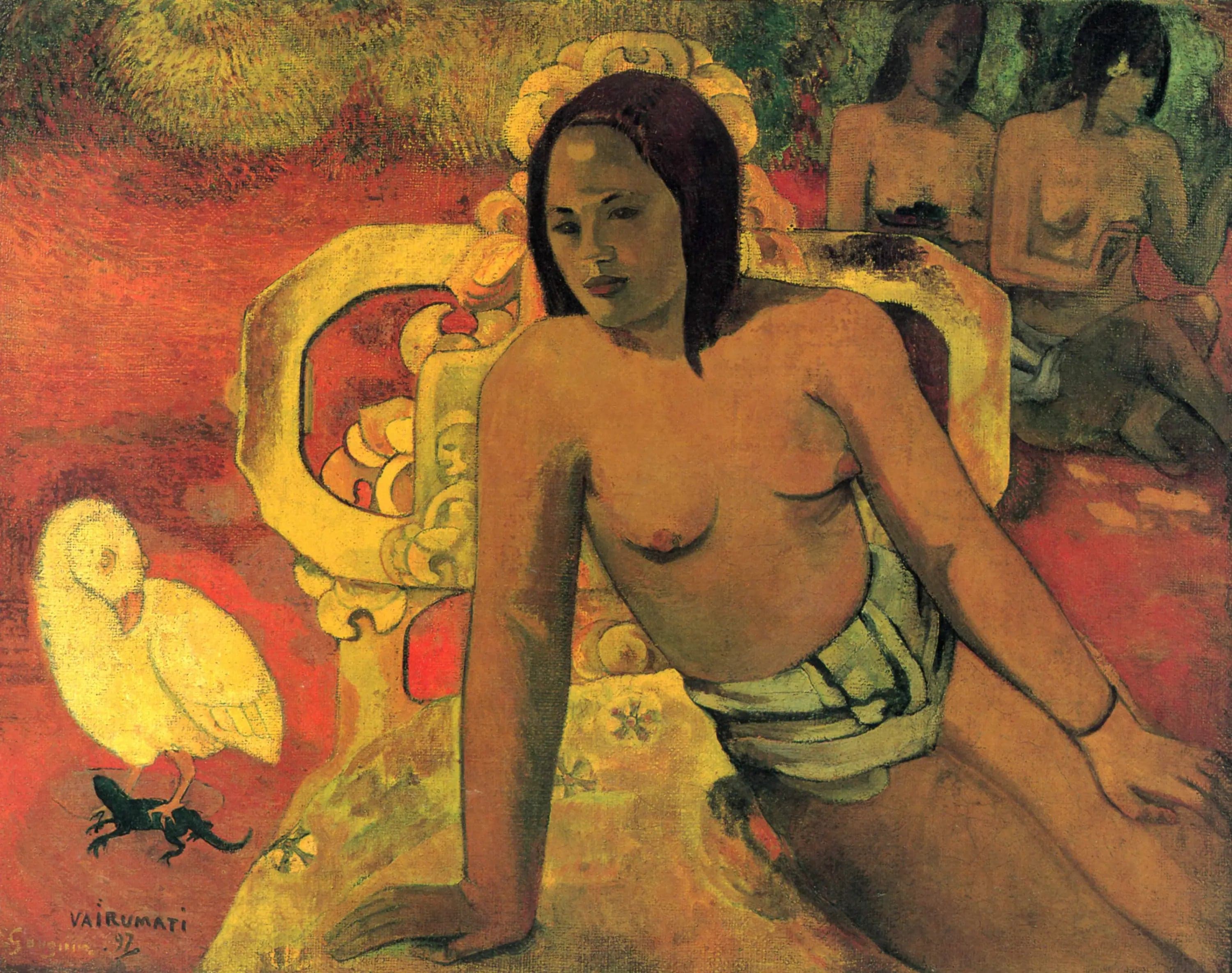
Vairumati
- Original dimensions
- 94 x 73 cm
- Museum
- Orsay Museum
- Year
- 1897
Scene depicted
In this painting , Gauguin represents Vairumati, a Tahitian woman. The dreamy gaze of this beautiful creature is a blend of wisdom and innocence. The vibrant background, illustrating the lush nature around her, contrasts with the depth of her expression. Every detail of this pictorial work reveals a dialogue between man and nature, a moment frozen between freedom and tradition.
Historical context
This painting is emblematic and was created in 1897 in Tahiti, during a period of great introspection for the artist. This painting, rooted in the post-impressionist movement, captures the essence of a reinvented world, far from European turmoil. Currently, the painting is housed in the Orsay Museum in Paris, where it continues to move visitors with its generous dimensions of 94 by 73 centimeters.
Place in the artist's career
“Vairumati” represents a decisive step in the career of Paul Gauguin . Positioned at the crossroads of his artistic experimentation, this painting follows significant works such as “The Yellow Christ” and “The Women of Martinique.” This painting testifies to the evolution of the painter, where bold palettes and introspective subjects reveal his rooting in the spirit of the places.
Anecdote
“Beauty is truth.” These words from Paul Gauguin evoke his intense desire to capture the purity of Tahitian life. On a soft morning fragrant with hibiscus flowers, the artist finds inspiration in the dazzling landscapes and serene faces of the island, giving birth to this masterpiece filled with light and color.