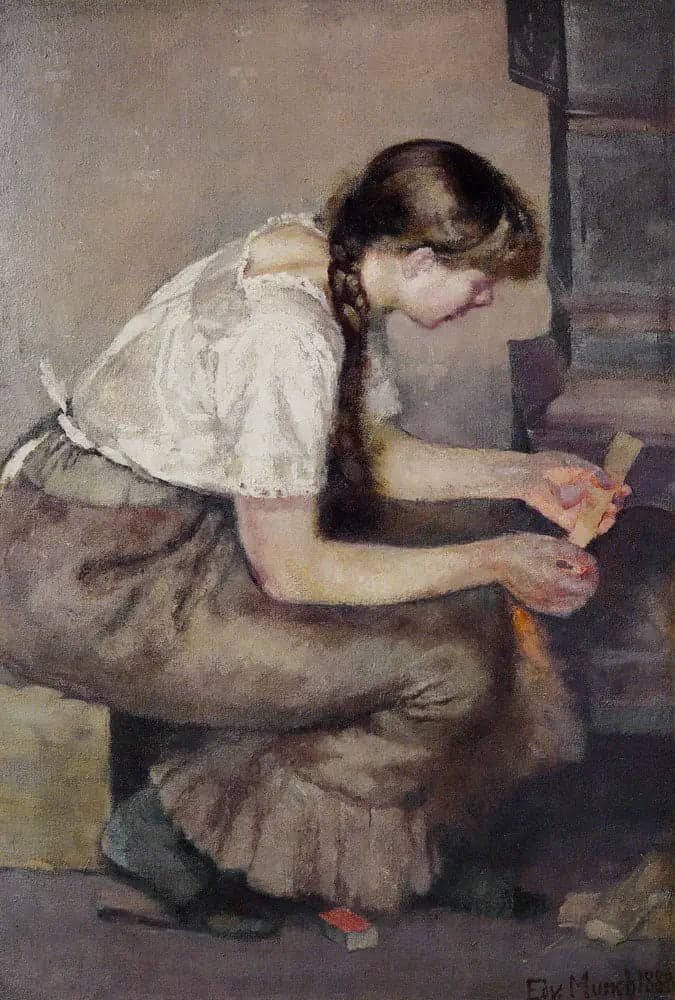
Until Morning
- Original dimensions
- 66 x 96.5 cm
- Museum
- Not specified
- Year
- 1883
Scene depicted
In Until Morning , Edvard Munch invites the viewer to a poetic introspection. The canvas represents a solitary figure lost in thought, emerging from a troubled night. The vibrant hues and stylized forms evoke the duality of human emotions, oscillating between melancholy and hope, while paying tribute to the fleeting beauty of dawn.
Historical context
Created in 1883, this painting is emblematic of the tumultuous artistic framework of the city of Oslo, then the capital of the Kingdom of Norway. Evoking the beginnings of the expressionist movement, Until Morning unfolds in an atmosphere that is both dark and luminous, a powerful reflection of the human soul in search of meaning. Although the current location of this canvas is not documented, its impact endures, testifying to a vibrant era of creativity and emotion.
Place in the artist's career
Until Morning marks a significant milestone in Munch's career, symbolizing a transition towards artistic maturity. Alongside The Scream and The Madonna , this painting offers insight into the evolution of his style and his exploration of complex themes related to love, loss, and existentialism.
Anecdote
“The morning light has always had a softness that enchants my senses,” said Munch, capturing the very essence of the inspiration for his masterpiece . It was in a peaceful alley in Oslo, amidst the sounds of the morning awakening and the sweet fragrance of spring flowers, that he found the motif for this pictorial work, symbolizing an inner quest for peace and escape.