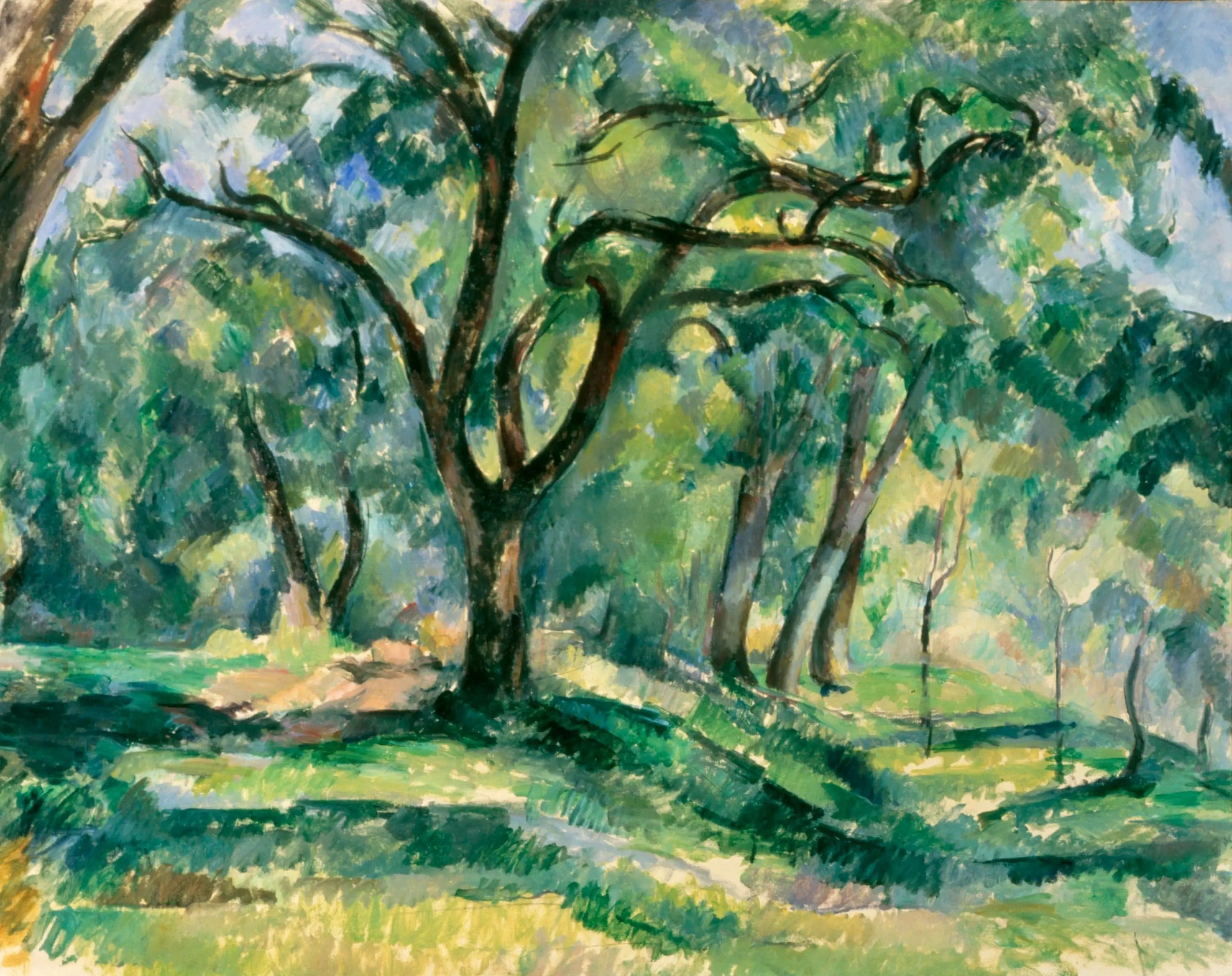
Underbrush
- Original dimensions
- 92 x 73 cm
- Museum
- Maison-Blanche
- Year
- 1890
Scene depicted
In this painting , Cézanne poetically immerses us in the heart of an underbrush, where light filters through the foliage. Shades of green intertwine, drawing a rich and vibrant landscape. The atmosphere is filled with the freshness of the morning, and each brushstroke reveals a story, that of a preserved natural world, intimately connected to the human soul.
Historical context
This painting emblematic, created in 1890, finds its roots in the heart of Provence in Aix-en-Provence, a city that witnessed the genius of Paul Cézanne . A prominent member of the Impressionist movement, Cézanne highlighted the fleeting beauty of underbrush through his canvas . Today, this painting is preserved in the Maison-Blanche museum, where it testifies to the artistic legacy of the time. The dimensions of this work, 92 x 73 cm, evoke a total immersion in nature.
Place in the artist's career
This painting fits into a pivotal period of Cézanne's career. As he navigated between Impressionism and Post-Impressionism , Underbrush reveals an evident artistic maturity. By comparing it to works like The Large Bathers and Mont Sainte-Victoire , one can discern an evolution towards a more pronounced abstraction, while preserving this connection with nature.
Anecdote
“I want to capture the peace of a moment, the fleeting beauty of an underbrush bathed in light.” Inspired by a morning walk in the Provençal forests, Cézanne captured the very essence of nature. The moment he set his gaze on the play of shadows and light led him to create this masterpiece , a testament to his deep connection with the earth.