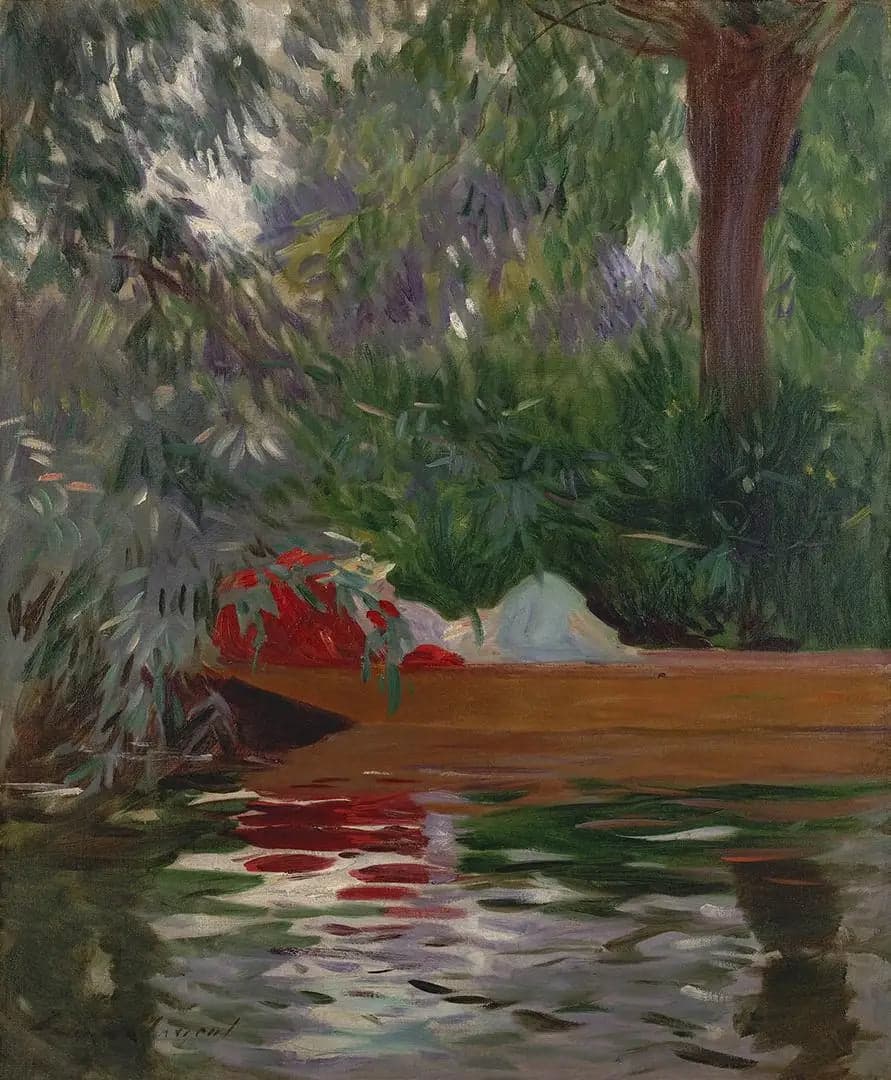
Under the Willows
- Original dimensions
- 55.9 x 68.6 cm
- Museum
- Nationalmuseum
- Year
- 1887
Scene depicted
The painting “Under the Willows” depicts an idyllic scene where light plays on the calm water, while weeping willows gracefully lean over. This painting evokes the tranquility of a summer afternoon, where the whisper of the wind in the leaves composes a soothing melody. The figures, enveloped in this natural setting, seem suspended in time, immersed in nostalgic contemplation.
Historical context
Created at the end of the 19th century, during the peak of the Impressionist movement, this painting is a vibrant testament to the exceptional talent of John Singer Sargent . Imbued with a subtle lightness, this canvas evokes a peaceful scene from the gardens of a European park. Today, this painting is displayed at the Nationalmuseum in Stockholm, where it continues to inspire visitors with its remarkable beauty.
Place in the artist's career
“Under the Willows” represents a pivotal moment in Sargent's career, marking his transition to an Impressionist mastery of light and color. Compared to works like “Carnation, Lily, Lily, Rose” and “El Jaleo,” this pictorial work reflects Sargent's journey towards greater stylistic freedom and palpable emotion in his works.
Anecdote
“Nature carries within it the breath of beauty,” Sargent might have said while contemplating a spring morning, when the idea for this masterpiece took root. The scene of visual poetry that unfolds in Under the Willows captures not only a fleeting moment but a pure emotion, that delicate essence felt at the heart of nature.