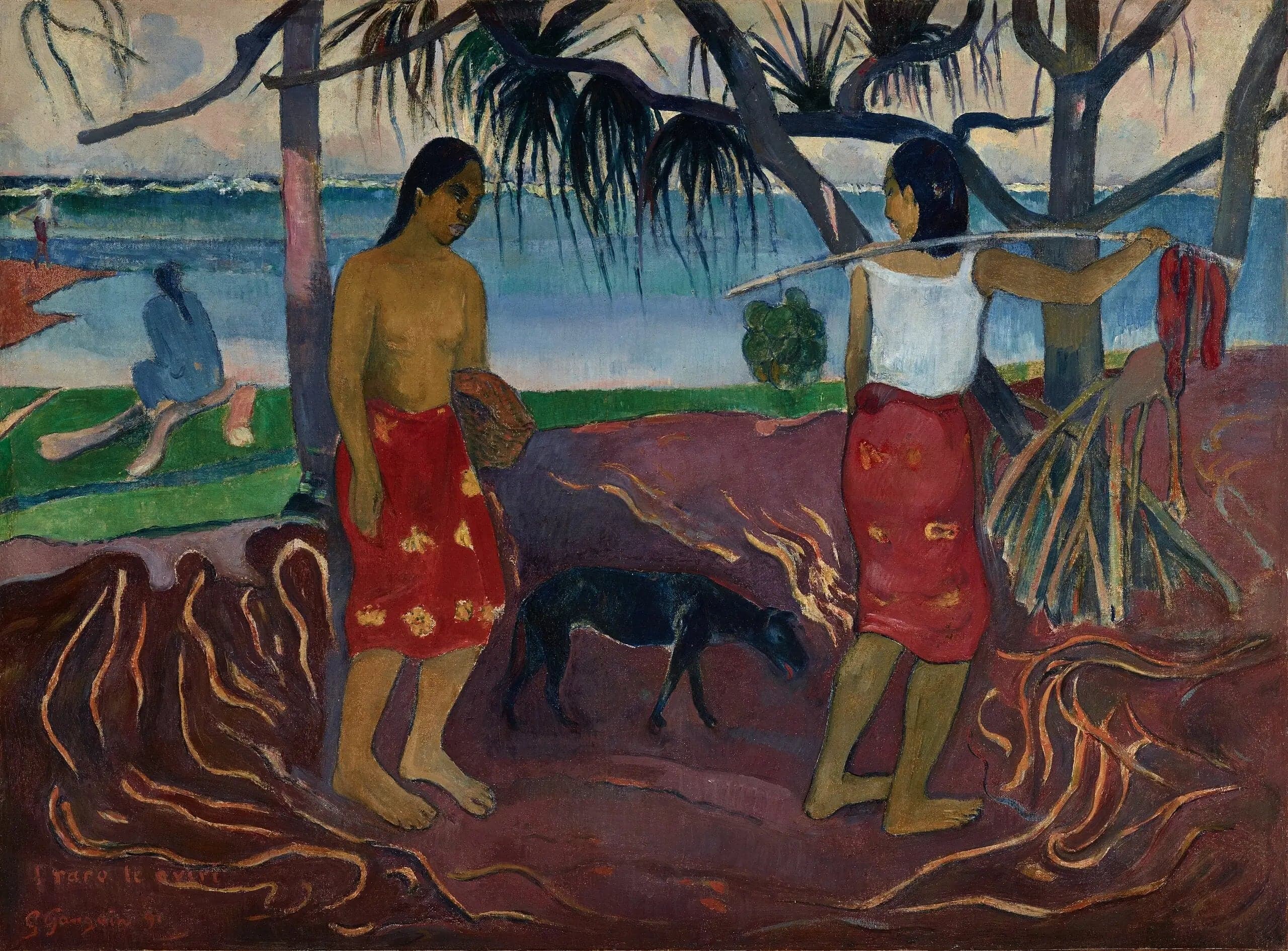
Under the Pandanus
- Original dimensions
- 90 x 68 cm
- Movement
- modern art
- Museum
- Dallas Museum of Art
- Year
- 1891
Scene depicted
In this iconic composition, Gauguin immerses us in the heart of Tahitian life, where serenity mingles with beauty. The sketched forms of women crossing under the lush foliage of the Pandanus evoke an intimacy laden with exoticism. Each brushstroke, each nuance of color tells a story, that of a vibrant culture and a lush nature, revealed by the magic of painting .
Historical context
This painting , a true emblem of modern art, was created in 1891 on the paradisiacal island of Tahiti. During his stay on this land with breathtaking landscapes, Gauguin drew inspiration from the raw beauty and vibrant colors that surrounded him. Today, this canvas is located at the Dallas Museum of Art , where its brilliance continues to captivate visitors.
Place in the artist's career
Under the Pandanus represents a turning point in Gauguin's career. This canvas is part of his Tahitian period, marked by a search for simplification and color. It dialogues with other works such as The Vision of the Farm and La Orana Maria , showing both technical and emotional evolution, crystallizing his quest for the "primitive".
Anecdote
“I set out in search of authenticity, where the soul is liberated.” This quote perfectly summarizes Gauguin's artistic quest. It was on the morning of a sunny day, under the soothing shade of a Pandanus, that he found inspiration for this masterpiece . The gentle murmur of the waves and the floral scents of the surrounding nature shaped the emotion that fills this pictorial work .