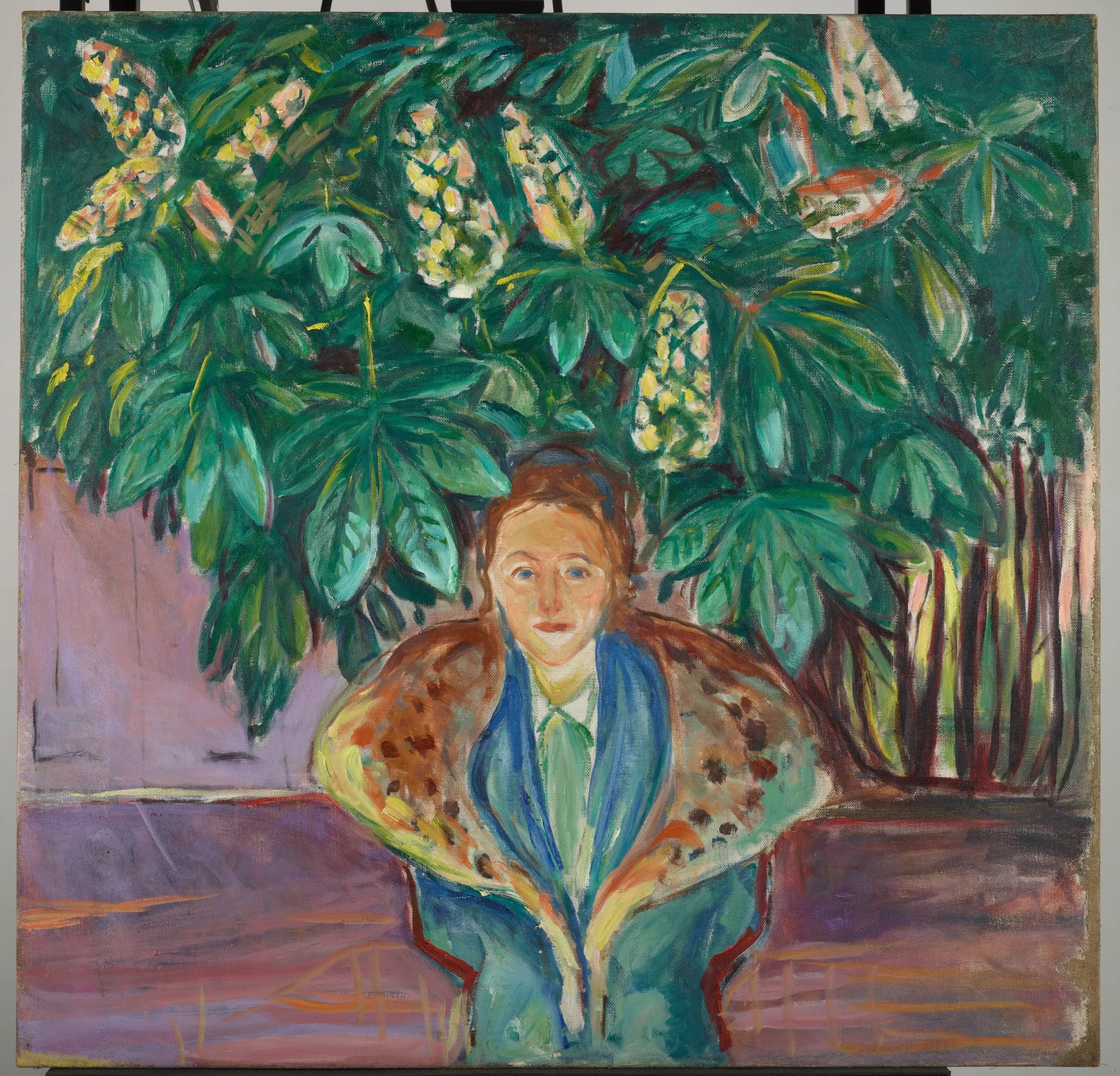
Under the Chestnut Tree
- Original dimensions
- 119.5 x 116.5 cm
- Museum
- Munch Museum
- Year
- 1937
Scene depicted
The scene depicted in “Under the Chestnut Tree” reveals a moment of introspection, where an individual sits peacefully in the shade of the imposing tree. The artist invites the viewer to reflect on the relationship between man and nature, on the silent dialogue we maintain with our environment. The shapes and colors vibrate in harmony, paying tribute to this spiritual connection.
Historical context
Created in 1937 in Oslo, this canvas is emblematic of the symbolist movement dear to Edvard Munch . At that time, the artist, influenced by his personal experiences, explores universal themes such as solitude and nature. The painting , now displayed at the Munch Museum, reflects a moment of intense creativity where light and shadows intertwine to evoke deep emotions.
Place in the artist's career
Placed there, at a turning point in his career, “Under the Chestnut Tree” testifies to an increased artistic maturity. This painting comes after major works such as “The Scream” and “The Madonna,” marking a return to more peaceful themes after the turmoil of an intense period. Each painting collaborates to outline the emotional evolution that defines Munch's work.
Anecdote
Edvard Munch once stated: “Nature is for me a confidant that whispers my most intimate emotions.” In the freshness of a spring morning, as he settled under a chestnut tree, he drew inspiration for this painting , capturing the thrill of a breath of wind, the rays of sunlight filtering through the leaves. This aura is palpable in every brushstroke of the composition .
Major exhibitions
Munch og Ekely: 1916-1944