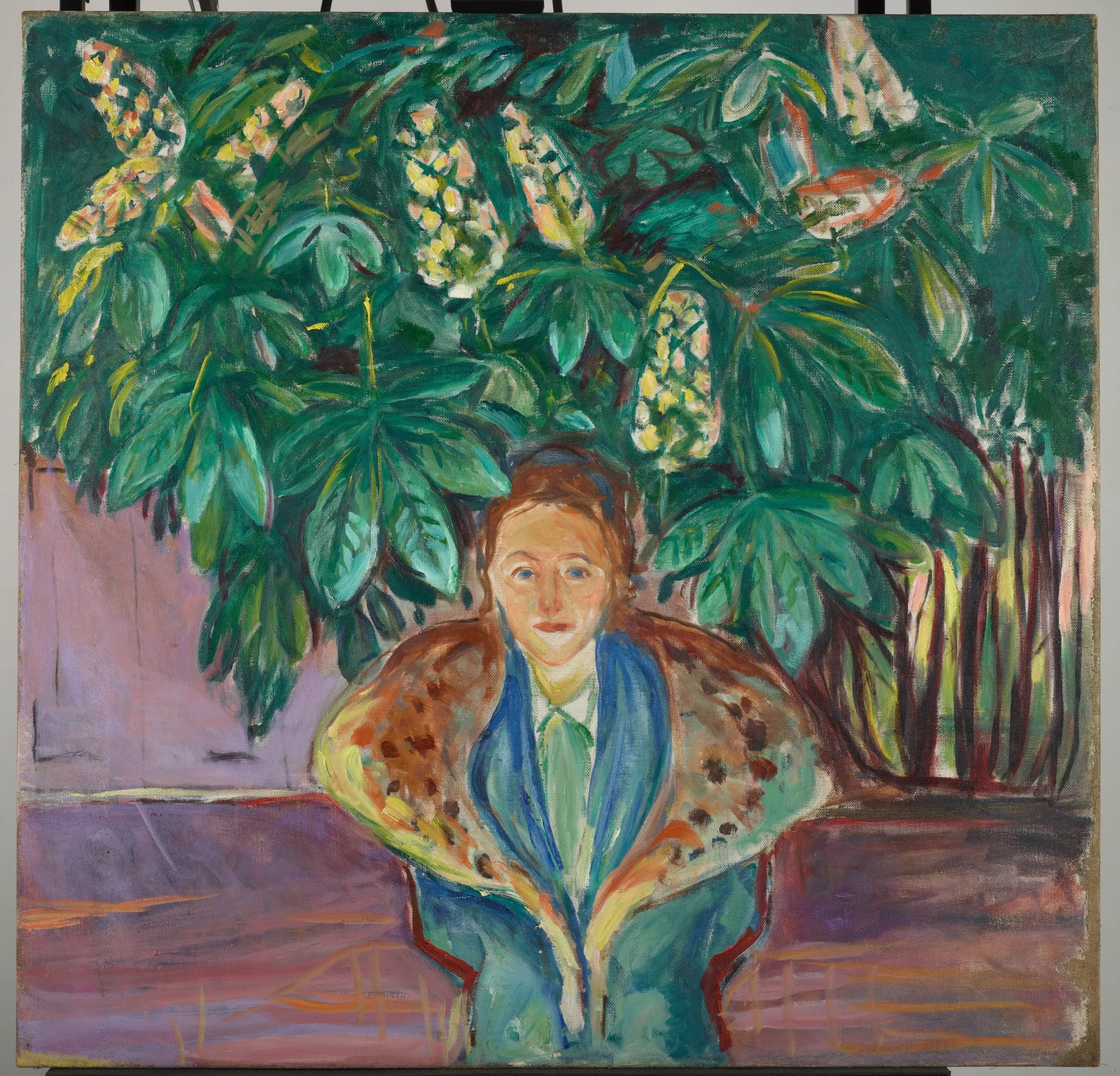
Under the Chestnut Tree
- Original dimensions
- 60 x 70.5 cm
- Museum
- Munch Museum
- Year
- 1937
Scene depicted
In the painting Under the Chestnut Tree , Munch depicts a suspended moment under the majestic branches of a chestnut tree, where two figures attempt to discover the depth of their feelings. The scene, imbued with mystery, resonates with an atmosphere that is both nostalgic and serene, evoking the beauty of human relationships intertwined with nature. The composition invites any patient soul to enter into this dialogue of light and shadow, witnessing the emotions subtly captured by the artist.
Historical context
Created in 1937, the painting Under the Chestnut Tree is part of the symbolist movement that characterizes the work of Edvard Munch . This pictorial work finds its roots in Oslo, Norway, a context enriched by the upheavals and tensions of the time, both social and intellectual. Currently, this painting is part of the collection of the Munch Museum, where it continues to evoke vivid emotions and poignant memories.
Place in the artist's career
Under the Chestnut Tree is situated at a pivotal moment in Edvard Munch 's career, where he consolidates his unique style. This painting echoes other memorable compositions such as The Scream and Madonna , illustrating a trend towards a deeper exploration of human emotion, enriched by constantly evolving pictorial techniques.
Anecdote
“Nature tells stories that we must listen to,” said Munch, drawing inspiration from every moment of his life. It was on a summer morning, while contemplating a century-old chestnut tree, that he captured the essence of a human encounter, delicate and intimate. This moment is reflected in the evocative power of Under the Chestnut Tree , where each shape and color vibrates with authentic emotion.
Major exhibitions
Edvard Munch and his models: 1912-1943