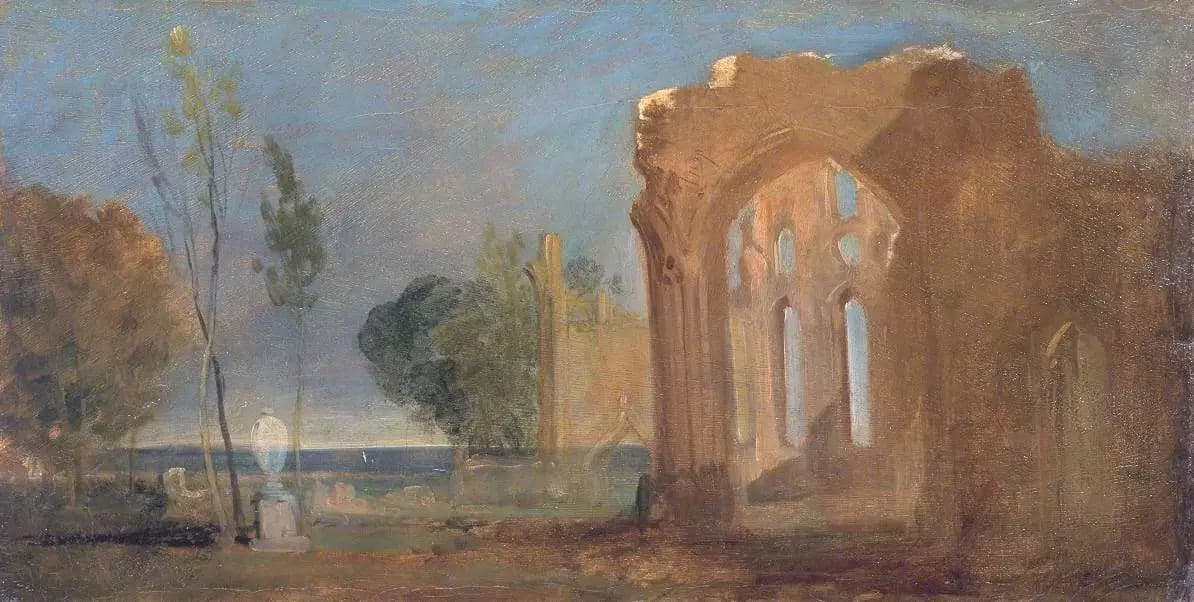
Tynemouth Priory
- Original dimensions
- 31.8 x 61 cm
- Museum
- Tate
- Year
- 1822
Scene depicted
The painting "Tynemouth Priory" illustrates the majestic ruins of this historical monument, emerging from the tumultuous waves of the North Sea. The scene captures both the fragile beauty of Gothic architecture and the oceanic vastness that surrounds it, testifying to the interaction between man and nature. The viewer's gaze is drawn by the play of light on the crests of the waves, while the building seems to vibrate under the breath of the wind.
Historical context
Created in 1822, the painting "Tynemouth Priory" is located in Tynemouth, a village steeped in history on the northeast coast of England. This canvas magnifies the romantic movement that characterizes Turner's work, an artist whose sensitivity to light and landscape is unparalleled. Currently exhibited at the Tate museum, this painting , measuring 31.8 by 61 cm, immerses us in the heart of historical England.
Place in the artist's career
This painting symbolizes a crucial step in Turner's career, marking a stylistic fluidity characteristic of his artistic maturity. Alongside it, "The Fighting Temeraire" and "Rain, Steam and Speed" reveal the evolution of his approach, both technically and emotionally, where light becomes a character in its own right in each of his pieces.
Anecdote
"Nature inspires me: I paint what I feel before what I see," Turner might have declared one morning as he stood facing the sea, observing the ruins of Tynemouth. This fleeting moment, marked by the sweetness of the spring air and the song of the waves, would have infused his masterpiece with an unmatched emotional depth, touching the soul of every viewer.