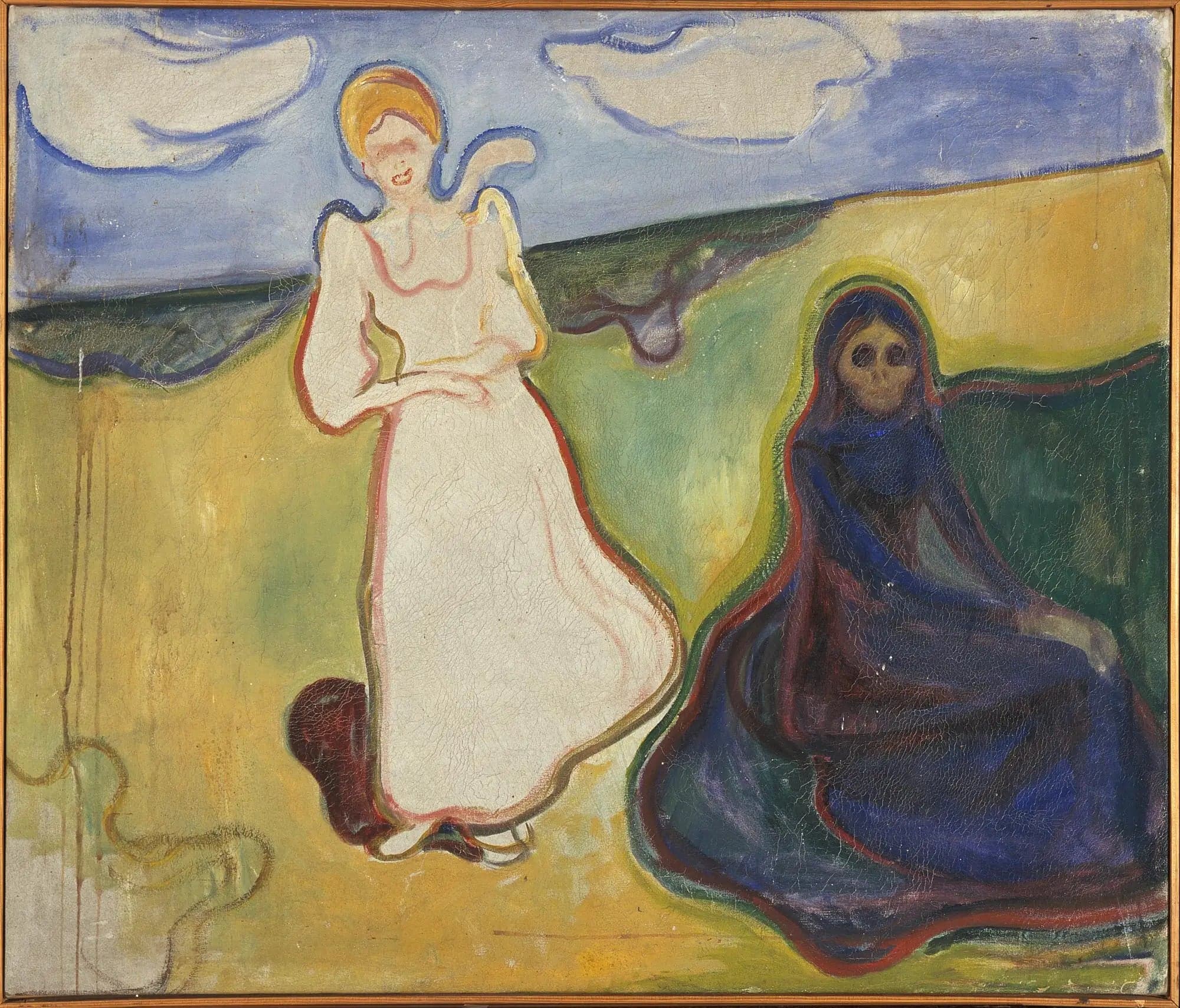
Two Women in a Landscape
- Original dimensions
- 90 x 76 cm
- Museum
- Munch Museum
- Year
- 1897
Scene depicted
In this painting , Munch offers us a poetic vision of the interaction between women and nature. The two female figures, enveloped in a lush landscape, seem in communion with their environment. The soothing movements of the trees, the undulation of the grass, all sing the sweetness of existence while suggesting a depth of soul. This subtle composition captures the essence of life, oscillating between the palpable and the dream.
Historical context
Created in 1897, this painting emblematic of Edvard Munch finds its roots in Oslo, Norway, within the expressionist movement. At that time, Edvard Munch intensely explored themes of solitude and human emotion, thus placing himself in a decidedly modern and introspective period. The painting is now preserved in the Munch Museum, where it continues to captivate visitors with its emotional depth and unique aesthetics.
Place in the artist's career
“Two Women in a Landscape” is situated at a turning point in Edvard Munch's career. Created during a period of undeniable artistic maturity, it solidifies his stature as a pioneer. Following this painting , he explored works such as “The Scream” and “The Madonna,” two paintings emblematic that further deepen his exploration of human emotions and psyche.
Anecdote
“Art is life expressing itself,” Munch said when discussing his inspirations. One spring morning, while walking in the hills of Oslo, lost in the landscape, he encountered the serene faces of two women, symbols of the tranquility and harmony that surrounded him. It was this fleeting moment, bathed in light and floral fragrance, that inspired this masterpiece , a delicate emanation of his inner quest.