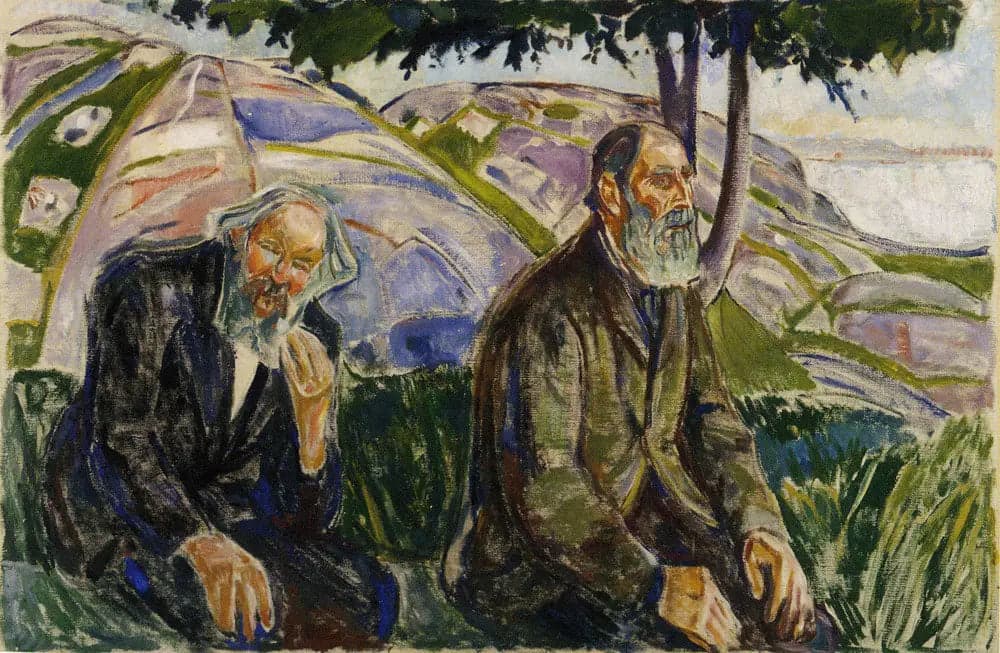
Two Old Men
- Original dimensions
- 200 x 130 cm
- Museum
- Waldemarsudde
- Year
- 1910
Scene depicted
The main characters of the painting , two old men, are frozen in silent contemplation, lost in their thoughts. Their interior reveals a wealth of emotions and a dramatic charge that transcends time. The composition captivates with the palpable tension between the figures, underscoring the inexorable passage of time and the quest for meaning in the solitude of existence.
Historical context
Created in 1910, the painting emblematic of Edvard Munch , "Deux Vieux Hommes", immerses the viewer in the charged atmosphere of early 20th century Norway. A poignant reflection of the human concerns of the time, it is an integral part of the expressionist movement, highlighting inner struggles and emotions. Currently exhibited at the Waldemarsudde museum in Stockholm, this majestic canvas of 200 x 130 cm captures attention through the depth of its subject.
Place in the artist's career
"Deux Vieux Hommes" is situated at a pivotal moment in Munch's career, illustrating a period where his style asserts itself. Compared to other works such as "The Scream" and "The Madonna", one perceives an evolution in his way of treating the expression of feelings. This canvas places him at the peak of his emotional exploration, moving from universal anxiety to a deeper personal introspection.
Anecdote
Edvard Munch once said: "The painting comes from the soul, it must convey the truth of our deepest emotions." This phrase awakens with every brushstroke in the misty climate of a spring morning, as he encounters emaciated faces filled with stories. It is in this fleeting moment that Munch drew inspiration for his masterpiece , revealing the power of human vulnerability.