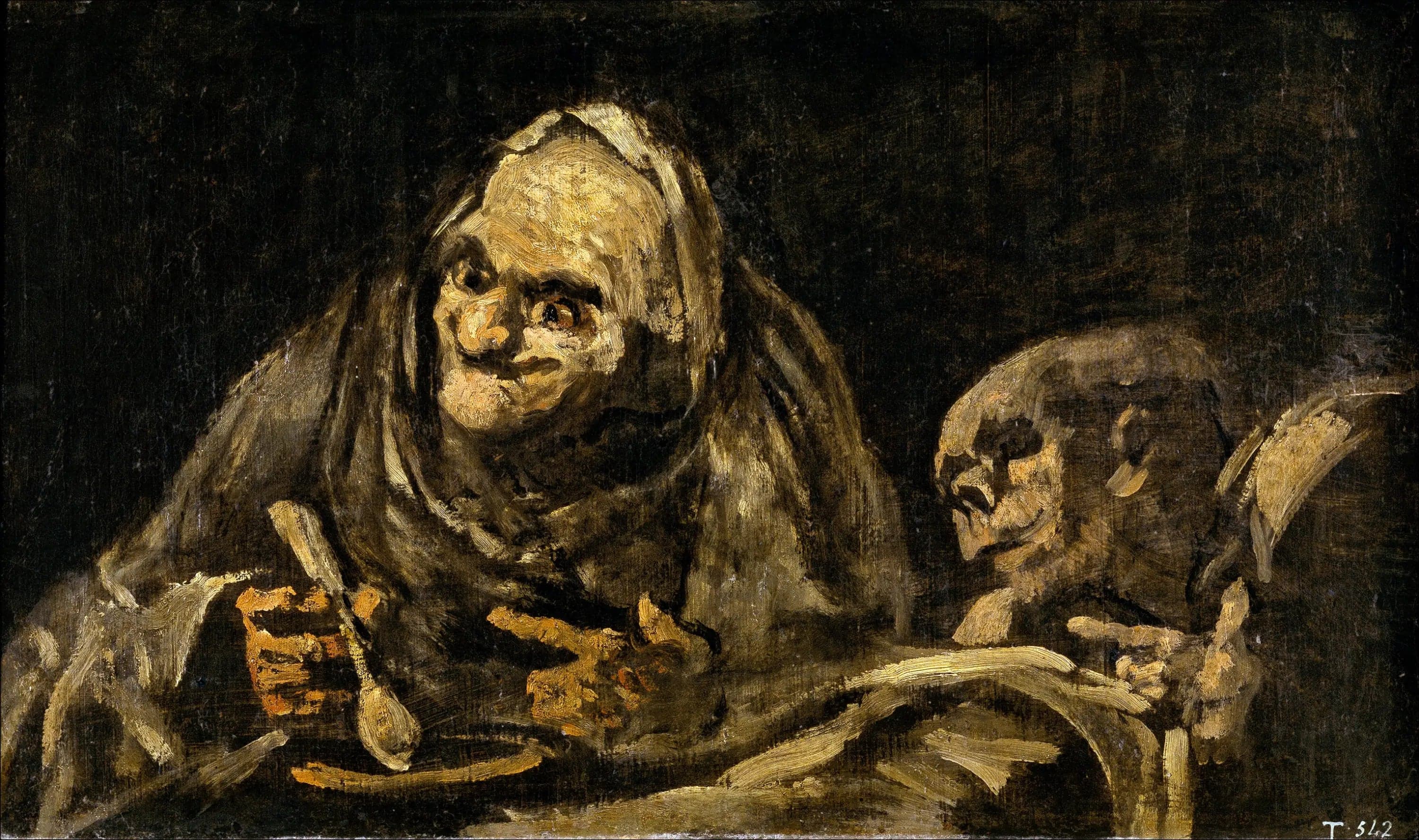
Two Old Men Eating Soup
- Original dimensions
- 83.4 x 49.3 cm
- Museum
- Prado Museum
- Year
- 1820
Scene depicted
In this painting , Goya depicts two old men, their faces marked by time and experience. They share a simple meal, a symbol of their unbreakable bond, revealing the dignity of life in its most elementary form. The soft light illuminating their features highlights the depth of their thoughts, making this painting a tribute to life and its inexorable cycle.
Historical context
Created in 1820, this painting reflects a time when Spain was seeking to define its artistic identity. Located in Madrid, at the heart of a rapidly changing Europe, this canvas perfectly summarizes the romantic movement, which debates its roots between rationalism and the expression of emotions. Today, this painting is carefully preserved in the Prado Museum, a sanctuary for art where the dimensions of the work, 83.4 x 49.3 cm, emphasize its intimacy while evoking the power of the themes addressed.
Place in the artist's career
Two Old Men Eating Soup represents a pivotal period in Goya's career, symbolizing his transition to a more introspective style. This masterpiece anticipates iconic works like The Four Seasons and The Mills of Quijote , where he further explores themes of humanity and the human condition, thus imparting a palpable emotional strength to his paintings .
Anecdote
"I have always sought the truth in every canvas I paint." These words from Goya could apply to Two Old Men Eating Soup , a painting inspired by scenes of daily life where humanity reveals itself in its simplicity. Imagine this moment of peace as you watch the two old men nourish themselves, leaving behind the turmoil of the outside world. It is this contrast that makes this work so poignant, adding depth and emotion to the composition.