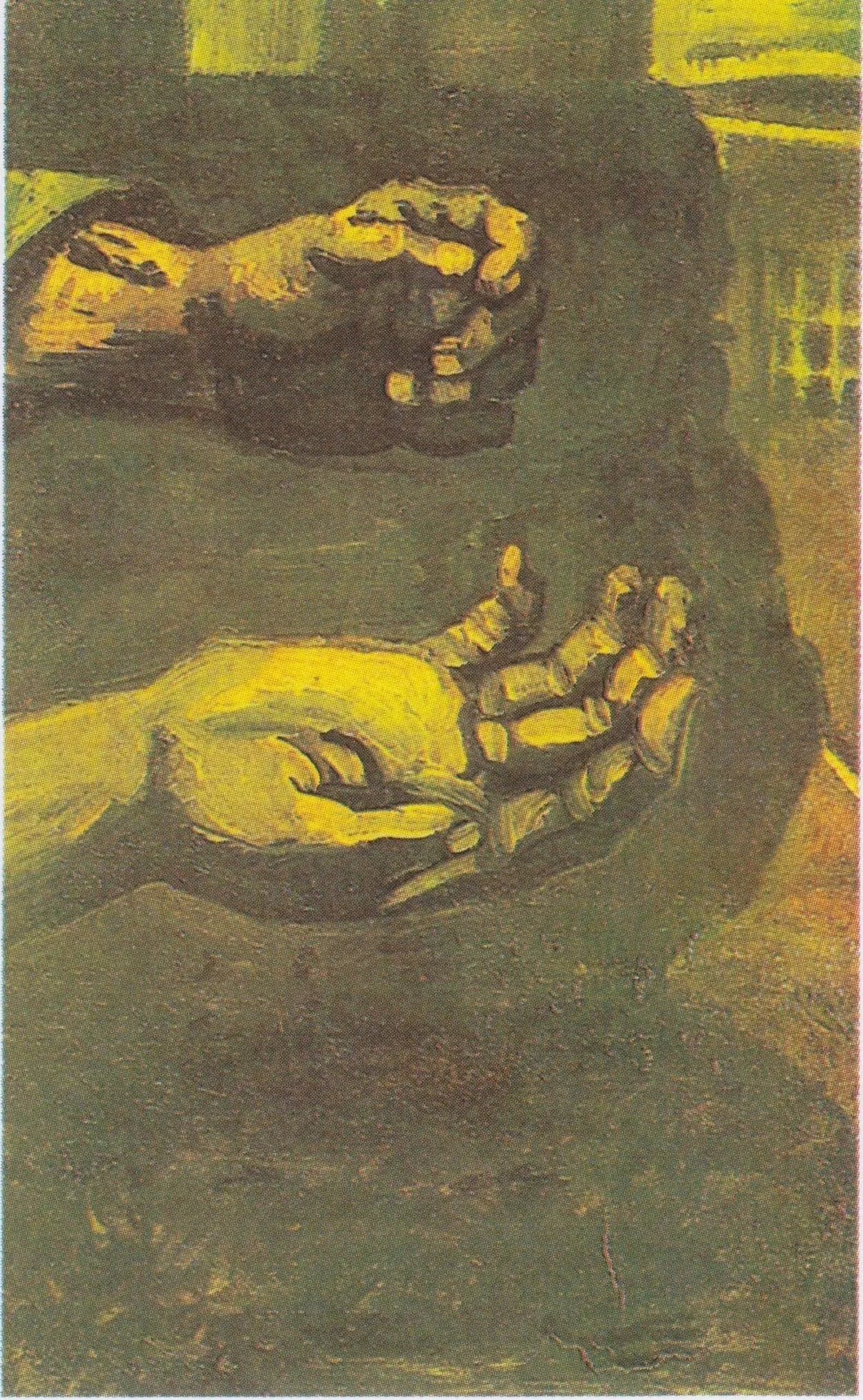
Two Hands
Scene depicted
The composition of “Two Hands - Vincent van Gogh ” unveils a scene of poignant simplicity. Under soft lighting, two hands meet, in a gesture that is both everyday and laden with meaning. This pictorial work is not merely a representation; it evokes deep emotions, personal stories, and moments of life, gathering memories and projects in a surge of sincerity.
Historical context
Created in 1885, in the peaceful municipality of Nuenen , this painting is part of the post-impressionist movement, highlighting the artist's introspective view on daily life and human struggles. This canvas , with a modest width of 19 cm and a height of 29.5 cm, remains in the shadow of an unspecified museum, but its artistic impact continues to inspire. Created at a time when van Gogh was desperately seeking his voice, the work depicts hands, symbols of humanity, labor, and passion.
Place in the artist's career
“Two Hands” is situated at the heart of van Gogh's career, marking the beginning of a reflection on human nature. Alongside “ The Starry Night ” and “ The Sunflowers ”, this painting reveals a significant evolution; it reflects his transition from a very realistic representation to increasingly expressive forms, each canvas translating his inner and artistic evolution.
Anecdote
“I do not paint things, I paint emotions.” These words resonate in the mind when one delves into the genesis of this masterpiece . Inspired by hands shaping the earth, one spring morning, Vincent captured a rare intimacy, where faces intersect with destinies. In this painting , every stroke reveals the pain and hope that inhabited him.