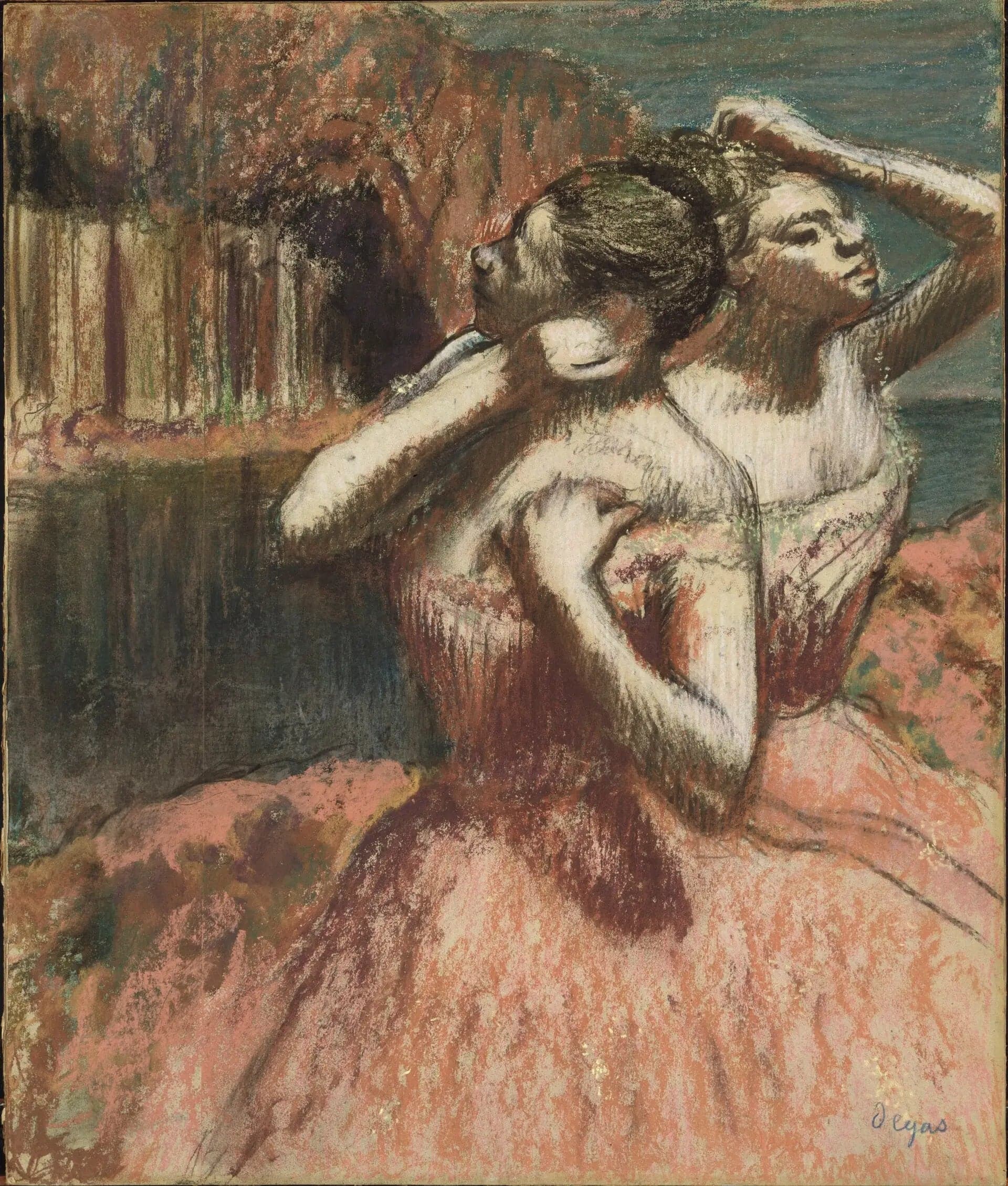
Two Dancers
- Original dimensions
- 24.5 x 32.5 cm
- Museum
- Angladon museum
- Year
- 1880
Scene depicted
The canvas “Two Dancers” depicts an intimate scene, where two ballerinas stand at the center of the frame, capturing a fleeting moment of preparation before the performance. Their postures, both relaxed and focused, invite the viewer to feel the ardor of a world vibrant with music and emotions. Degas excels at representing the nuances of theater life, giving it a dimension that is both personal and universal.
Historical context
Created in 1880, this painting emblematic finds its roots in Paris, cradle of the impressionist movement. Edgar Degas , a prominent figure of this era, manages to capture the movement and elegance of lyrical dancers, symbols of the Parisian art of living. The canvas is currently exhibited at the Angladon museum, where it continues to fascinate with its stylized complexity and the delicate light that emanates from it.
Place in the artist's career
Positioned at a turning point in his career, Two Dancers foreshadows the mature style of Edgar Degas . This masterpiece is situated between “The Dance School” and “Dance Among the Nymphs,” ensuring an increasing emotional response to his favorite subjects: dance, movement, and human intimacy. This evolution, through a unique perspective, anchors Degas as a pioneer of realism and impressionism .
Anecdote
“Dance is an illustration of life” Degas might have said in memory of his work in the studio. One spring morning, a soft light flooded the stage, while the young dancers prepared, merging grace and intensity. This delicate vibration resonates through Two Dancers , a work where each brushstroke tells a story.