Two Apples on a Table
- Original dimensions
- 33 x 24 cm
- Museum
- Speed Art Museum
- Year
- 1895
Scene depicted
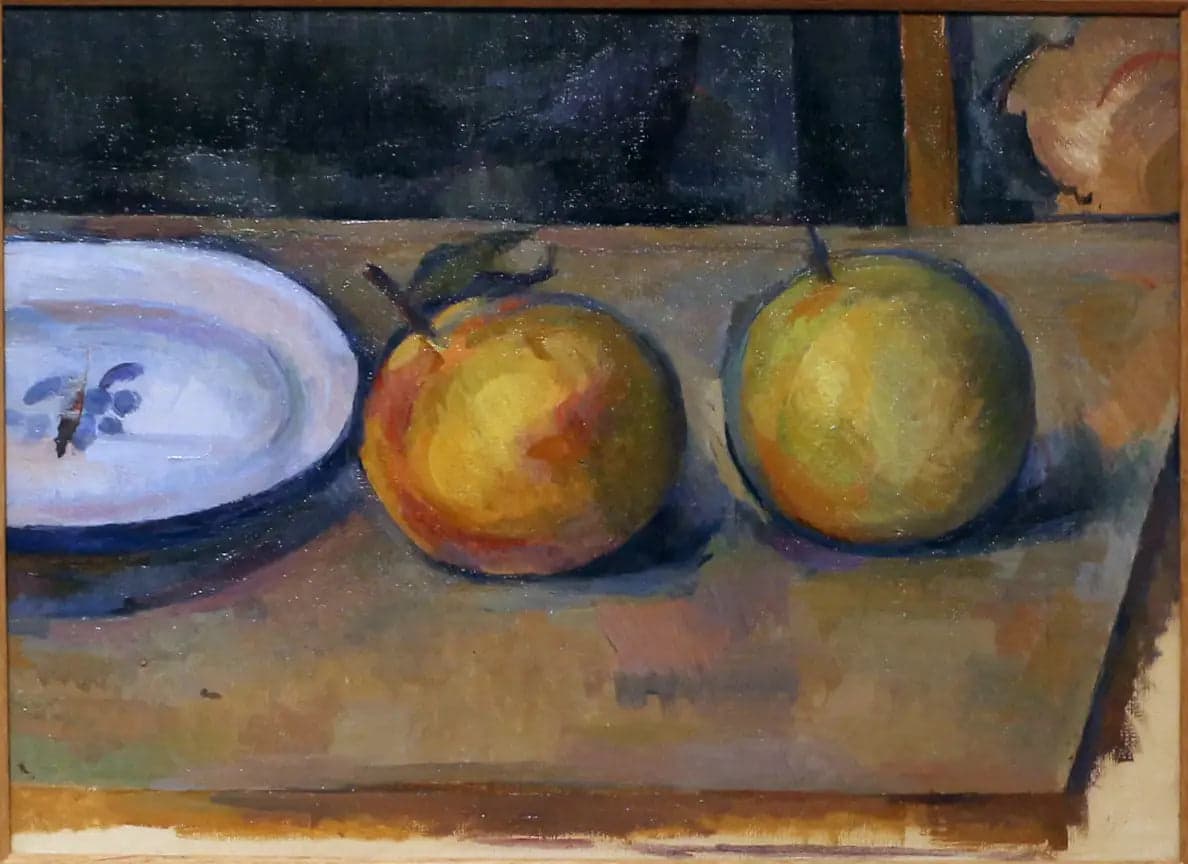
In this composition, Cézanne offers us a unique vision of a still life, where the two apples, delicately placed on a table, seem to vibrate with an internal light. The way he captures the shapes and shadows invites us to embrace the beauty of ordinary objects. This painting, while simple, transcends the everyday to reveal deep and universal emotions.
Historical context
Created in 1895, in the heart of Provence, the painting "Two Apples on a Table" is a perfect illustration of Post-Impressionism , a movement of which Paul Cézanne is one of the pioneers. This canvas powerfully resonates with the French artistic heritage of that time, distinguished by its innovative approach to still life. Currently, this masterpiece is exhibited at the Speed Art Museum, a setting conducive to contemplating its timeless beauty.
Place in the artist's career
"Two Apples on a Table" marks a turning point in Cézanne's career. His bold treatment of volumes and colors reflects a period of artistic maturity. In parallel, works such as "The Montagne Sainte-Victoire" and "The Card Players" reveal how his approach refines, marrying light and forms with ever-greater intensity.
Anecdote
"I have always sought to capture the essence of things," Cézanne would say when referring to this canvas . It was on a sunny morning, as the rays of the sun filtered through the leaves, that the painter stopped, amazed by the simplicity of the two apples. This mundane scene becomes, under his brush, a true call to contemplation.