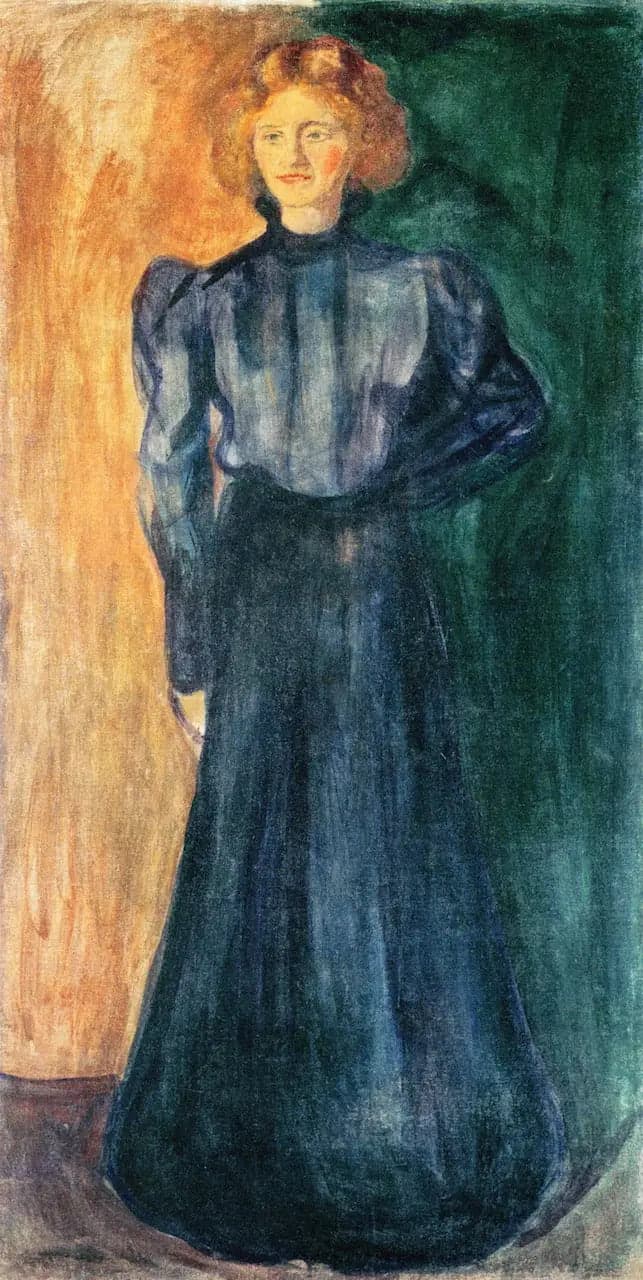
Tulla Larsen
- Original dimensions
- 61 x 119.5 cm
- Museum
- Munch Museum
- Year
- 1898
Scene depicted
This painting highlights Tulla Larsen in all her splendor, embodying feminine beauty and vulnerability. Munch, with his agitated brush, does not merely reproduce the features of his model; he explores the emotional intensity present in this face. Tulla's captivating gaze transcends the canvas, inviting the viewer to an existential introspection, a journey into the heart of the soul's turmoil.
Historical context
Created in Oslo, Norway, at the end of the 19th century, Tulla Larsen is part of the expressionist movement, marked by heightened emotions and a search for human psychology. It is within this framework that the painting was born, at the heart of a rich and tumultuous cultural environment. Today, this canvas shines in the Munch Museum, where the spirit of its creator continues to inspire generations.
Place in the artist's career
Tulla Larsen stands as one of the major milestones in Munch's career, reflecting a nascent artistic maturity. This tumultuous period of his existence, while aligning with other paintings such as The Scream and The Madonna , reveals the evolution of his perspective on the human condition, oscillating between anguish and beauty.
Anecdote
“Art does not reproduce the visible; it makes visible” – a phrase that Munch might have whispered as he created this canvas . Imagine a misty morning, Munch observing Tulla Larsen, model and muse, in the fresh breath of Nordic spring. This encounter was the catalyst for an iconic work that captures the complexity of the human soul.
Major exhibitions
Edvard Munch : portraits