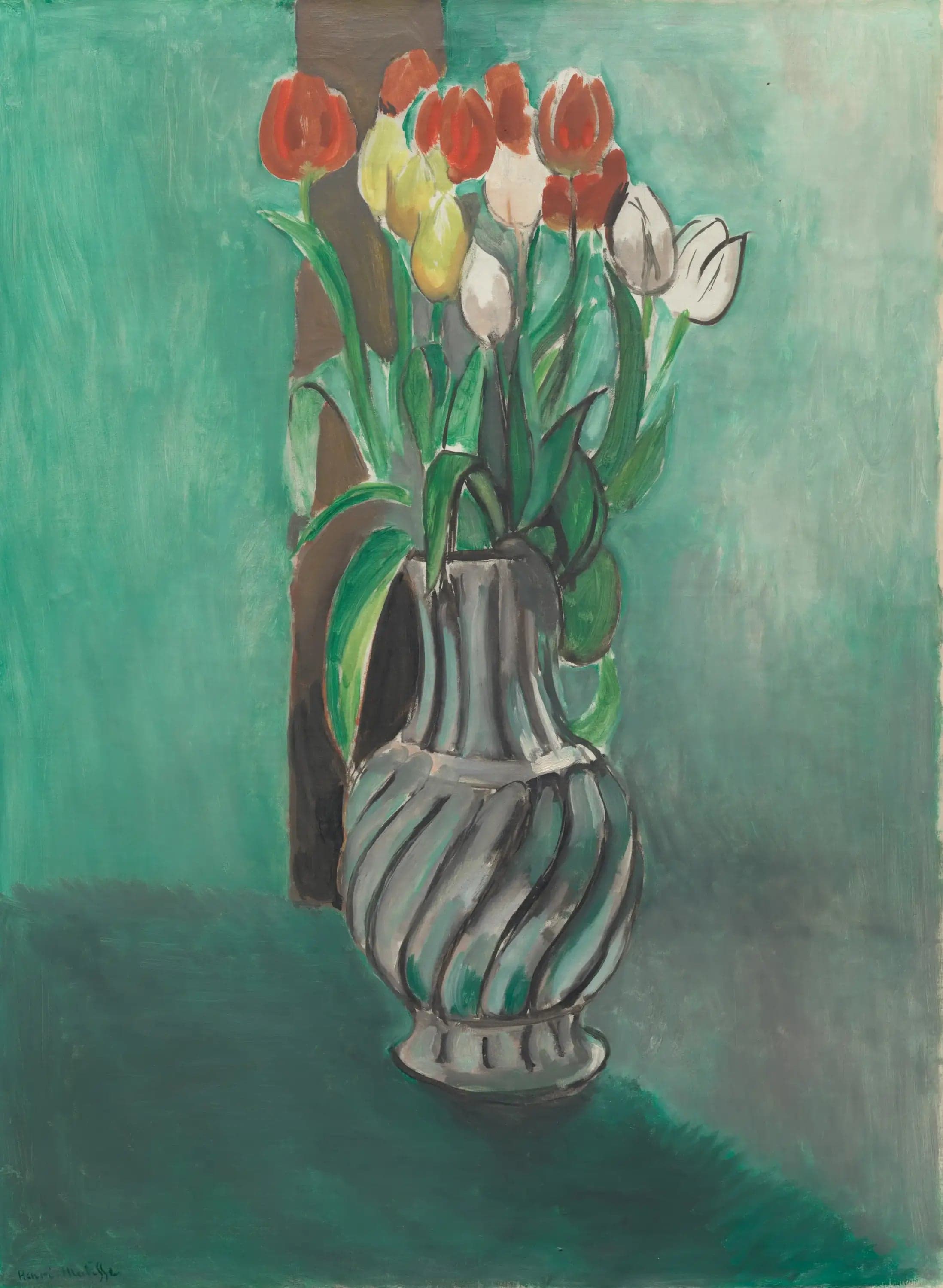
Tulips
- Original dimensions
- 35 x 45 cm
- Museum
- Cleveland Museum of Art
- Year
- 1914
Scene depicted
The scene of Tulips reveals a sublime play of lights and perspectives, capturing the very essence of nature. The tulips, vibrant and delicate, rise high in the composition, playing with shapes and shadows to create a dazzling harmony. This canvas , with its apparent simplicity yet deeply evocative, invites us to a contemplative reflection on the passage of time and the wonders of the present.
Historical context
Created in 1914, in the tumultuous context of World War I, Matisse's painting Tulips emerges as an ode to beauty and color, even though the outside world is darkened by conflict. Made in Nice, a radiant city on the Côte d'Azur, this pictorial work is part of the Fauvist movement, famous for its bold use of pure colors. Today, this painting enchants visitors at the Cleveland Museum of Art , where it continues to inspire generations of admirers.
Place in the artist's career
Tulips is situated at a pivotal stage in Matisse's career, marking his assertion as a leader of Fauvism . Alongside iconic works like The Dance and The Joy of Life , this painting reveals the evolution of his bold style. The bold use of colors in Tulips testifies to his quest for raw emotions, propelling art towards new horizons.
Anecdote
Henri Matisse once stated: "Color is the touch of a soul, expressing invisible emotions." It was in the heart of a bright spring, while he was strolling in his garden, that the inspiration for the painting of Tulips was born. The soft sounds of birds singing and the intoxicating aroma of flowers shaped this work , blending light with a palpable timelessness.