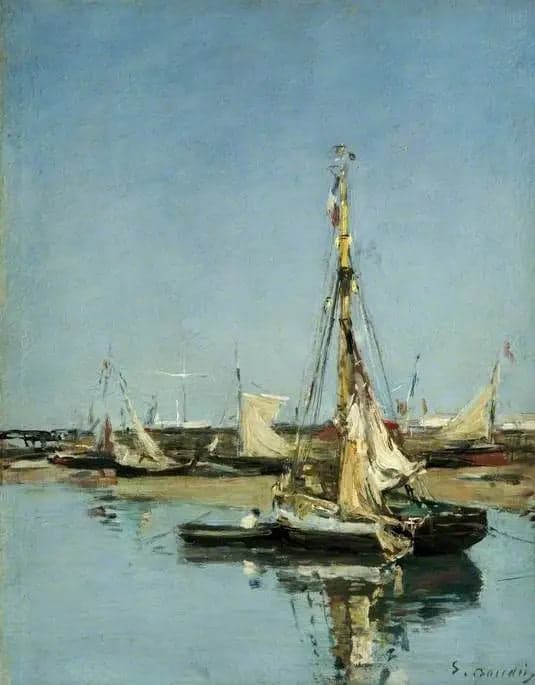
Trouville, the Jetties at Low Tide
- Original dimensions
- 21.3 x 26.3 cm
- Museum
- Burrell Collection
- Year
- 1888
Scene depicted
In this canvas , Boudin reveals a low tide scene where the jetties, slices of wood worn by time, extend majestically. Small boats are left waiting, while fishermen and walkers enjoy the last rays of the sun. The fluid colors evoke the softness of the atmosphere, giving the viewer a soothing glimpse of coastal life.
Historical context
Created in 1888, this painting is emblematic, immersing the viewer in the picturesque world of Trouville, a seaside village in Normandy. Eugène Boudin , master of plein air, is part of the Impressionist movement, capturing the living and ephemeral essence of coastal landscapes. Currently housed in the Burrell Collection, this canvas is a work of impressive poetic scope, measuring 21.3 x 26.3 cm.
Place in the artist's career
Trouville, the Jetties at Low Tide marks a pivotal moment in Boudin's career, signaling his transition to bolder colors and more dynamic compositions. Compared to The Beach of Trouville and The Port of Honfleur , this canvas reflects his growing interest in the effects of lighting and the representation of sea air.
Anecdote
“The sea is a painting with a thousand faces,” said Boudin. Inspired by the reflections of the jetties in the early morning, his passion for nature and his desire to capture the fleeting beauty of marine landscapes come to life in this masterpiece . One summer day, by the water's edge, he discovered the dance of the waves and the scent of sea salts, inviting his brushes to bring this vibrant memory to life on the canvas .