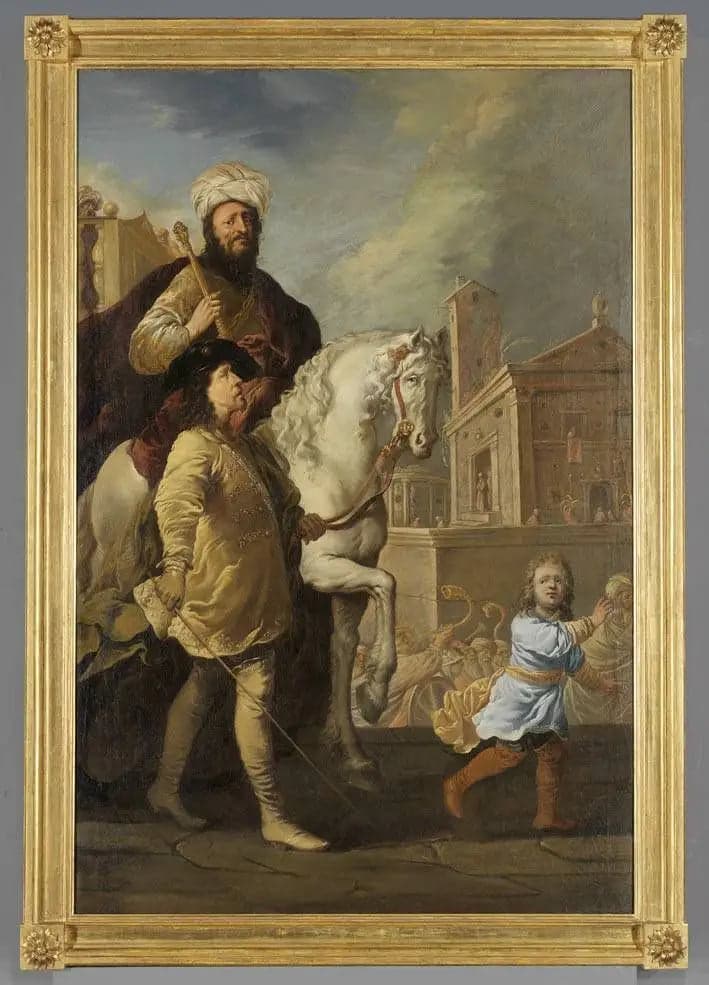
Triumph of Mordecai
- Original dimensions
- 167.1 x 251.6 cm
- Museum
- Collection of Paintings of the State of Bavaria
- Year
- 1637
Scene depicted
This canvas captivates by illustrating the victory of Mardochée and the splendor of Esther's coronation, a scene drawn from the Old Testament. The emotional impact is heightened by the intensity of the characters and the dramatic depth that emanates from the composition. The scene, bathed in plays of light and shadow, immortalizes the excitement and celebration of a triumph against a backdrop of poignant narrative stakes.
Historical context
Created in 1637, the painting "Triomphe de Mardochée" emerges from a rich context, vibrant with the cultural effervescence of Amsterdam in the 17th century. This iconic work is the result of the baroque movement, blending drama and captivating light, characteristics of Rembrandt 's practice. Today, this canvas rests in the Collection of Paintings of the State of Bavaria, where its majesty is highlighted within a prestigious museum setting.
Place in the artist's career
The "Triomphe de Mardochée" stands as a major milestone in Rembrandt 's career, marking a period of artistic maturity. Alongside other canvases such as "The Night Watch" and "The Descent from the Cross," this work reveals not only the artist's technical evolution but also an unceasing quest for emotional expression, playing on striking contrasts and theatrical light.
Anecdote
Rembrandt is said to have once remarked: "Every brushstroke is a heartbeat." This phrase resonates deeply when considering the creative process that produced the masterpiece represented by this painting . Imagine the artist, inspired by the morning light filtering through his windows, precisely sketching the forms and emotions that would emerge from this grand project.