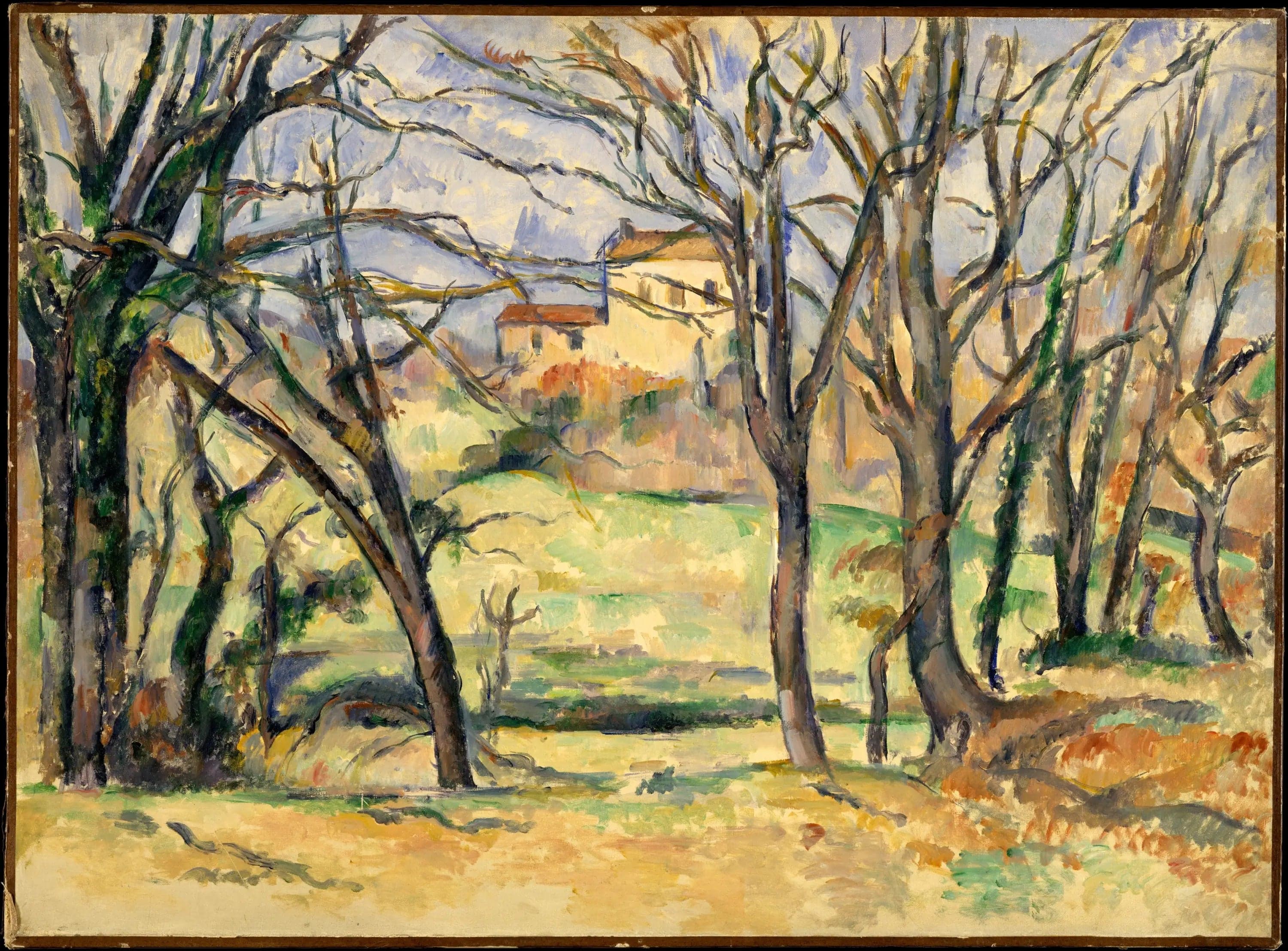
Trees and houses at the place called "La Durane"
- Original dimensions
- 92.1 x 67.9 cm
- Museum
- Metropolitan Museum of Art
- Year
- 1885
Scene depicted
This painting captures a tranquil scene of the Provençal countryside, where majestic trees rise alongside picturesque buildings. The canvas reveals not only a landscape but also a dialogue between man and nature, embodied by the softness of forms and the harmony of colors. The hues intertwine, offering an atmosphere of peace and serenity.
Historical context
Created in 1885, in Aix-en-Provence, this painting plays a crucial role in the Impressionist movement. It is set against a backdrop of artistic renewal, where perceptions of light and color redefine the canvas. Currently exhibited at the Metropolitan Museum of Art , this significant pictorial work offers a unique perspective on the Provençal countryside.
Place in the artist's career
Positioned during a crucial phase of his career, this painting represents the balance between technique and emotion. It stands out alongside other works, such as "The Montagne Sainte-Victoire" and "The Card Players," signaling an evolution towards a more structured and bold style. Through this composition , Cézanne marks a turning point in the history of art.
Anecdote
“Nature is my greatest teacher, it teaches eternity,” Cézanne might have declared while contemplating the landscapes around him. It was in the heart of a spring morning, bathed in golden light and floral scents of the countryside, that he found inspiration for this masterpiece , where every detail evokes the vibrant life of nature.