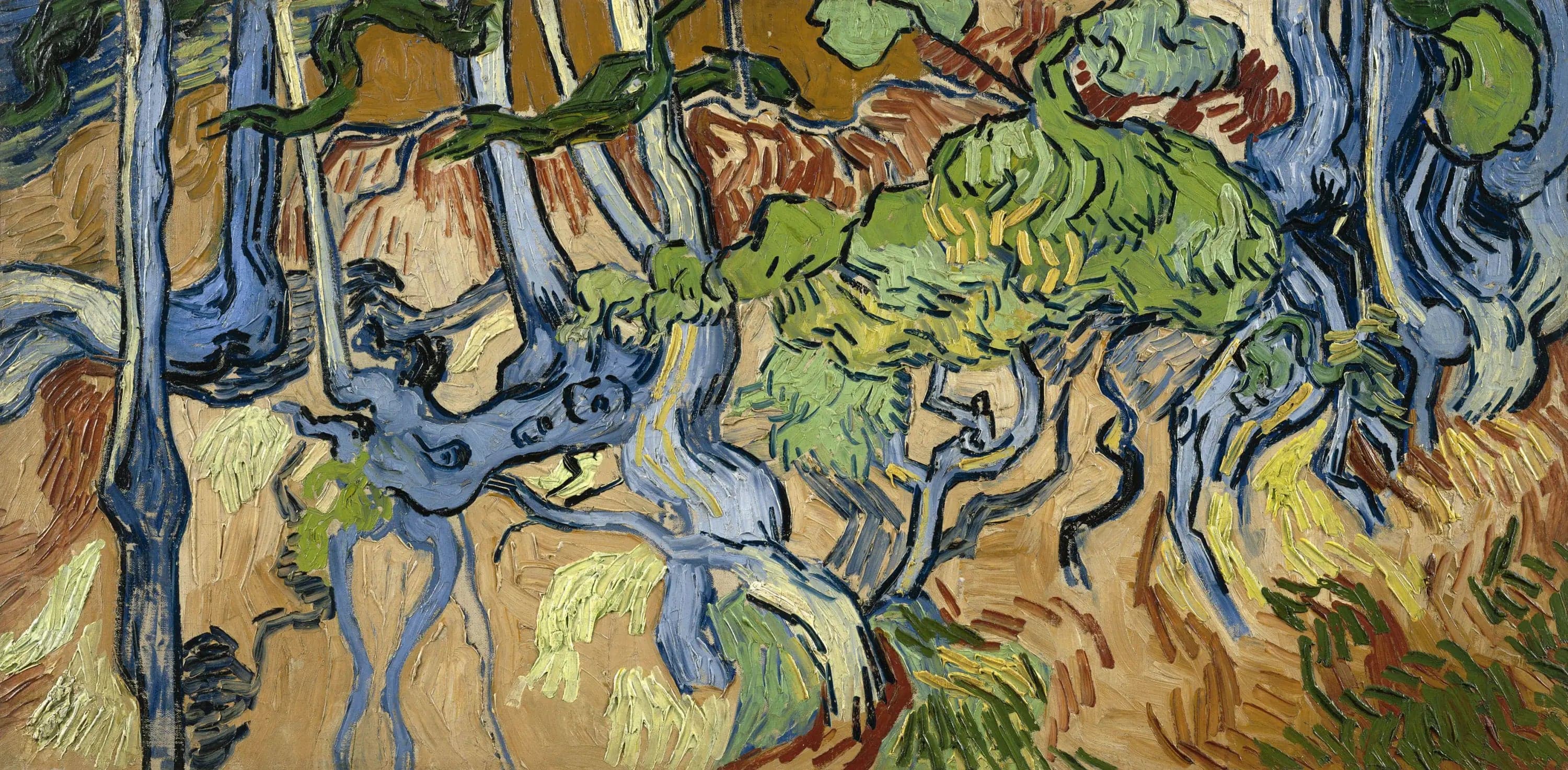
Tree Roots
Scene depicted
In this painting , the roots of majestic trees intertwine in a natural ballet. Van Gogh represents the strength of a living nature, questioning our relationship with it. The composition reveals a harmony between the imposing trunks and the fertile ground, as if each element tells the story of a rooted past, always present. This canvas celebrates the beauty of simplicity and the grandeur of natural elements.
Historical context
Created in 1890 , in Auvers-sur-Oise , this painting is emblematic of the artistic movement of Post-Impressionism . This period, marked by the quest for authenticity of emotions, reflects the artistic vitality of France at the end of the 19th century. Currently, the canvas is preserved at the Van Gogh Museum , where it continues to inspire entire generations of visitors. Its dimensions measure 100 x 50 cm , a size that allows one to appreciate every exquisite detail.
Place in the artist's career
Tree Roots is situated at a pivotal moment in Van Gogh's career, an artist who, despite his inner turmoil, manages to express his unique vision of life. Compared to earlier works like Starry Night and Sunflowers , this painting reflects a technical and emotional maturation, where mastery of colors and forms blossoms in depth.
Anecdote
Vincent van Gogh once stated: “True painting is that which springs from the heart.” This canvas was shaped by his reflections during his last days, as he walked the paths of Auvers, seeking to capture the beauty of the roots of the trees surrounding him. The emotions he felt shaped this pictorial work , each brushstroke vibrating with his silent thoughts.