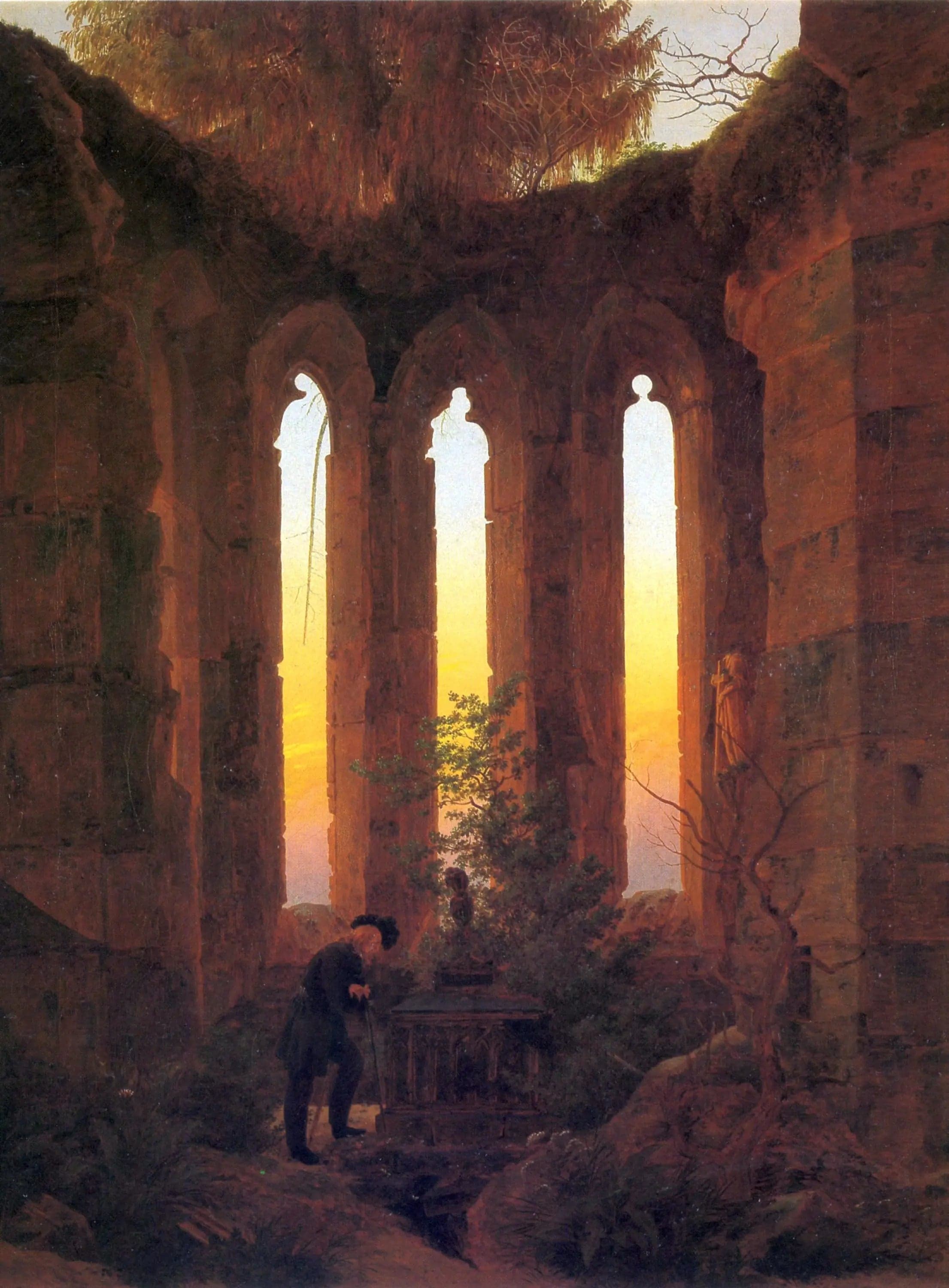
tomb of Hutten
- Original dimensions
- 73.4 x 93.5 cm
- Museum
- Weimar Castle
- Year
- 1823
Scene depicted
This striking canvas represents a scene of poignant serenity, where a tomb stands majestically amidst the surrounding nature. The monument, draped in ivy, testifies to memory and eternity, while the romantic landscape envelops the viewer in its gentle melancholy. The composition illustrates the indissoluble bond between man and nature, evoking a deep reflection on the passage of time.
Historical context
Created in 1823, the iconic painting "Hutten's Tomb" is the result of the romantic sensitivity of the master Caspar David Friedrich , a beacon of the German artistic movement. Located in the historic city of Weimar, Thuringia, this painting is set against a rich cultural backdrop, reflecting the existential concerns of the time. Displayed at Weimar Castle, this painting measuring 73.4 x 93.5 cm continues to amaze with its lyrical depth.
Place in the artist's career
"Hutten's Tomb" stands as a major work in Friedrich's career, showcasing his artistic maturity and ability to capture the transient beauty of life. Alongside it, " The Wanderer above the Sea of Fog " and " The Traveler Contemplating a Sea of Clouds " illustrate his stylistic evolution, between exalted romanticism and melancholic introspection. This painting emerges as a pinnacle of his exploration of themes of solitude and contemplation.
Anecdote
“Nature is our temple; each of its elements is a breath of the divine.” This quote resonates strongly as one imagines Friedrich, in the soft light of a spring morning, inspired by the tranquil beauty of the German landscapes to create his masterpiece . "Hutten's Tomb" is not just a painting , it is an invitation to reflection, a communion with the essence of nature.