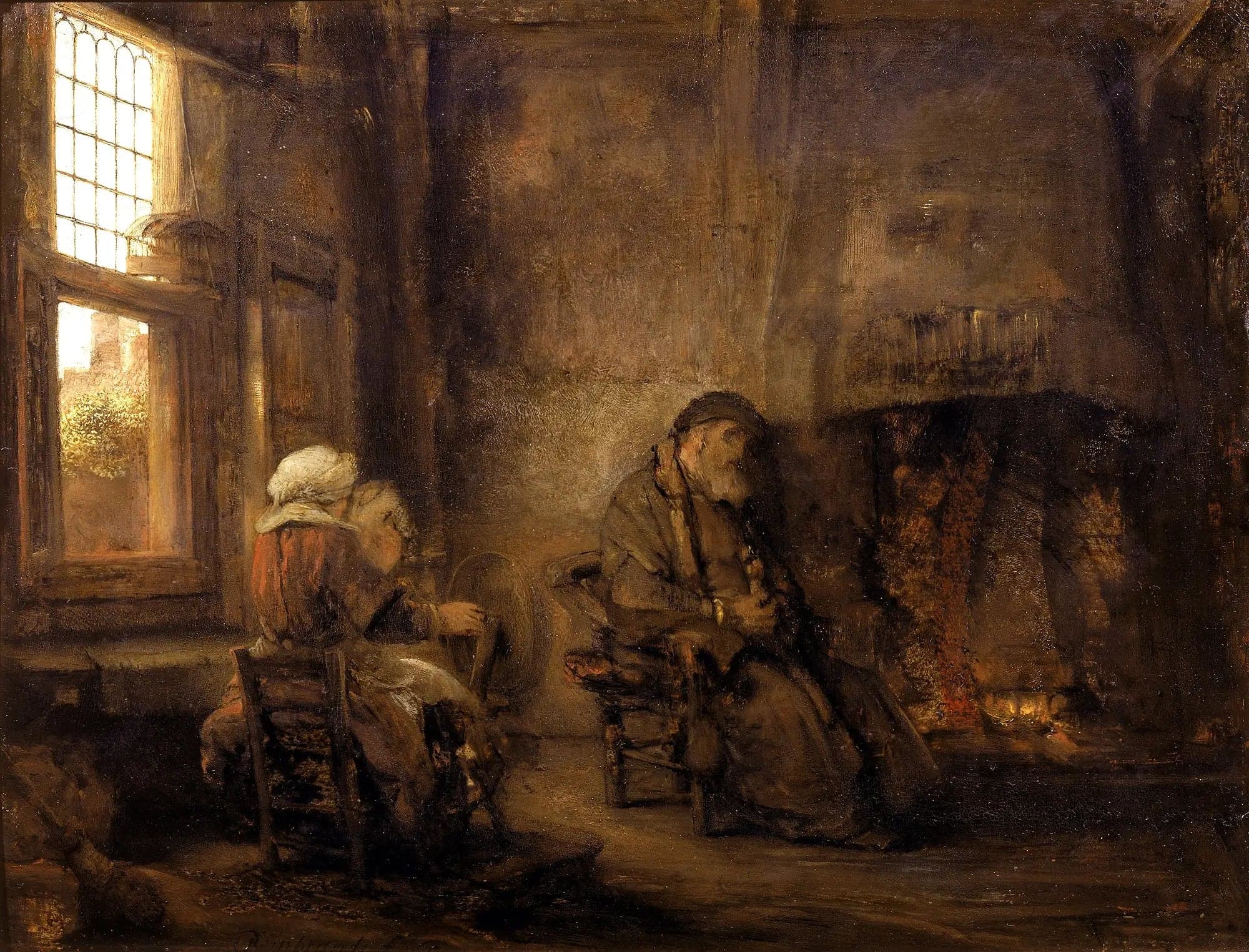
Tobie and Anne
- Original dimensions
- 54 x 40.3 cm
- Museum
- Boijmans Van Beuningen Museum
- Year
- 1659
Scene depicted
Through this painting, Rembrandt immerses us in the intimacy of the biblical scene of Tobie and Anne. Tobie, the son, is accompanied by his mother, Anne, in an atmosphere that is both gentle and charged with emotion. The faces are imbued with tenderness, and the soft light illuminating the composition enhances this relationship, making every exchanged glance an eternal moment. The scene illustrates a fidelity to human nature that only a great master can capture.
Historical context
Created in 1659, during the height of the Dutch golden age, this painting is the result of a rich and meticulous work. Currently located at the Boijmans Van Beuningen Museum in Rotterdam, this canvas embodies the values and emotions of an era marked by the baroque . Rembrandt , master of light and shadow, managed to capture precious moments through this canvas that deserves to be rediscovered with care.
Place in the artist's career
This canvas is situated at the peak of Rembrandt's career, a period during which his style reaches great mastery. Compared to works such as “The Elements” and “The Night Watch,” one can observe an evolution in his technique, blending emotional dynamism with unparalleled pictorial depth. “Tobie et Anne” reveals the artist's genius in exploring emotional and familial themes.
Anecdote
“The soul of a painting resides in its lighting,” Rembrandt might have said when discussing his inspirations. Imagine him, one spring morning, sitting in his illuminated studio, observing the timeless beauty of human emotions, when he found the creative impulse that led to this masterpiece . This painting resonates with that original passion.