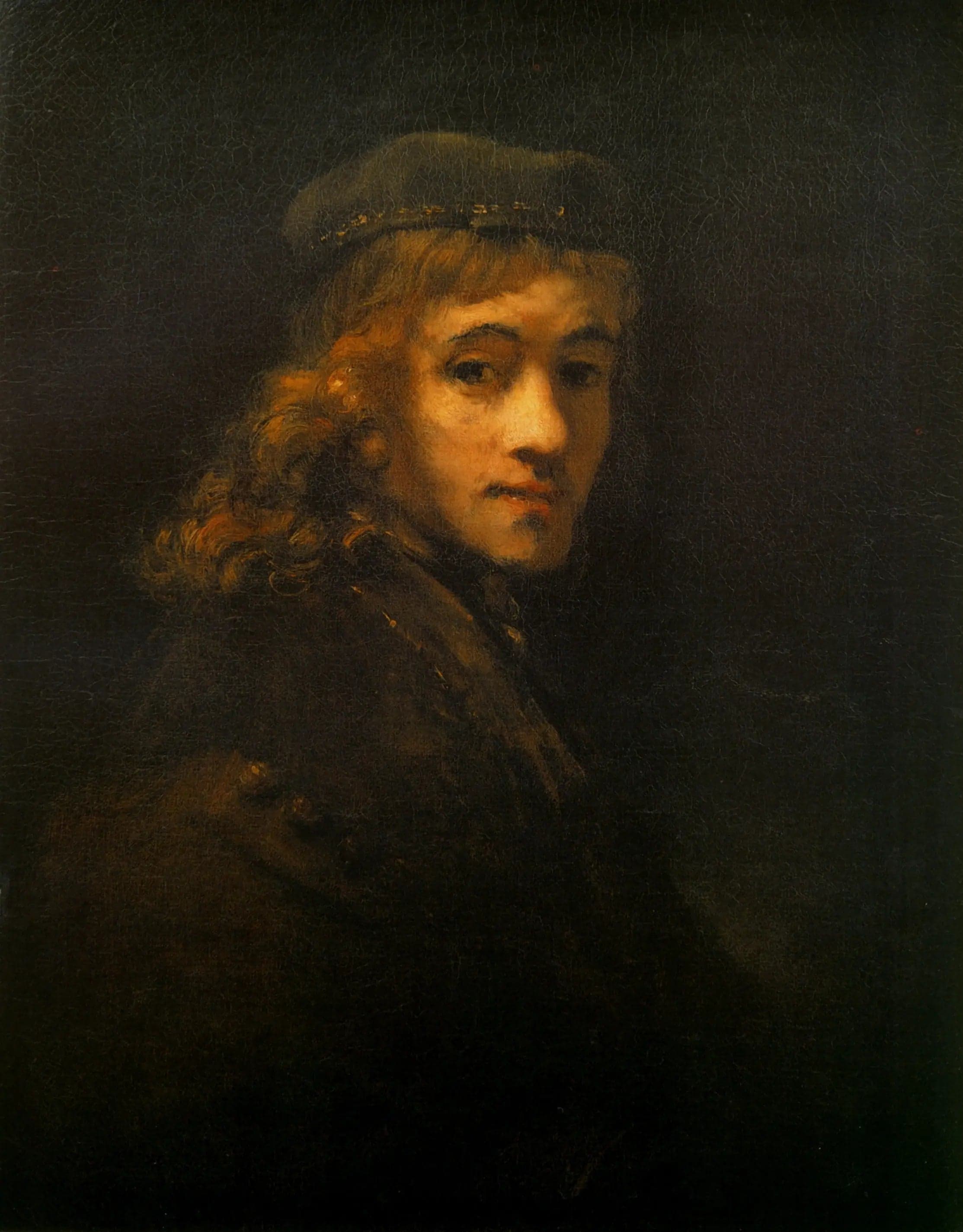
Titus van Rijn
- Original dimensions
- 56 x 72 cm
- Museum
- room 844
- Year
- 1668
Scene depicted
The painting “Titus van Rijn” depicts the adorable son of Rembrandt in a sweet moment of contemplation. Through hours of painting, it captures a moment of tenderness and filial love on the canvas, offering a poignant reflection of family ties and a father's perception. Each brushstroke seems to whisper the stories of a child at the age of innocence.
Historical context
Created in 1668 in Amsterdam, this iconic work is part of the artistic movement of baroque . The canvas, which is currently located in room 844 of a renowned museum, showcases Rembrandt 's virtuosity in the representation of light and shadows. His artistic legacy endures through the centuries, captivating art lovers around the world.
Place in the artist's career
This painting represents a stylistic peak in Rembrandt 's career. It falls within a period of maturity, just like his other masterpieces such as “The Night Watch” and “The Anatomy Lesson of Dr. Tulp,” revealing his technical evolution towards unprecedented expressiveness. A balance between shadow and light, revealing both happiness and melancholy.
Anecdote
“Light awakens shadows; therein lies beauty.” Rembrandt found his inspiration one spring morning, as the sunlight played on the faces of his loved ones, including his son Titus. This fusion of affection and pictorial mastery is reflected in the evocative power of this painting .