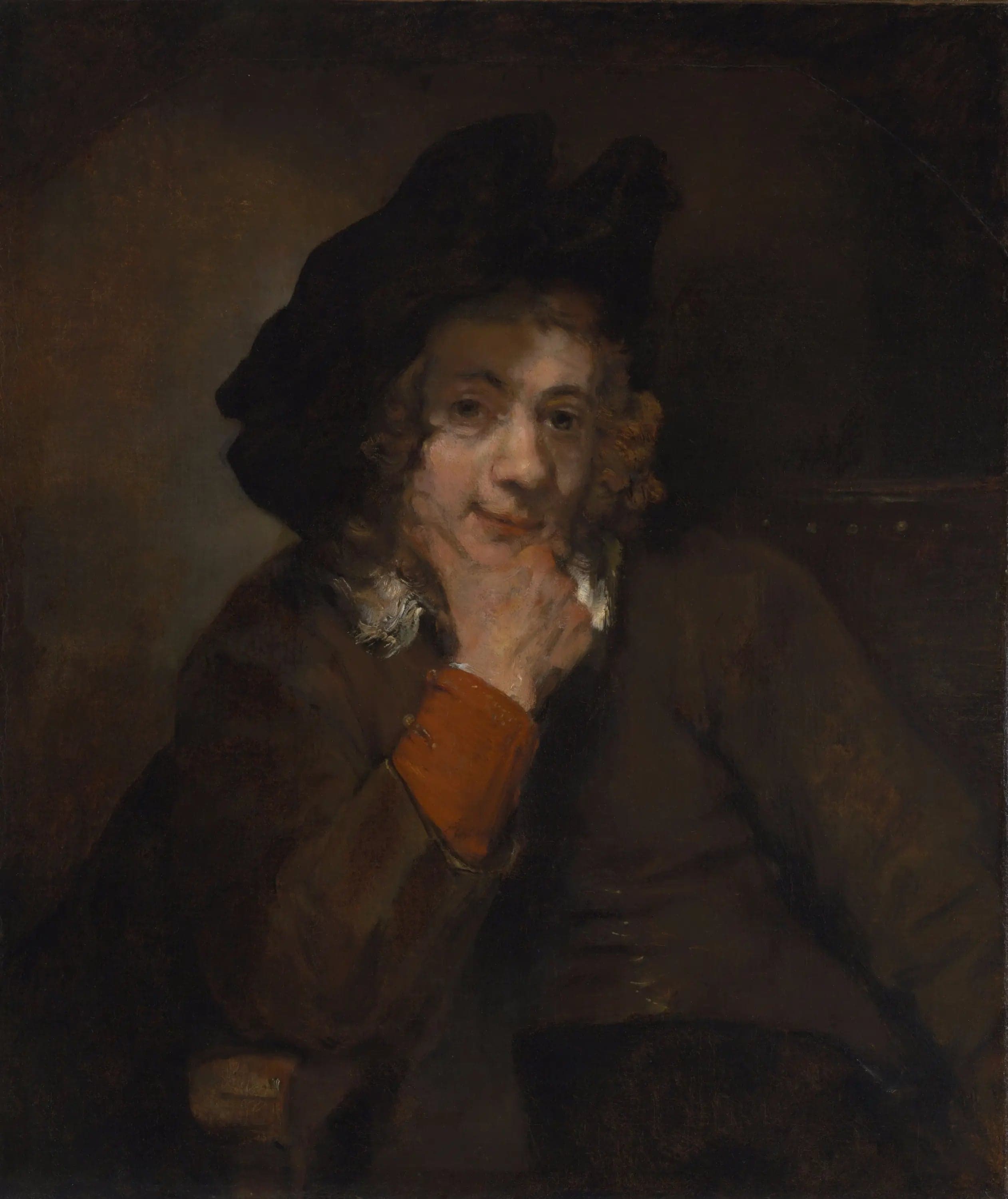
Titus, the Son of the Artist
- Original dimensions
- 68.7 x 81.3 cm
- Museum
- Baltimore Museum of Art
- Year
- 1660
Scene depicted
The painting “Titus, the son of the artist” shows young Titus, the son of Rembrandt , posed in an atmosphere of intimacy and tenderness. The pictorial work illustrates a moment of complicity, through a gaze that seems to rise towards the viewer, inviting everyone to feel a father's unconditional love. The composition, centered on the iconic figure of Titus, evokes themes of memory and the passage of time.
Historical context
Created in 1660, in the historic city of Amsterdam, this painting is at the heart of the Dutch golden age, at a time when pictorial realism and emotional intensity dominate the artistic landscape. This richly detailed canvas , proudly displayed at the Baltimore Museum of Art , testifies to the incomparable talent of Rembrandt and his skill in immortalizing paternal love.
Place in the artist's career
This painting is situated at a turning point in Rembrandt 's career, marking the maturity of his work. In parallel with “The Anatomy Lesson of Dr. Tulp” and “The Night Watch,” “Titus, the son of the artist” highlights the transition from collective frescoes to more intimate portraits, offering a glimpse into the psychological depth that will define the later years of his creation.
Anecdote
“Every brushstroke is a caress of love,” Rembrandt might have said while contemplating his masterpiece . Inspiration burst forth on a sunny morning when the artist observed his son, a young man with deep eyes, in the soft light filtering through the windows of his studio. This fleeting moment, imbued with emotion, captures the essence of the familial bond that shines through in this painting .